Horology has always prized precision as king. You could stuff three tourbillons into a wristwatch or fit a perpetual calendar that lasts a century, but all of that would be rendered useless if the watch itself weren't accurate. It's what Maisons chase, and what customers demand. But every so often, the industry's finest brands turn their attention towards something more primal, and at times underrated: speed.
Speed is subjective when it comes to watches. After all, how could something that's meant to remain stationary on the wrist even be considered "speedy"? The answer lies somewhere deep within the grinding and ticking of a movement, a rotating tourbillon cage, a spinning hand, and a snapping disc. Below, we've curated a tight selection of watches, each fighting its own battle against inertia, torque and the unforgiving laws of physics to define speed in its own way.
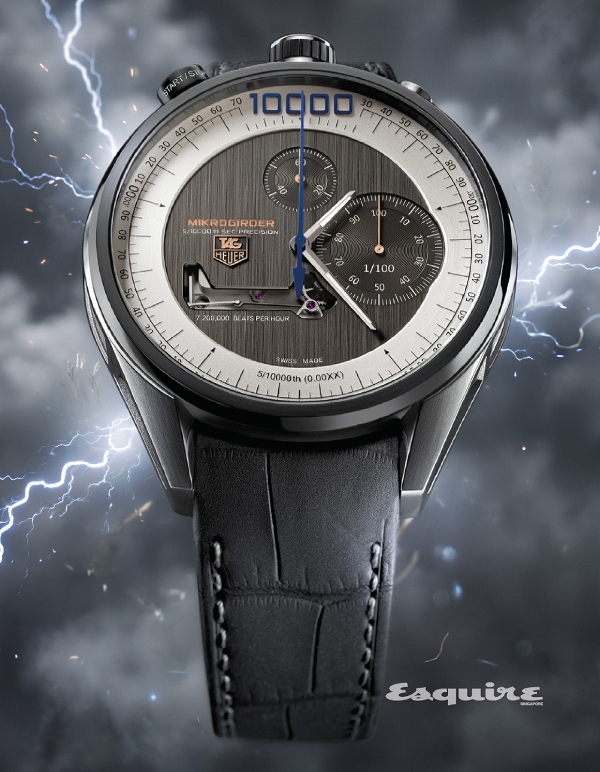
Back in the late 2000s to early 2010s, TAG Heuer had an itch they tried desperately to sate: to create the most accurate mechanical watch possible. To achieve this, they needed to maximise the frequency at which a watch could beat. Instead of relying on the momentum of a swinging balance wheel, which "ticks" four times a second, they replaced it with a tiny blade that vibrates back and forth. This reduction in movement allowed the movement to "tick" 1,000 times a second (i.e. 1,000 Hz), essentially chopping time down into much finer pieces, right down to 1/2000th of a second. To put things into perspective, a standard mechanical watch operates at 4 Hz. This precision isn't hidden but is manifested through the central hand on the dial, which rotates at a blistering speed of 20 laps a second—that's faster than a helicopter's rotor blades, by the way.
It was only after several ancestral prototypes and concepts that TAG Heuer, in 2012, was finally able to create the TAG Heuer Mikrogirder 2000. Over 14 years later, the watch still holds the distinction of being the mechanical watch with the highest frequency.
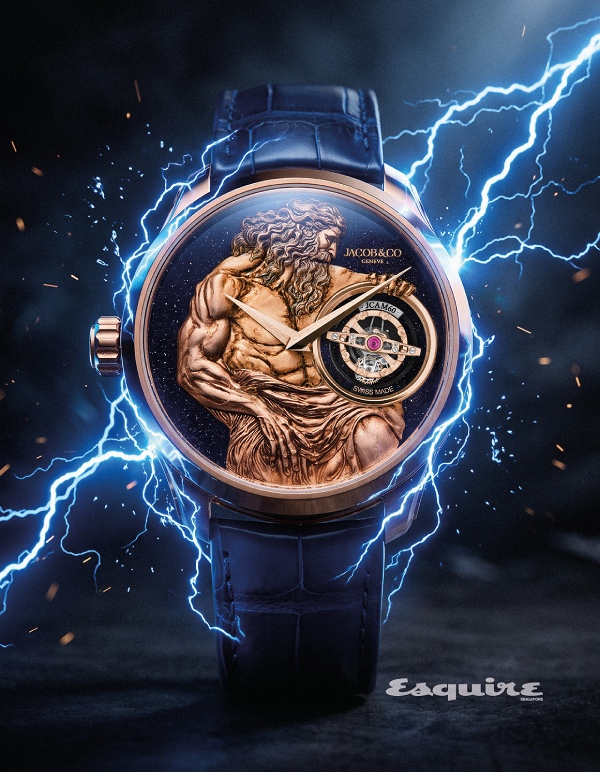
Most standard tourbillons rotate at a pace of one revolution per minute, and anything faster than that is considered quick. But Jacob & Co.'s God of Time blows that standard completely out of the water. The watch completes a full rotation every four seconds, about 15 times speedier than your usual tourbillon. It is, by all measures, the fastest tourbillon ever put into a wristwatch.
To match this level of achievement, the brand depicts the breakthrough by way of a hand-engraved rose-gold sculpture of Chronos, the primordial personification of time itself. The Greek titan, detailed down to his hair, muscles and fingernails, is seen cradling the tourbillon cage as if it were Earth in orbit. As biblical as the watch looks, its ingenuity is credited not to divine intervention but to the two sets of stacked barrels and the titanium tourbillon cage. Weighing just 0.27 grams, the cage reduces the inertia that the four barrels have to overcome, helping them not only multiply the available torque but also provide a power reserve of 60 hours, despite the appetite of the blistering tourbillon.
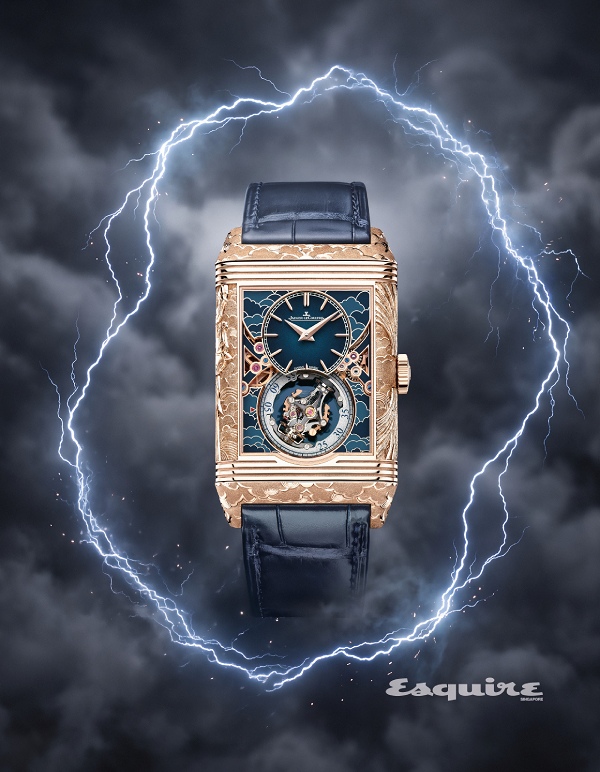
Where a normal tourbillon works by placing a watch's escapement into a cage that rotates in a flat direction to compensate for the tiny timekeeping errors caused by gravity, a gyrotourbillon takes that very concept to the extreme. Conceived and patented by Jaeger-LeCoultre in 2002, the gyrotourbillon brings the complication into the third dimension. Using multi-axis ball bearings, the inner tourbillon cage rotates a full 360 degrees in 16 seconds. At the same time, the peripheral carriage, which cradles the tourbillon cage, completes a full rotation of its own once a minute. These specifications, altogether, make this the most complex and fastest gyrotourbillon ever crafted.
This latest iteration of the Reverso Hybris Artistica Calibre 179 features Pegasus—the mythical winged horse of Greek mythology—as its central motif. Whispers in the wind carry stories of the horse's incredible speed as it soars through the sky, capable of reaching Mount Olympus with ease. Its unmatched speed and power are what later led Zeus to choose Pegasus to carry his thunderbolts across the heavens. We see this depicted through wreathed clouds hand-engraved on both dial plates and the pink gold case, which took master artisans over 180 hours of painstaking work to complete.
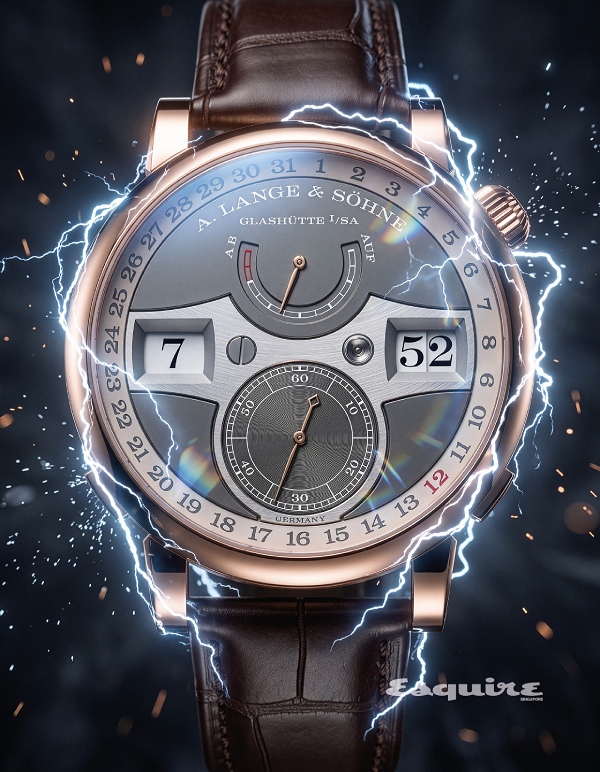
When it comes to jumping-hour watches, precision is just as paramount as it is with a traditional watch with hands, and A. Lange & Söhne's Zeitwerk has arguably the fastest and most precise instantaneous jumping mechanism in watchmaking. Three discs (hours, minute units and minute tens) sit beneath the dial with cut-out windows, plainly displaying time as one would on a digital watch—it seems simple enough, but its movement is anything but. As the discs weigh considerably more than an average pair of moving hands, a great deal of power is required not only to move them, but also to make them accelerate and brake in quick succession. In racing terms, it is akin to taking a tight turn on an F1 circuit, where immense precision and restraint are required to maximise speed.
The Maison addresses this challenge by creating a patented constant-force escapement that generates just enough energy every 60 seconds, storing it before releasing it all at once in a controlled burst to snap the numeral discs forward. This non-stop process of precise acceleration and immediate braking occurs exactly 1,440 times a day, but will eventually stop once its 72-hour power reserve is depleted.
Illustrations by Joan Tai