
When Everything Everywhere All at Once faded to black, the credits rolled to a song that lingered with audiences long after they had left the cinema: "This Is A Life". For many, it was their first memorable encounter with Son Lux, the experimental trio whose music feels as though it's been dismantled and rebuilt—its conventional parts swapped for fractured sound design, soulful grooves, and unexpected textures before being served up on a plate, raw.
The band may have been a new addition to your Spotify Liked List back in 2022, but by that time, they had already spent over 15 years quietly reshaping the boundaries of contemporary music. In 2027, the group will celebrate its 20th anniversary. What began in 2007 as Ryan Lott's solo project has since sprouted two new branches in 2015 with drummer Ian Chang and guitarist Rafiq Bhatia. Together, this tree-o (geddit?) has yielded Oscar and BAFTA nominations, alongside critical acclaim for genre-defying records such as Bones (2015) and Brighter Wounds (2018).
Online interviews can make it difficult to gauge a person's sincerity—particularly this one, which unfolded across Zoom calls and voice recordings. Yet those digital barriers quickly dissolved as Ryan, Ian, and Rafiq spoke earnestly about their craft, added to each other's ideas, and bounced between stories with an easy chemistry that felt almost familial.
Ahead of the release of their forthcoming album, Out Into, we spoke about their favourite collaborations, their evolution over the years, and the closest they've ever come to calling it quits. But first, we returned to the project that introduced Son Lux to millions: scoring Everything Everywhere All at Once.
ESQUIRE SINGAPORE: So many people were introduced to you through Everything Everywhere All at Once. Does the acclaim from that movie make it harder for you to take risks now?
IAN CHANG: I think the answer is no. One thing I feel lucky about with that film is that even though it got a lot of attention, it's not a very mainstream piece of media. It's a pretty wild and bizarre movie. Because of that, I don't think we feel pressured to make music that's more mainstream because of the film. If anything, that film gave us permission for more weirdness.
ESQ: Did you feel like you had to create music in service of someone else's direction whenever you scored a film?
RYAN LOTT: We're always making music in service of some direction—sometimes our own, sometimes direction from within our band family. Some of the best ideas come from the outside. When we write music for picture, we're not the boss. The boss is the story, and how we participate in telling that story defines what we do as musicians.
But we've found it's a real honour to be filmmakers when we make scores. So while we look outward for influence to a greater degree, we gain the incredible privilege and joy of making something interdisciplinary, something with its own rich tradition.
ESQ: Did coming back to making Son Lux music again feel any different?
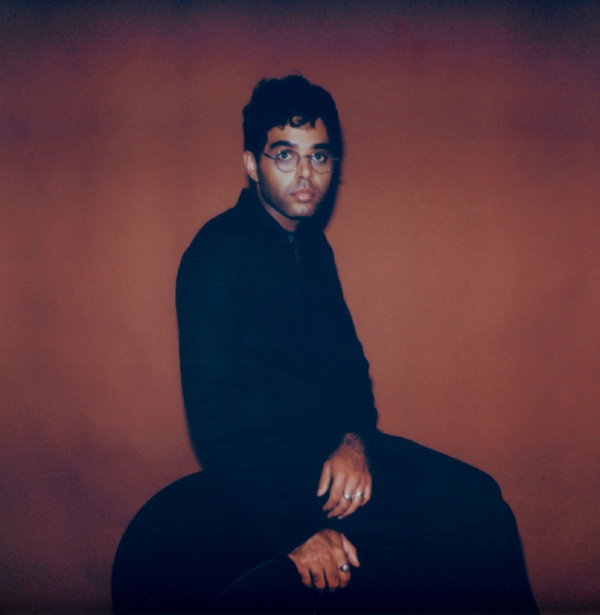
RAFIQ BHATIA: I think it feels pretty different. This album [Out Into] was made while we were making a lot of other work, collectively and individually. One thing that's evident in what we ended up making is that certain impulses we've had as musicians have now found a home in filmmaking—grand gestures, the ability to make sharp turns within a single song, our love of surprise and high contrast. I think because we've had so many opportunities to do that through film work, making this record became a space for music that doesn't do that as much.
It's a lot more stark and direct than some of the things we've made in the past. I think we're all really inspired by music like D'Angelo, Bob Marley and the Wailers, or Madlib. We'd never made music that works like that before, the three of us, so it was really interesting and fun to make a record that feels like that.

RL: I'm just having this realisation: when you're making music for a film, it accomplishes a lot while you're not directly thinking about it, because you're more engaged with the story and the picture. When we made this record, we intentionally thought about that same concept: how does this music feel and sound when you're not directly engaging with it as an active listener?
Our bias has historically been, and still is, to make music intended for the active listener. But it's a unique challenge, akin to film scoring, to make music that accomplishes essential and beautiful things while you're not actively hunting for it with your ears. That's one of the great challenges of film scoring, and why, speaking for myself, it's a fascinating puzzle.
It's inherently challenging in film scoring, and weirdly also in making a pop record. A good pop record exists in multiple forms—it feels awesome at a party, and it also feels awesome with your eyes closed and headphones turned up. We wanted to make a record like that.
ESQ: Ryan, you've spoken about how the album is about losing and finding ourselves in relationships, work, children, pursuits, and desires. Which of these areas resonates most with each of you personally?
RL: It might be a little unfair to put this question on the guys since I'm the lyricist. I've always tried to write lyrics that invite the listener to bring their own stories and feelings to the music. I've never felt comfortable writing autobiographical lyrics, but I've always tried to write honest lyrics, ones I can embody and feel fully.
I'm in a place in life where things are changing very fast around me. As a father, I can witness a ticking clock in my son's life; he's changing so rapidly that it's emotionally destabilising. But his development is also an amazing reminder that everything is changing at that speed, including myself.
So what is it like to be present to every moment, knowing it disappears as soon as you recognise it? That's a big inspiration for this record, lyrically.
ESQ: From Mitski to David Byrne and Lorde—what's been your favourite collaboration so far?

IC: Favourites are really hard, especially with collaborations, which are all unique. The ones you mentioned were definitely big and inspiring for us. I'll shout out our collaboration with Mitski and David Byrne on the soundtrack for Everything Everywhere All at Once.
I especially want to talk about David—obviously a legend from Talking Heads, but David was extremely open-hearted, full of ideas, super communicative, and had this wide-eyed curiosity about what we were doing together that reminded me of someone much younger, someone excited, passionate, and new to things, feeling them with real intensity. Someone in our circles once said that David Byrne's career is the type of weird we all aspire to be. I wouldn't call it a favourite collaboration, but it definitely made an impression.
ESQ: What about you two, Rafiq and Ryan?
RB: (Silence) This band is bad at favourites, man.
RL: I can offer a favourite! Son Lux began as a solo project. So my favourite Son Lux collaboration so far has been with Rafiq and Ian (laughing).
ESQ: What kind of music do you think Son Lux would be making now had Ian and Rafiq not joined?
RL: The simple answer is less good music. I know I'm a different musician now as a result of this collaboration. In particular, I'm not sure I would have discovered the affinity I have for performing live.
Before this band started, I had very little, if any, performance experience that felt positive. Live shows always felt like an inherent compromise. But as we developed as a band, our live performances actually caused me to grow and discover things I hadn't otherwise discovered musically.
ESQ: What's your guys’ dream collaboration?
IC: We would love to put this out into the world: we would love to collaborate with Björk, who is a big inspiration to all of us. She's such an incredible artist and visionary. She's a true individual in every sense of the word, as a vocalist, as an artist, as a producer, as everything. She's just a hero for all of us.
ESQ: Are there any names on this upcoming album that you're excited to share?
IC: What's funny about this album is it's probably our least outwardly collaborative, which sets it apart. Interestingly, I think the three of us collaborated [more deeply] on it than on any album before, but there are a lot fewer collaborations with people outside the three of us.
RL: This record is more like "family time". You know how "hang time" is when you invite friends over for drinks? This is more like staying in and hanging with family.
RB: Think about all the legendary records. There are so many great records with no features. There are no features on A Love Supreme. There are no features on Voodoo. So many records showcase a tight-knit, close group of collaborators doing something at a very high level. I think that's just something we were aspiring to here.
IC: The name drop is that there are no names.
ESQ: You guys mentioned seeing each other almost as family. Can you recall a specific moment that made you realise this?
IC: I wouldn't say there was a specific moment. The feeling of us being family is something that kinda seeped in over time. When you're on the road with people, you become very close. We've been playing together for over 10 years now.
But there are definitely moments that solidified that feeling—being at Rafiq's wedding, watching Ryan's son grow up, becoming close with each other's families. Our lives and our relationship have extended far beyond just being partners in music, and it's a really wonderful thing.

ESQ: You guys seem like really genuine and nice people. What does a creative disagreement between the three of you look like?
RB: Total warfare (laughing). Don't stop until complete annihilation has been achieved!
RL: Last man standing!
RB: No, honestly, it's kind of amazing that we haven't had more true disagreements among the three of us. I think part of the reason is that there's a lot of mutual trust and respect in this group. These guys are like siblings, and we all have each other's backs.
Generally, when someone says something I might not agree with in the moment, I'll stop and think about why Ryan or Ian feel the need to say this, and what might be making them say it in this way. So I know you were hoping for a dramatic answer, but the reality is we're all pretty well-adjusted, calm people (laughing).
IC: There are times, though it doesn't happen often, when it helps that there are three of us. If two people agree on something and the third doesn't necessarily agree but can live with it, we're pretty good about not making that a tense thing for long—just agreeing that it's two versus one, that we can live with it, and moving on.
RB: A final thing on the subject. I can't overstate the value of having people you love and trust and respect who will tell you exactly what they think, whether it's what you want to hear or not. I feel so grateful and fortunate that we don't have that echo-chamber kind of situation in this group, and that we can really speak our minds to each other, because that's what allows us to keep moving forward, as individuals and as a group.
ESQ: What's a Son Lux song that makes you proud of your bandmate?
IC: I'll name a Son Lux song that makes me really proud of Ryan—and maybe it's also an excuse to plug our new single, "Endlessly." One thing I love about being in brotherhood with these guys is that we're always trying new things and exploring new ground. Ryan really went for some new stuff vocally on this one. I'm just really proud of [him].
On top of that, Ryan tends to be the person the songs pass through last. We all produce on the songs, but Ryan ultimately puts things together—and he produced his ass off on that song. So, check out our new single; Ryan killed it on it (laughing).

RL: I'll take the baton, thanks bro. Let's go with "Out Into Us," from the album Out Into. I want to give a shout to Rafiq for that one—he has this crazy ability to author amazing ideas instantly, ideas that hold up over time and are incredibly singable, that have real hook quality. He and Ian are really responsible for the meat and the foundation of that song. There's something about how your chord progressions feel like melodic hooks.
RB: There are so many Son Lux songs with his drumming on them where I hear it and think, "this is my favourite Ian Chang performance". But that keeps changing all the time. I want to spotlight one example of his drumming that was just absurdly sick: "Summer's Gone." I can't imagine that not being Ian.
Sometimes Ian plays these beats that are teeming with information, and that one is bursting at the seams with soul, but it also has a lot of really deliberate, intentional placement in it. And that's also him on the background vocals in the chorus.
ESQ: What goes through your mind when you revisit your earlier work?
RL: Oh, I like this question. You can't help but look back at your work with some degree of a critical eye. But I prefer to be generous with myself, my past self. I'm quite proud of the things we've made along the way, including the music I made when Son Lux was a solo project.
Sometimes I'm even challenged by it—I hear the potential for a trajectory that maybe I haven't quite met yet. So when I look back at our old work, I'm not only proud of it; I use it as a reminder of the promise it held, and still holds, for our past and our future.
IC: Since we're all in the same place right now rehearsing for a show, one thing we're doing is revisiting some old songs to play live. It's interesting watching videos of us from 10 years ago. I was definitely hitting the drums too hard all the time (laughing), just that youthful energy. I take it with a smile—I'm kind of fond of those times. I know I was in a state of growth, and I feel grateful for the journey.
ESQ: What's the closest you've ever come to quitting?
RL: Usually I get fired before I quit (laughing).

IC: I have a story about quitting where I actually did quit. When I was younger, I was on a path to study and become a classical percussionist, which is very different from what I am now. I had the opportunity to be admitted into the junior program at Juilliard.
But as the time to apply for colleges got closer, and the path laid out for me was to continue toward classical percussion programs, there was a voice in me pulling in a different direction, telling me this wasn't actually what I wanted to do, that it wasn't where my strengths were.
So, pretty last-minute, I quit the program to focus on my jazz audition instead, and ended up going to school for jazz. Looking back, telling the story now, it doesn't seem like such a huge deal, but at the time it was a really heavy decision. Telling my parents I was going to quit the Juilliard junior program wasn't easy.
What I took away from it is that sometimes, even if it feels like the most wrong thing to do on paper, it can be the most right thing if you're doing it for the right reasons. I'm so grateful I made that shift. It sent me on a different path where I've been able to explore my own musical inclinations more deeply. Actually, I recently taught a music tech class as a guest lecturer at Juilliard, so that was a pretty funny full-circle moment.
RB: I think that's really the thing about quitting. There's a stigma associated with it, but it has to be something you're open to maintain a healthy relationship with anything.
I remember my dad telling me I should have a backup plan, an exit strategy, in case this music thing didn't work out, because he could see I was stressed about it. That used to upset me when I was younger. It almost made me feel like I couldn't show any vulnerability. What I realised later was that I had completely misunderstood where he was coming from.
In actuality, having an exit strategy or backup plan is what enables you to double down on what you're doing, because you know what you'd do if it didn't work out. If you're willing to accept that maybe something doesn't work out for you, that can be a better way to stick with your principles than compromising your relationship with the thing you love until one day you wake up and don't recognise it anymore.
I see a lot of people lose the spiritual reasons of why they make art, and that's such a sad thing. It's been one of my greatest fears my whole life.
RL: It's like saying no is as much a part of it.
RB: Yeah, or being willing to walk away from something. The reality is none of us would ever want to sever the tie of that relationship in terms of our own personal lives. We're all going to be making music until the end. But the only way you can sustain that is by accepting that if circumstances around you change, and you couldn't do this for a living, you wouldn't force it.
As opposed to saying "I'm going to do this no matter what," and then waking up one day and realising that the relationship—wherever the beautiful place it started from—is unrecognisably poisoned now.

Photography: Anna Powell Denton
Art Direction: Rebekah Nolan
Styling: Jess Lykens
Hair and Makeup: Andrew Elliot
Set design: Danielle Joy Graves
This interview has been edited for length and clarity.