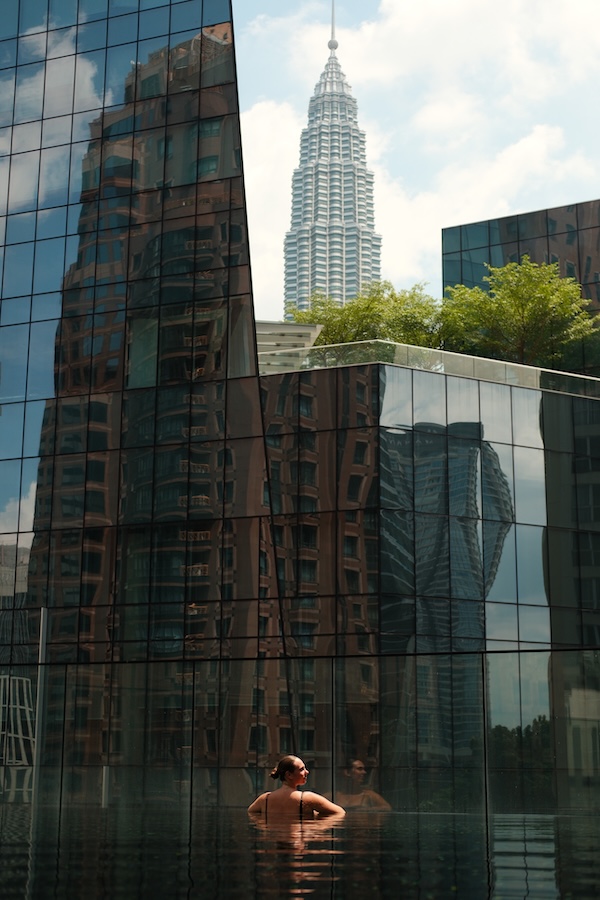
The term "hidden gems" is so overused in recent influencer videos that it has lost all meaning. But I'm here to say that I'm bringing it back, beh-bey, and as it's originally meant to be.
Take The RuMa; this hotel has been around for eight years, and we've only known about it this year. How can this be? Did we awaken from a torpor? Are we not hip to the ins-and-outs of the hospitality world?
Kuala Lumpur isn't immune to urban redevelopment; like any other city, where the past is enmeshed with the new and upcoming, KL is a hotbed of hotels, offices, and malls opening up. So, to now discover the existence of The RuMa... now that is the definition of a hidden gem. Camouflaged among the other buildings in the city is the sleek, 40-storey single-tower hotel.
Perhaps one of the reasons for its inconspicuousness is that the hotel is tucked along Jalan Kia Peng. There's no signage or traits to indicate that it is a hotel. A stone's throw from the Pavilion, and close enough that you can see the Petronas Towers... well, it depends. When The RuMA started operations, one could see the Petronas Towers in their full glory, but urban renewal forced other structures to be erected around The RuMa, so only certain rooms, like the Corner Studio and the Deluxe Suite, get an unobstructed view of the Petronas Towers.
But staying at The RuMa, it is more interesting within than without.
Perched on the notion of rumah ("home" in Malay), this independent hotel lends itself to modern Malaysian hospitality. There's usually a five-star script for hospitality: the marbled lobby, high-rise mosaic ceilings, austere artworks, but The RuMa eschews that.
Sure, the hotel pulled out all the stops in its architecture, but like a diamond, there are more facets than meet the loup-less eye.
The RuMa's design bears the hallmarks of old Malaysia—batik motifs, rattan, brass—all filtered through a modern eye. There are clever nods to certain Malaysian aspects, like the entrance antechamber that pays homage to Malaysia's tin-mining history. This open-work antechamber that's constructed from interlaced glazed and non-glazed terracotta hearkens to the caged canaries that miners would carry into the mines to detect dangerous gas and toxic air; it is the first room—a preview, if you will—of what visitors will come to expect.
Continue onwards, and it opens to the grand salon, where you'd encounter a grand double-spiral staircase (representative of tin-mining drills), and in between the staircase is the centrepiece: a golden kebaya crafted from geometrical gold squares and butterfly-shaped cut metal. Called the "Kebaya-ku", the installation is fashioned by Bernard Chandran. (Off-tangentially, it brings to mind Miss Havisham's wedding dress.) Above, we stared at our warped selves in the reflective copper-tiled ceiling.
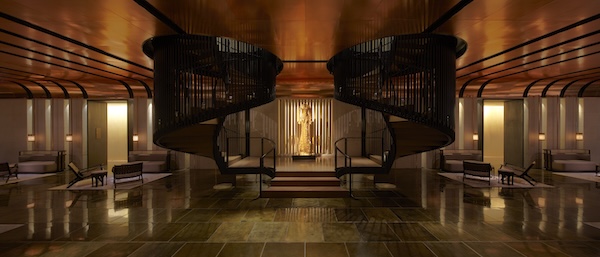
Ascend the staircase (or take a lift) to the mezzanine level, where ATAS restaurant is at. Breakfast is worth setting an alarm for. Rich, varied, with none of that routine spread that many hotel restaurants would offer. ATAS' Executive Chef Suhalmi Tasir made sure that ATAS would have a veritable line-up of international and local dishes like nasi lemak with beef rendang, or kuehs.
Recently, ATAS launched its Key Tables programme, where they invite a chef to work with them on a four-hands menu. During our stay, Michelin-starred Chef Masahiko Kawano was the inaugural partner for the Key Tables pilot. While Key Tables was reserved for dinner, Chef Kawano's duck bone broth with chewy noodles ended up as a surprise dish for breakfast.
(GU:UM, the modern Korean steakhouse by MICHELIN-starred Chef Louis Han, returns for another ATAS Key Tables collaboration. This time GU:UM's residency at ATAS will run for four months, ending on 30 November, 2026.)
On the cantilevered sixth floor, you'll find the gym, a function room, SANTAI bar, and a 25m infinity pool with a considered skyline behind it. In the lobby, you can indulge in a tipple or two at SEVEN Lobby Bar, where the drinks menu is centred around the number seven (cocktails are made from 77 gins from around the world; seven tonics are used in the making of said cocktails).
If you're after a moment free of alcohol, next to SEVEN Lobby Bar, the LIBRARI (decked out to look like a private home library) is the perfect nook for afternoon tea that features local Malaysian bites and brews.
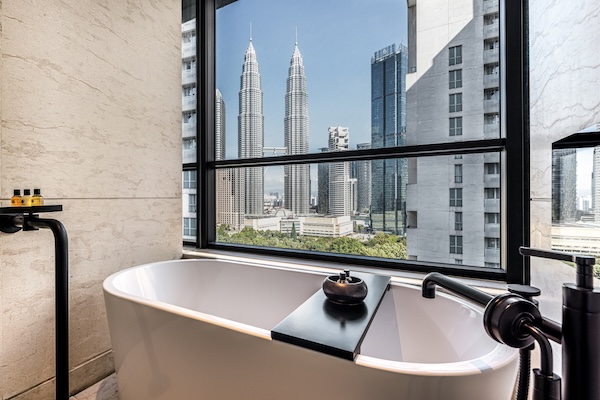
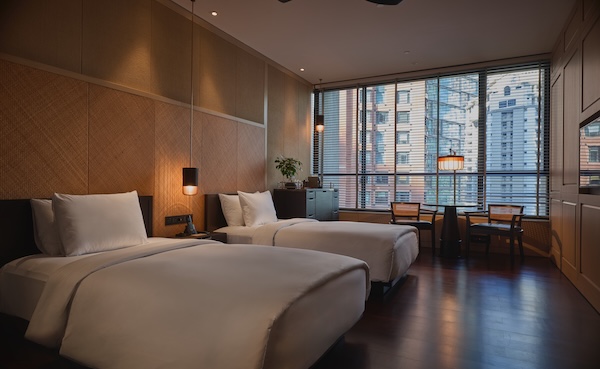
From the hotel's 253-room stable, you have stays ranging from a 43-square-metre deluxe accommodation to expansive multi-room suites; the rooms at The RuMa feel bigger than advertised.
Rooms are equipped with large windows, so you might want to stave off from walking about in the buff if you haven't lowered the blackout roller blind. That includes the bathroom. Sure you have a lovely view when you're soaking in the bathtub, but you'll have to account for others being able to look into the bathroom.
If there's a cherry on top of our stay, it is the human element staffed at The RuMa. Service is impeccable. Your name is remembered, and needs are met tout de suite. The concierge desk, in particular, punches above its weight; when we first checked in, the concierge knelt next to us as they patiently went through the form.
How good, how welcoming is The RuMa? We've returned on our own dime. It's a good room in a good part of town, staffed by people who give a damn. The RuMa is a hidden gem, yes. And peeking through the neighbouring columns of glass and steel, The RuMa's brilliance shines ever so brightly.
The RuMa is located at 7, Jalan Kia Peng, Kuala Lumpur, 50450 Kuala Lumpur, Wilayah Persekutuan Kuala Lumpur, Malaysia