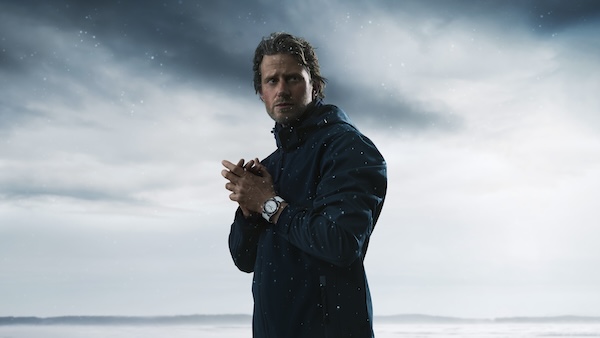
Imagine this. It is June 2019, and you’re attempting to scale Mount Everest for the third time. You’ve reached its peak twice before, but this time, the ascent proved difficult. For one, you decided to take a different trail along the North-East ridge in Tibet, which is considered to be a challenging path. The second is the weather; it is the summer monsoon, where violent snowstorms and thick clouds made the climb impossible.
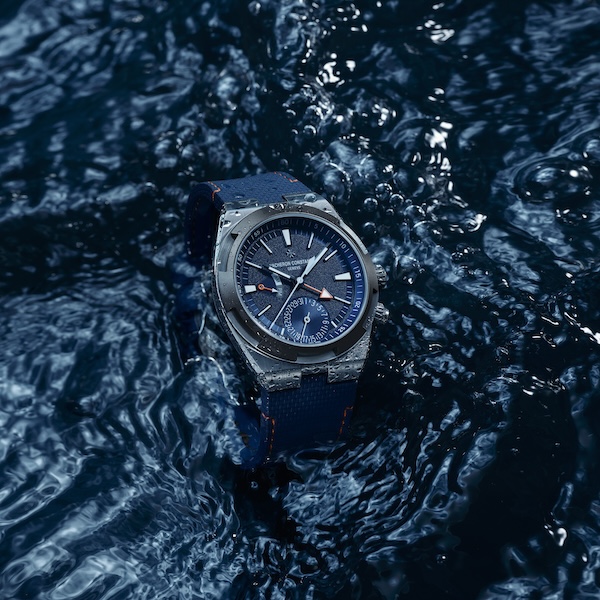
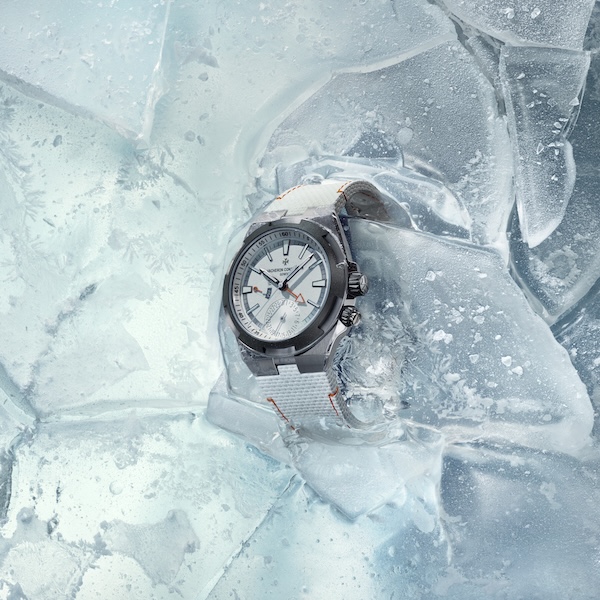
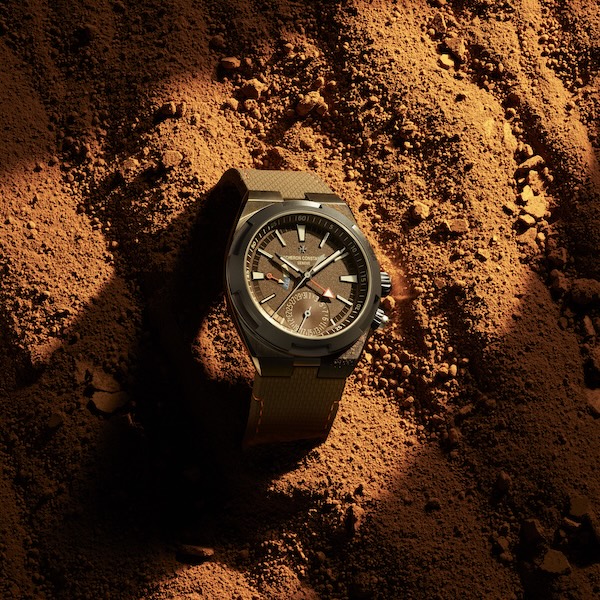
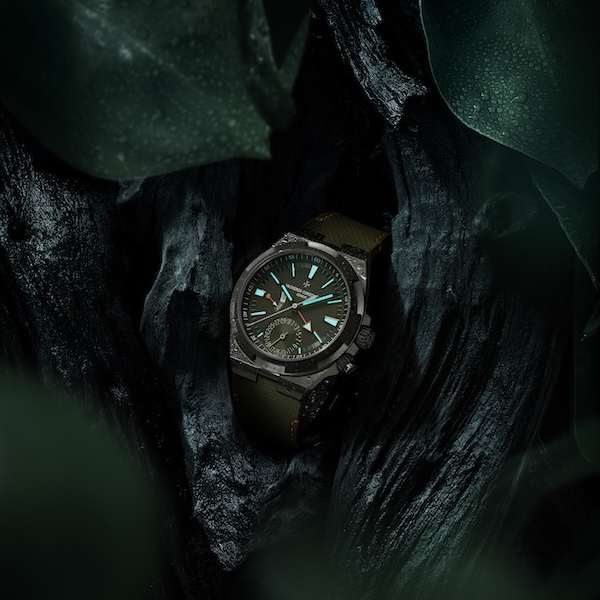
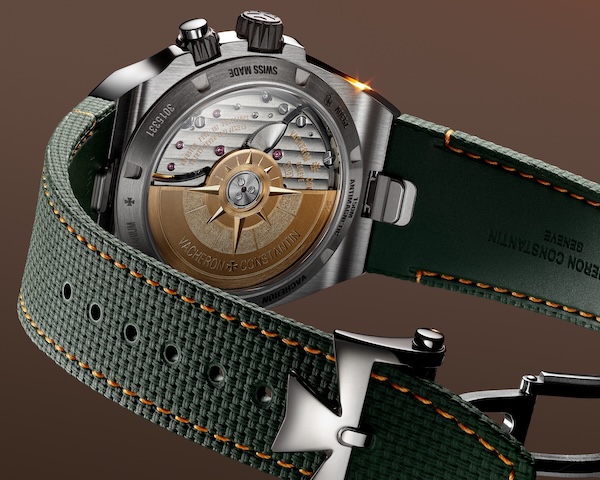
This is what Cory Richards, National Geographic photographer and adventurer, and his climbing partner, Esteban Mena, faced. For this excursion, Richards, who is an ambassador for Vacheron Constantin, worked with the House to develop a watch that is light, robust and able to track two time zones. This was an Overseas Dual-Time prototype watch made out of titanium and tantalum.
Although the worsening conditions would force Richards and Mena to turn back, there were still a silver lining, two, in fact: the Overseas Dual-Time prototype would be auctioned off for USD106,000, with the proceeds going to National Geographic Society, and given the popularity, Vacheron Constantin would inevitably mass produce the model in two variants—the Overseas “Everest” Chronograph ref. 5510V and the Overseas “Everest” Dual Time ref. 7910V.
Richards always had an affinity with the mountains. Because his parents were skiers and climbers, Richards got into mountaineering at age five. He established a new route on the north face of Kwangde Shar in 2009; soloed Lhotse in 2010, with the aid of oxygen tanks; and ascended the central south buttress of Tawoche in Nepal.
In 2011, he climbed Gasherbrum II, making him the first and only American to summit the 8,000-metre peak during the winter season. It was also during the descent that he and his climbing partners were struck by a class 4 avalanche. After freeing himself from the snow, Richards would immediately take a selfie that would be on the cover of an October 2013 issue of National Geographic: his haunted ice-crusted face, a raw moment of Richard’s narrow escape from death.
Richards might have escaped, but the trauma followed, exacerbating current mental health issues that he was still dealing with. It all came to a head in a 2021 expedition on Dhaulagiri, where Richards suffered a bipolar episode, spending days crying in his tent. He gave up mountaineering after that.
These days, Richards is living a slower pace of life. He published his memoir, The Colour of Everything, detailing his battle with several mental afflictions; tours as a public speaker; and a return to his roots in fashion and commercial photography.
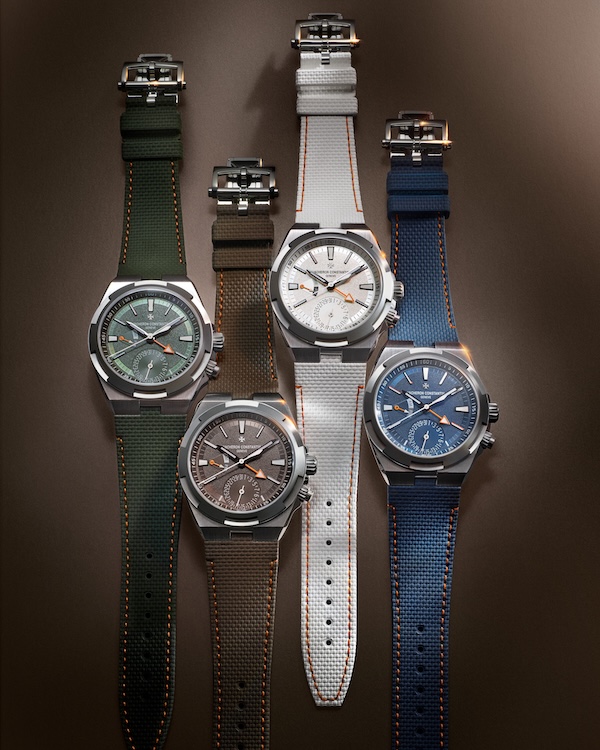
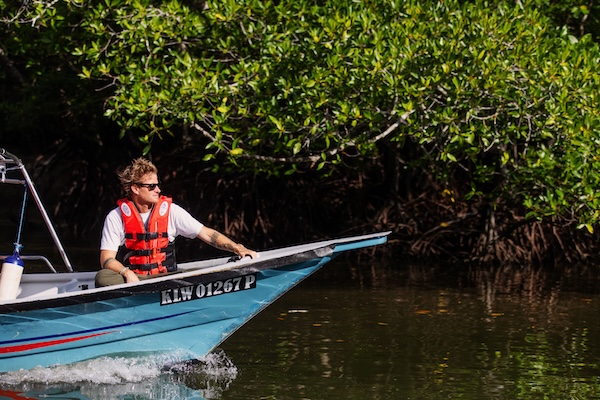
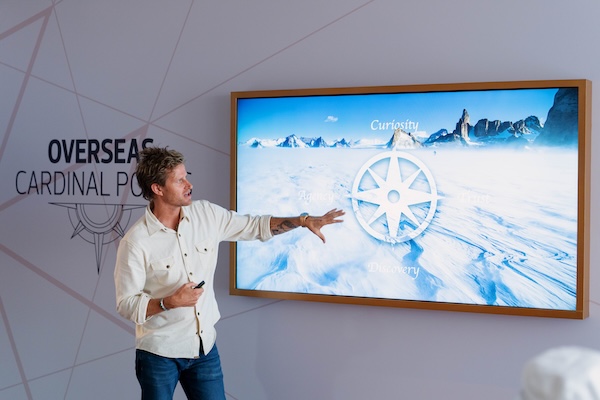
For Vacheron Constantin’s “For All Ways Possible” campaign, Richards travelled to Langkawi for the launch of the Overseas Dual-Time Cardinal Points collection. We talked with Richards over lunch, where the conversation was less about horology and more about living.
ESQUIRE SINGAPORE: In your interview with Alex Honnold, you mentioned that you’re much happier after you gave up on mountaineering and extreme photography. Knowing what you know now, would you have done it differently back then?
CORY RICHARDS: Knowing what I know now, I think I would have taken more time to appreciate what was happening rather than being so deeply invested in the accomplishment of it. Life was so fast then; I didn’t slow down and appreciate how beautiful it really was. That’s not to say that I didn’t appreciate it some sense, but I didn’t give it the full attention that it was really worthy of.
But that’s a lesson that’s as old as time, right? “It’s not the destination, it’s the journey.”
A cliché, I know, but the funny thing is how many people would arrived at that truth?
ESQ: It seems people only come to that conclusion after they have found it.
CR: One of the things that I said [in The Colour of Everything] is, “Only the summit can illuminate its own insignificance”, meaning that you have to get to the end to understand that it never mattered. So, maybe the answer to your question is that I wouldn’t change a damn thing.
ESQ: How difficult was it for you to step away from climbing?
CR: It was difficult only because I had attached an identity to it that was so complete. You see this all the time with professional athletes or soldiers, where an identity is made around what you do. And when you don’t do it any more, there’s nothing to cling to, so you don’t know who you are.
The most challenging aspect was rediscovering or restructuring an identity after that, and decoupling from the statement, “I am this,” or “I am that”. I had to learn that “I am not those things; I do those things”. I have to be careful with the language.
But that’s not to say I won’t go back. I have a lot of aspirations to go back and do it again, but I’d do so with a different perspective.
ESQ: So what are you, if you’re not a climber or an adventurer?
CR: Well, if you really want to get down to it [laughs]. This is a philosophical answer, but it’s the way I really think: on my best days... I am.
ESQ: That’s it?
CR: That’s it. If you just are, that’s the totality of all of it, right? But if you put a gun to my head and ask, “What are you?” I would say I’m an artist. That’s about the only thing that I would feel safe saying. It’s photography, it’s writing, it’s painting... that’s all artistry, you know? That’s the only thing that I would actually feel comfortable saying.
ESQ: What’s your true north in life?
CR: It’s how can I be of service? It’s hard, it’s not completely baked yet. It’s still shifts, but that’s where I would like it to be, you know. To wake up and want to be of service every day.

ESQ: How has your partnership with Vacheron Constantin evolved, if at all, ever since you stopped climbing?
CR: One of the things I knew about Vacheron from the very start is that their concept and their idea of exploration was broader than how the other companies paid lip service to exploration.
Because first it was climbing and photography. Then I walked away from that. Then it was writing a book, right? Vacheron [Constantin] has supported me through many different iterations of myself... which is what exploration is about, if you think about it. That’s somebody continuing to evolve, right? Vacheron [Constantin] has stood by me through all of that.
Very few brands, if any, would stick by somebody on a journey that I’ve gone on over the past 10 years. Very few. Because as soon as your initial utility wears out or changes, then the natural recourse for them is to be like, “Well, we don’t need it any more, because now it doesn’t fit our narrative of what we’re trying to sell aspirationally.” But here’s the thing about Vacheron: I don’t think they were ever trying to be aspirational in an exploitative way. They were just genuinely invested in what would happen and what would happen next.
ESQ: How has adventurous travel shaped your perception of time?
CR: In many ways, time slows when you’re [not adventuring], but it also made me more aware of how special time is, because living somewhat close to that line of travel and exploration makes you aware of your own finitude, your own mortality. How do I fill it up most effectively? After 80-85-90 years, whatever, how do I make life the most fulfilling it can be?
Sometimes people forget that. They get super close, they accomplish something, then they come back, and they’re like, “Look at me, I’m so great,” instead of being like, “Oh wow, this was really special, and things could have gone wrong really quickly.” And then [snaps fingers] time’s up.
ESQ: Do you miss it?
CR: Of course. It was what I knew for so long. I miss the stimulation, but I don’t miss the stress that comes with that sort of work. It was beautiful; I appreciated it, but I hated it because it was stressful. That’s something people don’t understand—that many things can exist all at once. People want a neat, concise answer. They want “Oh, I was so overjoyed,” or, “It was the best thing ever. I was so grateful all the time.” No, man, that’s not how life works. You can love your job of writing, absolutely love it, and still hate an article you’re working on, right?
ESQ: All the time. [laughs] So, how was that conversation with Vacheron Constantin when you decided to quit?
CR: In 2021, I called Laurent [Perves, CEO of Vacheron Constantin] and I said, “Hey man, this is what’s going on. This is what’s happened. This is why I’m leaving.” And he said, “Whatever you decide to do, we’re gonna stick by it.”
That made me feel actually valued. It was a totally unique, amazing experience to have somebody go, “Great. Whatever you decide to do, we’ll stick by it.” That speaks volumes to the brand. It still boggles the mind that that’s how they responded.
ESQ: Do you still take photos?
CR: I love taking photos. I’ve gone back to using film, which is just the coolest. I love the process, the slowness of it all, y’know? It’s just been a joy.
ESQ: What are you shooting?
CR: More fashion stuff. I started my photography career in fashion. I was an assistant for years and years and years. I actually used the money I made to fund my climbing expeditions and take photographs.
ESQ: Who are you working with now?
CR: I’m starting my own materials company, where we take dead stock, waste materials, and weave new yarns and make our own textiles. We have five different technologies (and we are working into a sixth right now. So ideally, ultimately, that becomes, um, you know, we’re releasing, we’re doing blanks. We’re leasing the tech to other people. Uh, so we’re doing collaborations in that way. But we’ll have our own apparel line as part of it. Think of it as workwear adjacent. Uniforms for artists.
ESQ: What is it called?
CR: It’s called Seconds. Like, second chances for materials, second chances for people. We see waste as an economic driver, and many of our employees at our oceanside facility were formerly incarcerated or justice-impacted. Many of them are women.
ESQ: Story seems central to you and how you operate. Is there a particular narrative you want people to take away from your experience?
CR: Storytelling is essential in all that we do. From the moment we wake up until the time we go to bed. Even in our sleep, we tell stories by dreaming. We never take a moment to stop and think, “Is the story I’m telling actually accurate?”
I don’t necessarily want anybody to take away a narrative that I’m trying to spin about myself. I don’t care what people think. What I’m more invested in is asking people to question their own stories, question the narratives.
For example, I could very easily tell a story of abandonment when my parents put me in the hospital when I was 13. Oh, poor me. They abandoned me. They gave up on me. Or my parents were so scared that they didn’t know what else to do except to take me to the last place they figured could help me. Two very different stories, same circumstances.
When I talk about storytelling writ large, I’m asking people to listen critically. Like the story I tell about Everest... that’s the narrative I’ve chosen. Whether people buy it or not is up to them. I’m very conscious of how it’s told, but it doesn’t make it disingenuous. A good story is powerful in a way that it allows people to examine their own [bias] and hopefully change for the better.
ESQ: In your opinion, is there someone out there that is a good storyteller?
CR: I don’t wanna be political, so you can take this off the record or whatever, but the reason [Donald] Trump is so effective is that he tells the easiest story. Think about that for a second. He makes it binary: good, bad; right, wrong; black, white. He reduces the stories into a simple structure so that people don’t have to think for themselves. He is a wildly effective storyteller. He doesn’t know it; it just comes naturally.
ESQ: The theme of Vacheron Constantin’s campaign is about the possibilities in exploration. What’s your advice for those who feel stuck?
CR: First, what I’d say is, for a moment, just be stuck. Stop trying to free yourself; just allow yourself to feel what it’s like in that tension. When you allow yourself to feel that tension, it might become so uncomfortable that you’re thrust into action. But it’s not an exercise to get unstuck. It’s like the principle of boredom. Rather than “I’m bored, let me get my phone,” you sit in that discomfort and try to identify not why you’re stuck, but what you want to do.
I’ve been stuck for years at times. Years. But I think it’s because I was fighting being stuck. Sometimes being stuck is part of the process. If you can zoom out far enough, you can see, like, oh no, this is just part of my process.
ESQ: Are you afraid?
CR: I’m scared all the time. I’m scared of not doing enough, of not being enough, of not having enough impact. To me, fear is not living up to the potential that I think is possible. That comes down to time management, about how I’d manage my time well and use it to the best of my ability within this short window of time that I have.
ESQ: But I assume that would be tricky to mitigate because of your whole “I am” outlook, and therefore, the rush to accomplish something is just-
CR: That’s the thing. It’s very Taoist to not do anything and accomplish everything.
ESQ: The paradox of the teachings.
CR: Right? I mean, and Taoism to me is the most fascinating and most, um, relevant teaching. That’s, that’s the most closely aligned philosophy that I can find to my life.
I mean, talk about a time-laden philosophy that talks very little about time, but it’s all about time and presence and a do-nothing approach to everything. Anyway, I love it. I have [Tao Te Ching by Laozi] next to my bed, and I’d read a verse and try to think about it throughout the day.
ESQ: What’s the last verse you read?
CR: It’s the one about, um, the empty vessel. [Editor’s note: “The Tao is an empty vessel; it is used, but never filled.”] It’s not the glass, but the space that it creates, right? That’s one of my favourites.