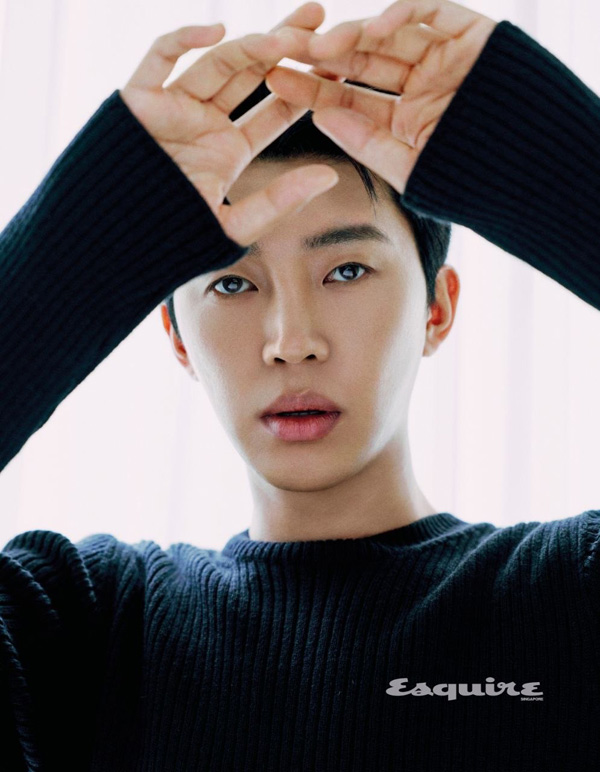
The South Korean scene is flourishing. A veritable landscape of burgeoning movie stars and musicians, with the cream of the crop stubbornly holding on to the upper echelons of the industry. It is a garden, yes, but it is flushed with foliage of all sorts that it would be hard for a bloom to be noticeable.
Lim Young-woong is one such floret that we think would be talked about. Signed with Mulgogi Music in 2016, Lim is a trot singer (trot or ppongjjak is a genre of K-pop that's uses repeating rhythm and vocal inflections), who debuted with "Hate You" and rose to prominence for his appearance in the reality competition show, Mr. Trot. He was also the first trot artist to achieve the Gold Play Button for attaining one million subscribers on his YouTube channel.
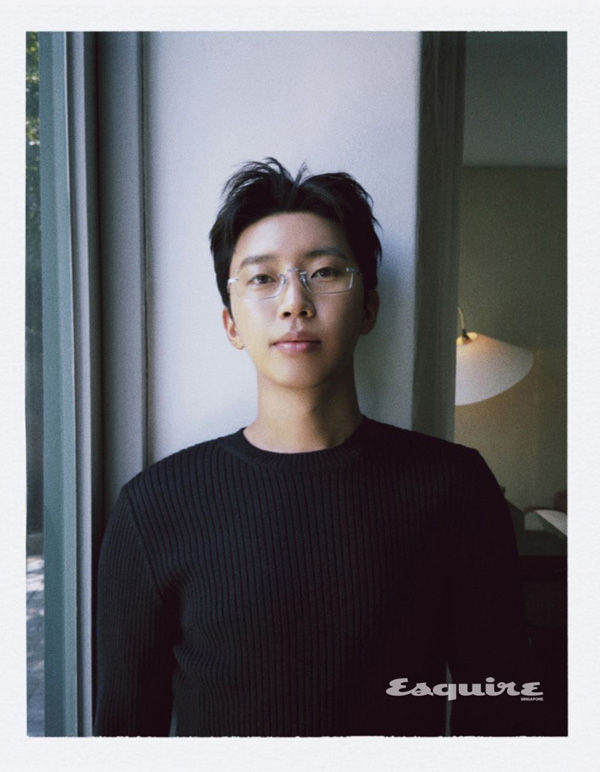
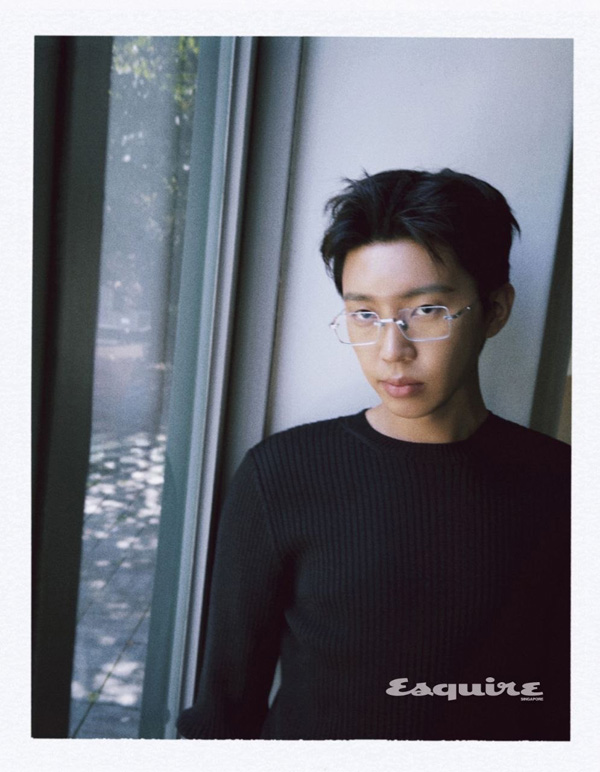
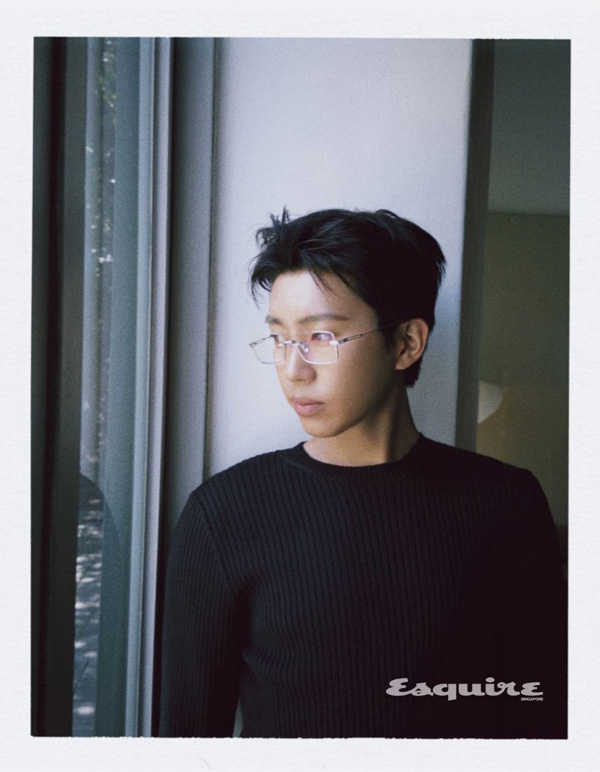
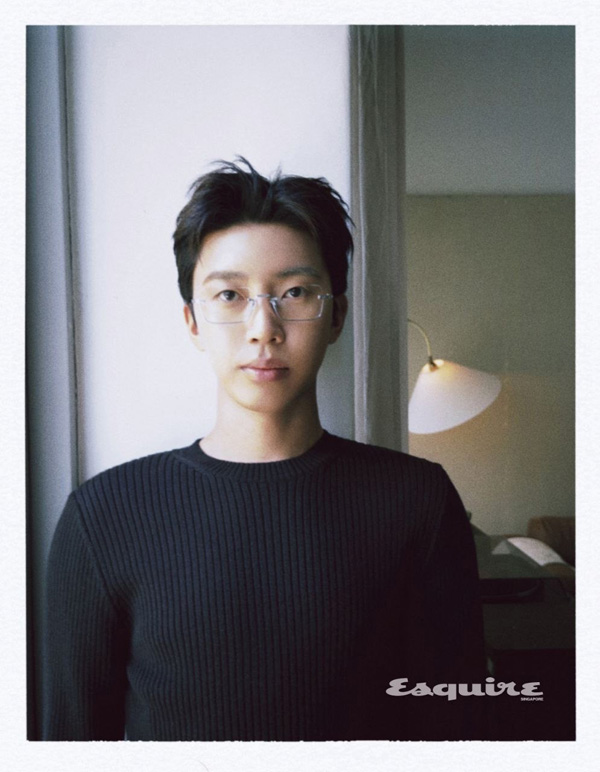
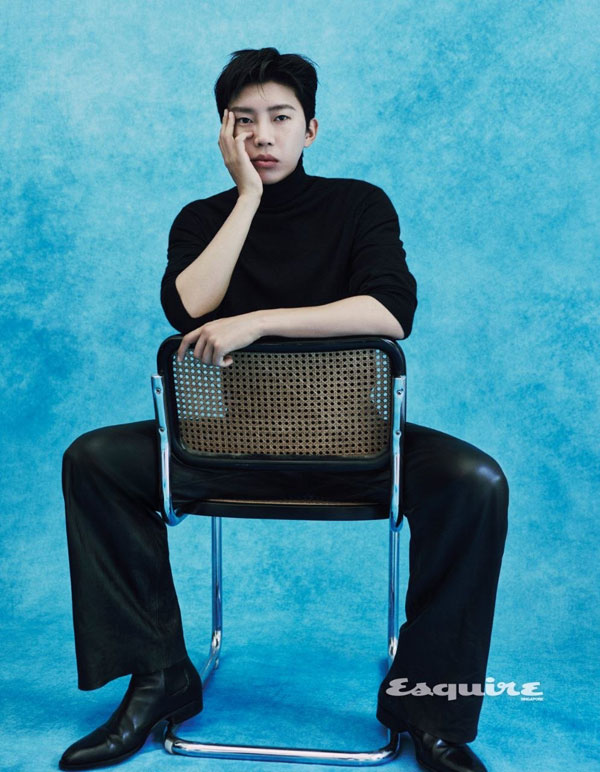
Before Lim achieve his eventual stratospheric position among K-pop royalty, we talk with Lim about his inaugural cover shoot, football and everything in-between.
ESQUIRE: How was today's shoot?
LIM YOUNG-WOONG: It was fun. This was my first time doing a magazine cover shoot, but the editor in charge of the visual direction guided everything so well. All I had to do was follow along—and then before I knew it, the day was over.
ESQ: That editor was very appreciative; they said you were a pleasure from start to finish, and it was close to 10 straight hours of shooting.
LYW: Not at all. It was all thanks to the great direction. I really didn't do anything.
ESQ: It seems to me that the finer details of a person's character really come out in small exchanges like this. It may not seem like much, but you have this way of declining a compliment without making the other person feel dismissed—and even when you demonstrate a sort of humility, it never comes across as excessive or uncomfortable. How do you do that?
LYW: It's not that I consciously tell myself, I should be humble, I should demonstrate good character, or I should be kind, and then act accordingly. I just behave as I am, as I genuinely feel in the moment, and then I think people are generous enough to see it in a positive light. That said, I do think my fans have helped shape who I am. When I do something, and they tell me that I'm "kind," "upright," or "humble," I do find myself acting that way more and more, little by little.
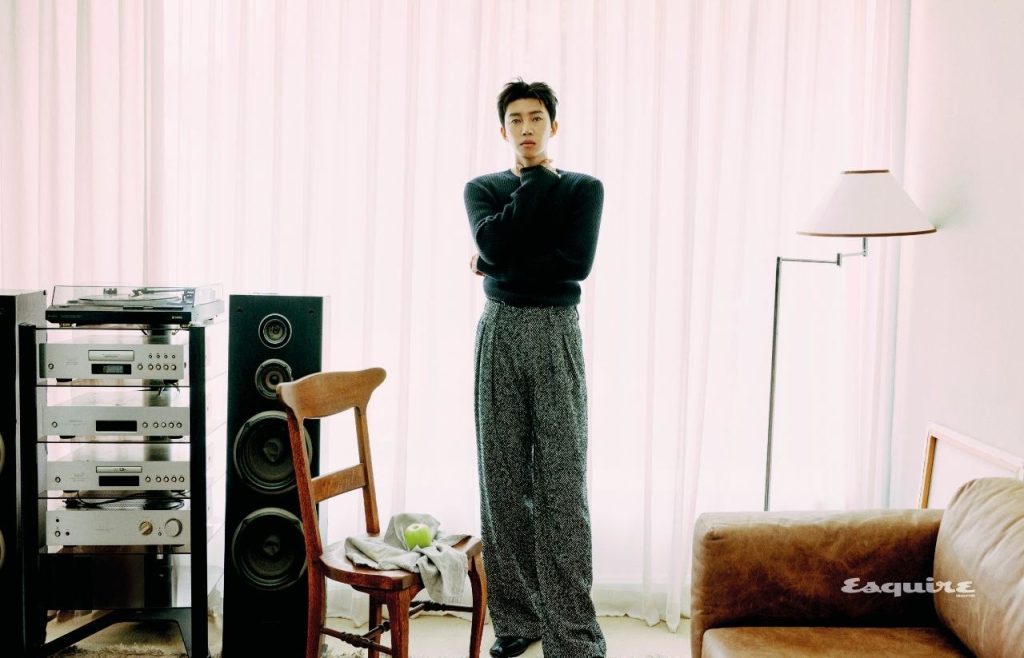
ESQ: So your fans have a real impact.
LYW: Well, my mother certainly did her best to raise me well, to start. But since I started my career, yes, my fans have continued to guide my growth in the right direction.
ESQ: Sometimes I wonder if my sense of self is shaped less by my own "will" but by the reactions of the people around me—would this be something similar?
LYW: I'd say so. Whenever I do something, the response from my fans is very active. And so those reactions, in turn, shape how I behave.
ESQ: That's a really interesting way of putting it. You know, now that I'm actually chatting with you face to face, you seem much more introverted and calm than you do on variety shows.
LYW: That makes sense. I'm a bit shy around people I don't know. When I'm not surrounded by people I'm already close with, I tend to talk a lot less.
ESQ: That's not how you come across in High Valley, Top Hero.
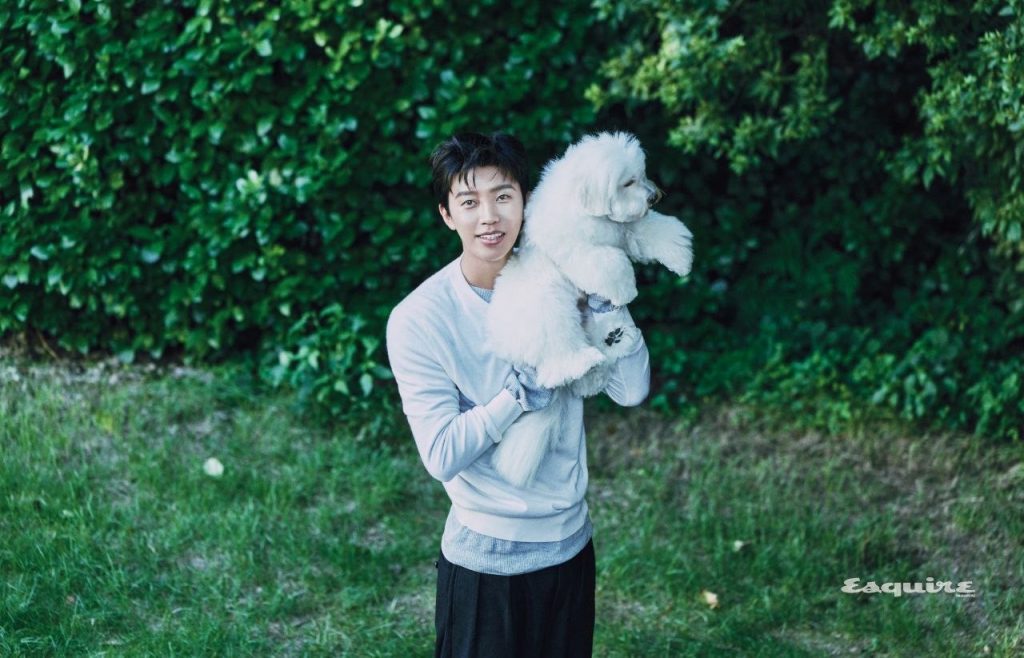
LYW: Doing High Valley, Top Hero is actually hugely outside of my normal comfort zone. It helps that a lot of the folks on the show are already friends of mine in real life; they're people I feel comfortable around. And on top of that, the production team really went out of their way to create an environment where I could feel at ease. It helped to have Siwol there, too. (Note: Siwol, Young-woong's dog, was also present for this day's shoot and interview as well.)
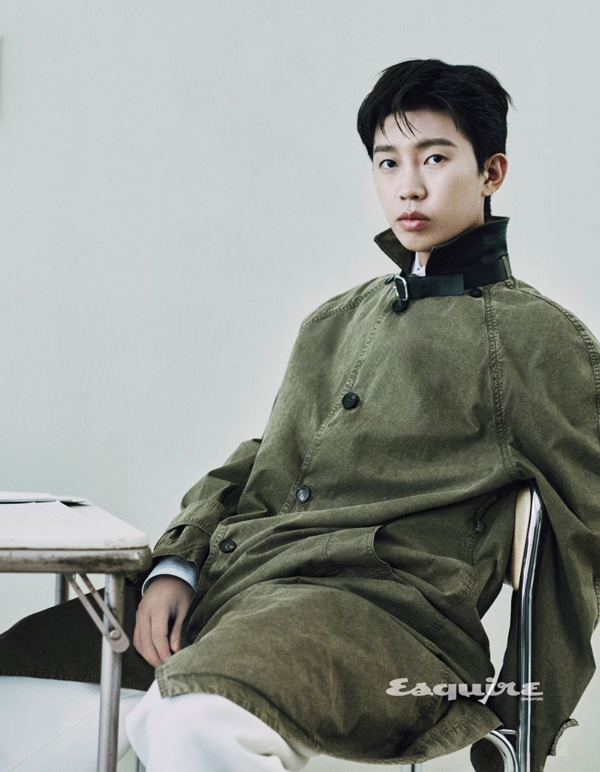
ESQ: Beyond the friends who appear on High Valley, Top Hero, you famously have another circle of close friends, right? Out on the football pitch. In fact, you've graduated from the level of the average football club to running an entire league.
LYW: That's right. I'm the owner of Returns FC, and I also oversee the Korea Amateur League (KA League), which consists of eight amateur teams. Sports have a way of bringing people together—all it takes is one game to start getting close. I'm the same way. You play a game, you grab a beer, and before you know it, voila! You're friends. I'm not introverted at all on the pitch.
ESQ: So football is the way to get to know you.
LYW: Definitely the fastest way. [However] getting into our league isn't exactly easy.
ESQ: How hard are we talking? If you had to compare it to the K League?
LYW: Our team would probably rank around the middle of the K5 League in the Seoul area. Across our league as a whole, the standard ranges from K5 to K6.
ESQ: That's a crazy high standard. Are there specific requirements for joining?
LYW: There are actually quite a few. To start, former professional players are allowed, but only after they've been retired for a certain number of years. There are also age restrictions. We currently don't accept players born after 2000. The league was founded as a league for amateur footballers whose dreams of going professional never came true, so naturally it's centred on people in their 30s and older. We also found that once people in their 20s get in the mix, the balance really starts to break down.
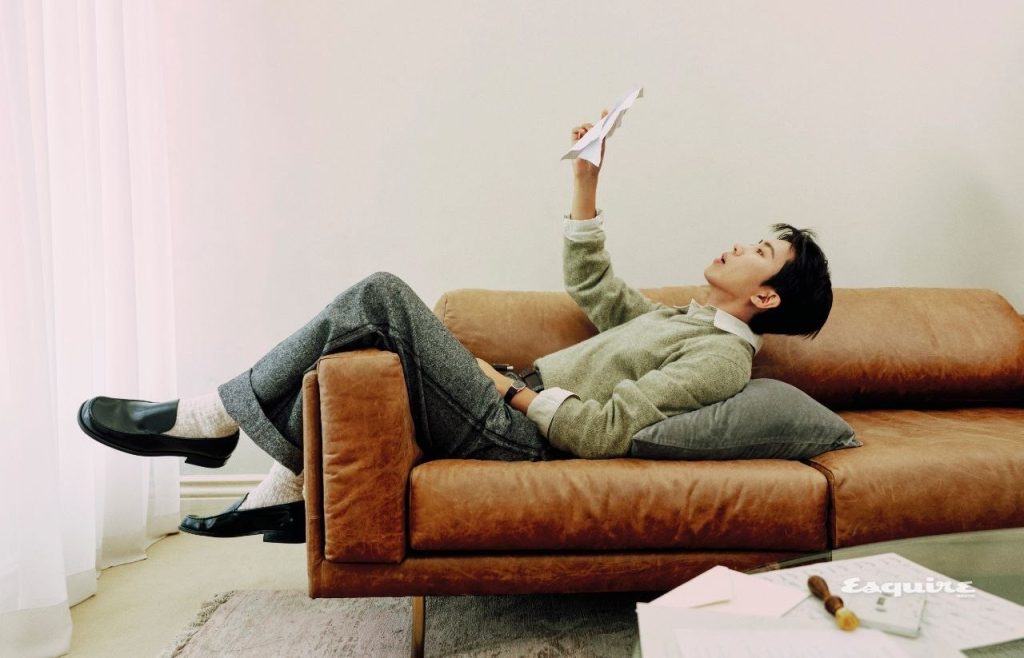
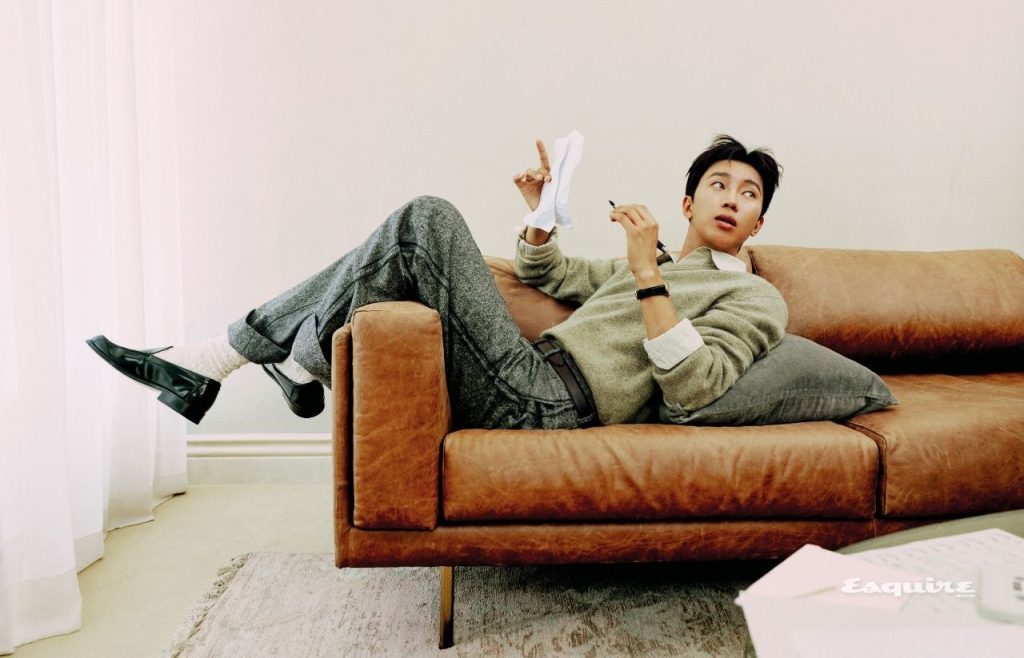
ESQ: Oh man, I can imagine. Twenty-somethings are way too fast. It feels like the matches just wouldn't work.
LYW: Exactly, it changes the game. We considered introducing rules like, "only non-professionals in their 20s are allowed, but players in their 30s can have a professional background," or something along those lines. But ultimately that just seemed unnecessarily complicated.
ESQ: All this football talk has your eyes literally sparkling.
LYW: That's what happens the second anyone mentions football. (laughs)
ESQ: So you've tried other sports, too, but football is still the one?
LYW: I recently took up golf, but at this point nothing's come close to matching the thrill I get from football. And really, in golf, there are far more bad shots than good ones. (laughs) Besides, no matter how perfectly I hit a golf ball or how far it flies, it still can't compare to the feeling of scoring a goal.
ESQ: Yeah, I suppose nothing really beats that feeling. I still remember scoring a goal against the class next door back in high school, just in a pick-up game over lunch.
LYW: That's football. I just think it's amazing, how vividly those moments stay with you, no matter how much time has passed. I can still remember almost every dramatic goal I scored as a kid.
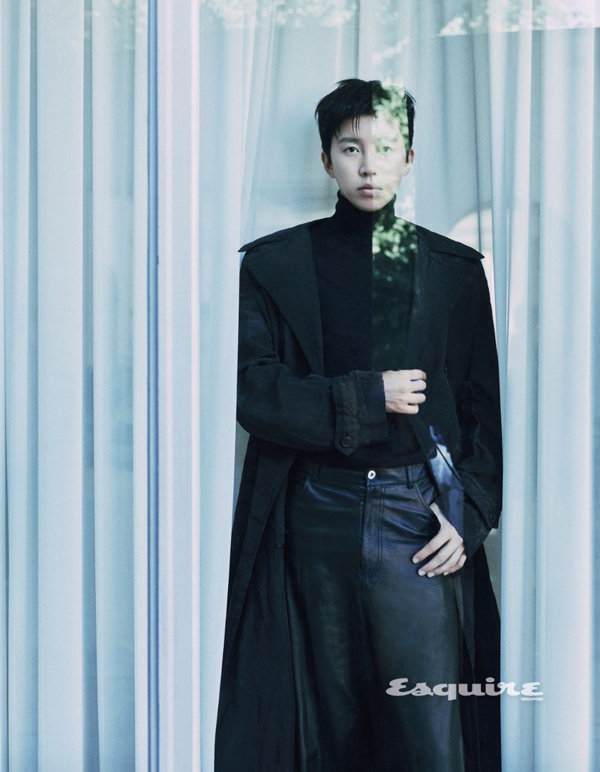
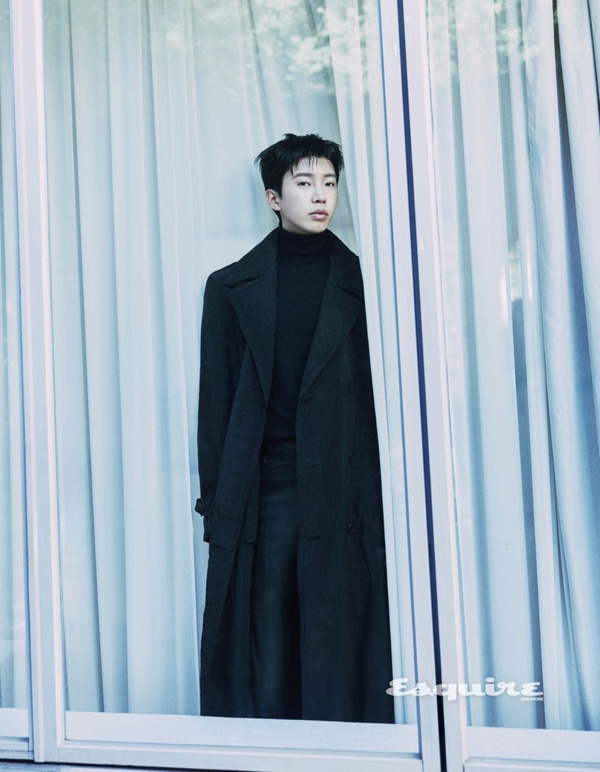
ESQ: You were a youth league player for a while, weren't you?
LYW: Only for about a year in elementary school. I've heard there's this rumour going around that I have a competitive football background, but honestly, around here, a single year in elementary school doesn't really count at all. For all practical purposes, I'm just an ordinary amateur.
ESQ: I saw you play on The Gentlemen's League (Let's Play Soccer, JTBC) the other day. You were genuinely impressive!
LYW: That's because the production team was kind enough to edit together all the moments where I actually played well.
ESQ: See? This is exactly the gracious humility I was talking about earlier.
LYW: Oh, this isn't humility. They really only used the clips where I looked good.
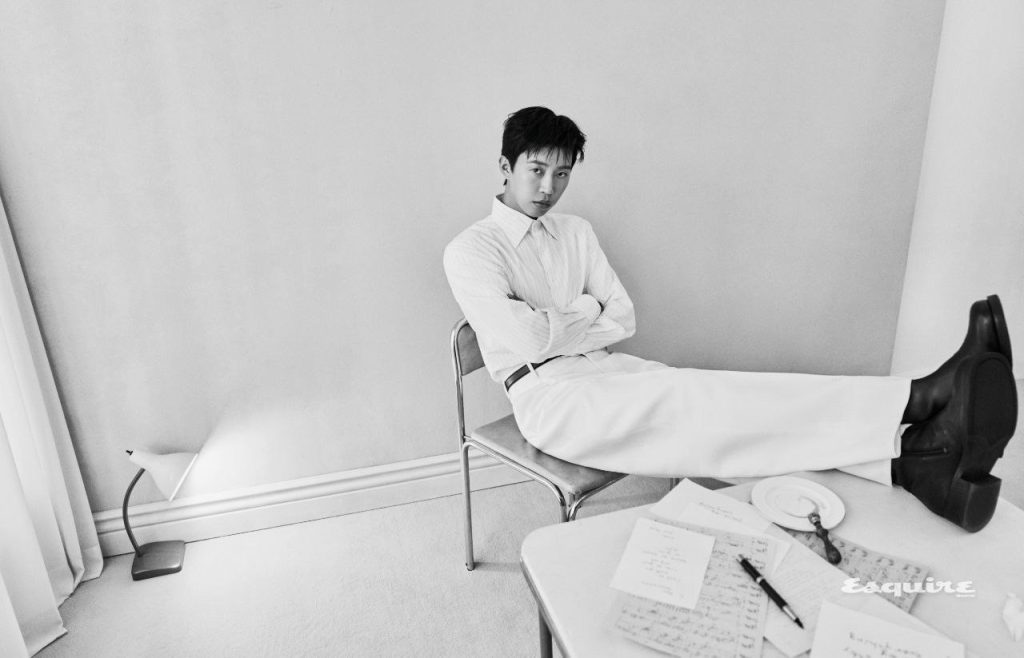
ESQ: I don't think I've ever spent this long talking about football in an interview with a singer, but let me ask you one last question. If you'd stayed with football after elementary school, how far do you honestly think you could have gone?
LYW: I sincerely believe that if I'd kept playing, I'd be on the national team today.
ESQ: Whoa! In what position?
LYW: Probably where Lee Kang-in plays, I would think? He moves between winger and midfielder depending on the situation, and those are the positions I play as well. To be honest, when I was younger, I always preferred playing in Lionel Messi's position. If I'd pursued football seriously, I think I would have been heavily influenced by the way Messi plays.
ESQ: You love football so much—why did you give it up?
LYW: I was much more introverted than I am now, back in elementary school, so I gave up pretty early on. Oddly enough, it was after I stopped playing that I found a bit more confidence. I'd had just enough training that I would really stand out, any time I played with ordinary people. It's ironic, but I only became confident about my football after I'd quit. When you're surrounded by kids who are all excellent, it's hard to shine.
ESQ: We'll come back to this later, but I've always felt that some of your performances are quite literally perfect, right down to the placement of every pause. I wonder if that musical precision is, in some way, connected to your introverted nature.
LYW: [The introversion means] I do tend to speak less, and I spend a lot of time thinking. I imagine these things have probably helped me make better music.
ESQ: I've heard that introverts are more likely to have perfectionist tendencies.
LYW: I don't know if I'd call it perfectionism exactly, but I do tend to think things through very carefully before taking action. And now that I think about it, I suppose I do try to make things as close to perfect as I can.
ESQ: So even in rehearsal, you're trying to perfect every pause, every breath?
LYW: Well, I never think about those things when I'm actually performing. That's what all the rehearsing is for—to make the real thing come out naturally. Once I'm on stage, my focus is on communicating with the audience, not on how I'm singing. By that point, the technical aspects have all been thought through and practised until they're second nature.
ESQ: As someone who's followed your career since your debut, I have this impression that the way you sing has changed over the years. Your voice feels more relaxed and supple now, more... lovely, even.
LYW: You're right. Up through Mr. Trot (TV Chosun), I sang in a much heavier way. My sole focus was on communicating with the audience. At least in my own opinion, if you want to communicate effectively, you need to sing primarily with your chest voice. When we speak normally, we don't use our head voice, right? Nor do we consciously speak using diaphragmatic breathing. We just talk in our natural register—and that ordinary speaking voice resonates in the chest. So back then, even when I was hitting high notes, I relied mainly on my chest voice. Compared to head voice, it naturally has a heavier quality. After that, though, as I continued developing my sound and exploring different genres, I started thinking, Why not cultivate a prettier, lighter sound as well? So I began working on my head voice. That's probably why you thought you noticed a change. These days, I mix a lot of different techniques together.
ESQ: It was a song called "Grain of Sand". Your voice on that song was just so lovely. And then on "London Boy", it has this wonderfully open quality, whereas on "Warmth", it's much deeper.
LYW: "Grain of Sand" is exactly the kind of song I was talking about. In the past, I probably would have sung it with a heavier placement, but for the sake of the song as a whole, I chose to use a lighter register instead—softer, more delicate.
ESQ: You sang with that kind of voice recently on High Valley, Top Hero too, when you covered Sung Si-kyung. It honestly startled me. I had no idea you were capable of such a light, lyrical tone. It's almost like you can do any voice you choose.
LYW: No, I wouldn't go that far. I just thought it might be nice to show my fans a side of me they hadn't really seen before, so I went ahead and let it out on the show.
ESQ: Not only do you sing across all these different genres and vocal styles, but you also write an incredible range of music yourself. The proportion of your own compositions seems to be growing by the day. When you write a song, what usually comes first: the melody or the lyrics?
LYW: It's very case by case. Sometimes I start with the melody. Other times I'll build the track first and write the melody over it. And sometimes I write the lyrics first and shape everything else around that. I don't really limit myself by genre. I've loved all kinds of music since I was young. Whatever I'm listening to and influenced by in the moment, I just try to reinterpret it in my own way.
ESQ: What instruments do you use when you work?
LYW: I'm not really much of an instrumentalist. When I'm writing, I just sort of plink away on the piano. I know the basic chords, so I can work out a song with those. I usually write the main melody first, and once I want to add more detail or give it a bit more character, that's when I start working with other composers.
ESQ: I'm curious about your lyric-writing routine as well.
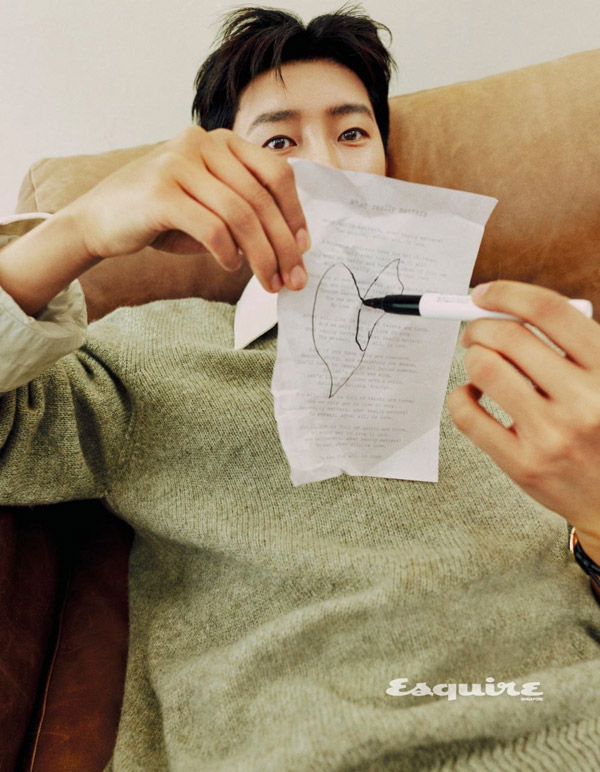
LYW: I actually have developed a bit of a routine lately. I get up early, go to a café, read for a while first, and try to settle my mind into a peaceful state—and then I start writing. If you go early enough, there are hardly any people around.
ESQ: I get it. I've heard a lot of creative people absolutely have to protect that kind of time alone, without any external stimulation. And apparently neuroscientists say that creativity really flourishes when we're not actively doing anything. Which is why so many people say their best ideas come to them in the shower.
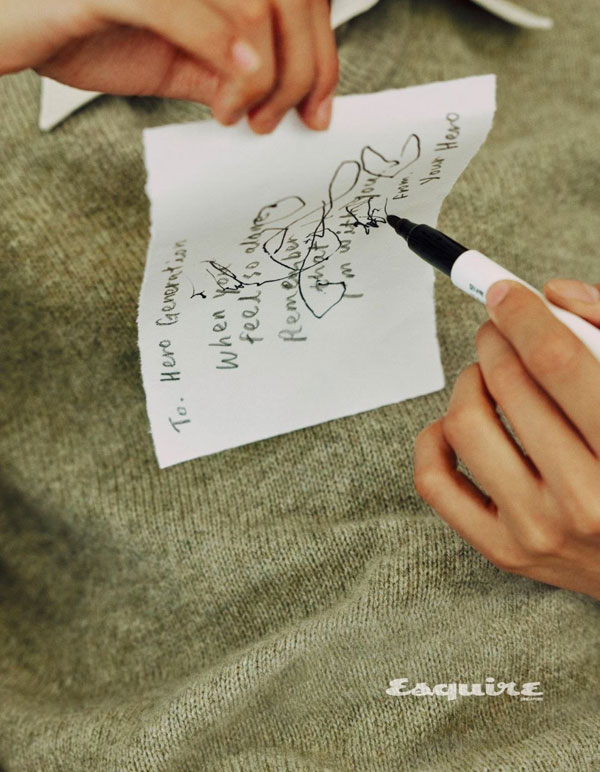
LYW: I'm the same way. There have been so many times when a melody suddenly came to me in the shower, or a line just appeared out of nowhere. Sometimes, if inspiration strikes while I'm showering in the evening, I'll just scribble it down somewhere and then sort through it properly the next morning.
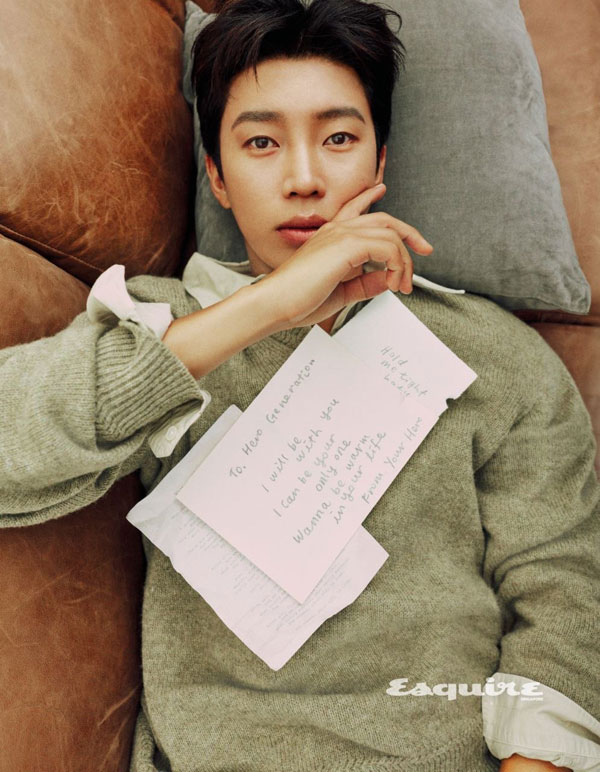
ESQ: Do you keep a notebook by your bed, by any chance?
LYW: I do! When I'm working on a song, I always have two or three notebooks scattered around. One might be by my bed, another on the sofa. You never know when a lyric might come to you, so I try to be prepared.
ESQ: I've heard some songwriters will wake up in the middle of the night and record a melody so they don't forget it.
LYW: I do that, too. Whenever I'm in the middle of writing, my voice memo app fills up with melodies I recorded in the middle of the night. Because sometimes a melody will come to me in a dream, so I'll wake up, still half asleep, and record it. Usually when I wake up in the morning, I don't even remember doing it. And most of the time, when I actually listen back, it's pretty unusable.
ESQ: Still, every now and then it does turn into something real.
LYW: You end up tinkering with them, trying different things, and before you know it, you've got a song. I remember once a melody came to me and I thought, "This one's solid, I'll be sure to remember it and record it tomorrow." But when tomorrow came around, I couldn't remember a single note. Ever since then, I've made a point of recording every melody or lyric that crosses my mind, no matter when it happens, even if it means waking up in the middle of the night to do it.
ESQ: In a contemporary art context, we could consider those recordings an archive of Lim Young-woong's unconscious. (laughs)
LYW: (Laughs.) I suppose you could put it that way.
ESQ: What have you been working on lately?
LYW: I'm working on some new songs that will be released soon. I've written about four of them so far.
ESQ: As I went through your entire discography recently, I was really struck by its range. In terms of genre alone, you've done everything from the ballad "If We Ever Meet Again", written with Lee Juck, to the honky-tonk country song "I'm HERO"—definitely a style we don't often see in Korea—to the straight-up hip-hop track "Since I Sent the Reply". It's incredibly diverse. Is there a style you'd like to explore on your next album?
LYW: Not necessarily on the next album specifically, but looking ahead, I'd really like to try jazz. I love jazz.
ESQ: Oh! I remember thinking the same thing when you covered Lee Jung-sun's "Lonely People". It suited you so well.
LYW: I love that kind of music, but I've never really attempted it on one of my own albums. It's something I'd like to do someday, but as we all know, jazz is difficult. People say there's no such thing as an easy genre, of course—but jazz is one of those genres where I do feel the need for much deeper study before I could really take it on.
ESQ: I still remember the first time I heard "If We Ever Meet Again", the song Lee Juck gave you. To be honest, I remember thinking it sounded even more like Lee Juck than hearing Lee Juck sing it himself. The phrasing, the breathing, the dynamics—it was a quintessential Lee Juck ballad.
LYW: He was incredibly meticulous with his direction. And building on that, I kept rerecording it over and over until we got it right. I really learnt a lot from working on that song.
ESQ: I hear the two of you get together fairly often.
LYW: I don't know about "often". We do get together for a drink every now and then, and when we do, we end up talking about music for hours. I really enjoy learning from musicians who are more experienced than I am, and every time I see Lee Juck, I really do learn something new, musically speaking.
ESQ: We touched on routines a little earlier; a lot of artists seem to have them. Besides going to a café every morning, do you have any other routines?
LYW: I wouldn't really call it a routine, maybe just more of a habit—but whenever I get hooked on a particular food, I'll eat it almost every day for a while. If it's seolleongtang, for example, I'll have it for lunch every day for a month or two. Then I'll move on to sundae-guk, then galbitang, and so on.
ESQ: Oh! I know exactly what you mean. I'm like that, too.
LYW: Yeah. Essentially, if something tastes better to me than anything else in a given moment, I don't want to waste time forcing myself to come up with something else to eat.
ESQ: Some people are like that with clothes, too. They'll buy several versions of the same outfit and just rotate through them, so they never have to think about what to wear.
LYW: I'm a bit like that as well. I have certain outfits for dressing up, certain ones for going out casually, and certain ones for everyday wear.
ESQ: So what food are you hooked on right now?
LYW: Lately it's been butter chicken curry. Unless the people I'm working with are craving something else, we usually end up going out for butter chicken curry for lunch. (Laughs.)
ESQ: Songs like "Warmth", "Heavenly Ever After", and "Grain of Sand" have all made the Billboard Global Excl. US chart. And in 2023. You played the Dolby Theatre in Los Angeles.
LYW: It was surreal. I could hardly even believe I was performing in a place like that, and then before I knew it, the whole thing was over. It was still incredible, though. Some of the people in the audience had completely forgotten how to speak Korean, and others had been born and raised overseas and never learned Korean in the first place. Yet somehow they all knew who I was, and they were so genuinely happy to see me.
ESQ: I'm a big (American) pop music fan myself, but whenever I hear you sing "Purple Postcard", I find myself welling up. There must be something in that sound that speaks directly to the Korean heart.
LYW: I think so, too. I do feel that there's a kind of shared emotional sensibility embedded in genres like trot and the Korean ballad. No matter what kind of music someone usually listens to, there are certain melodies and registers that resonate with Koreans on a very deep level.
ESQ: The phrase "geon-haeng" (meaning "health and happiness") has become something of your signature. To me, it feels less like a catchphrase than a way of life you seem to share with your fans. Health and happiness. If you had to add one more value to those two, what would it be?
LYW: It's such an obvious, cliché answer, but... love. I really mean that. It's something I always say at my concerts: Never stop loving. And I always tell my fans that I love them, too. Love is something we should always practise.
ESQ: Beautifully put. Being loved is wonderful, of course, but there's a true happiness in loving someone yourself. No matter how hard life gets, financially or physically, if you have someone to love, you can find the strength to keep going.
LYW: I feel that even more strongly since Siwol came into my life. Of course, I was always urging my fans to love, and not to be afraid to express that love, long before Siwol came along. But then one day, as I was saying the words, it suddenly occurred to me:
Am I actually loving this way in my everyday life? Then I met Siwol. Loving Siwol and expressing that love every day genuinely changed my life. So these days, I make a conscious commitment to try and give love actively, every moment.
ESQ: Maybe that's actually the role you play for so many people. For fans who are struggling with the challenges of real life, the act of loving you might be a source of healing in itself.
LYW: To be that kind of presence in someone's life—I would be deeply grateful.
Fashion Editor: Lee Jinsoo
Editor: Park Sueun
Photography: Kim Heejune
Styling: Lee Hyeyoung
Hair: Lee Iljung
Makeup: Ahn Sunghee
Set Styling: Lee Nakyung
Art Designer: Kim Daesup
Assistants: Kim Jihyo, Han Dawon and Park Hyunji
Animation: Joan Tai
Translation: Maya West