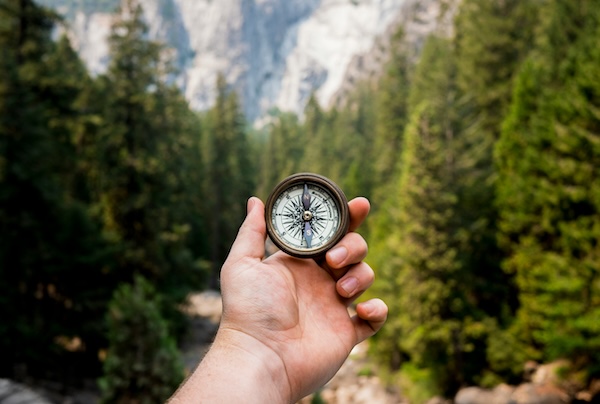
When I say “wander”, it’s not the GPS-plotted, itinerary-laminated, travel-influencer version of it. I’m referring to the rawer impulse that precedes the booking confirmation. Watch it surface in the unlikeliest places: a commuter on an MRT platform staring not at the arrival board but through it, eyes somewhere between a surprisingly enjoyable holiday and a fever dream.
Or, a soon-to-be traveller peeling stickers off a suitcase, rehearsing departure plans in a living room that smells like yesterday’s dinner. Wander announces itself long before the first stamp hits the passport. It is desire in its most geographically restless form, leaning irresistibly toward something unnamed. Of travel, as the issue’s theme insists, expands the heart.
But it is worth pausing on the mechanics of its implied expansion—freedom.
Minds broadened by travel are the easy sell. History lessons in ruins, empathy in foreign faces, perspective recalibrated by altitude. Heart expansion is messier. It requires disorientation, the particular vertigo of losing one’s coordinates. Cultural, emotional, linguistic. After which, one might find a new footing or lose it. Observe seasoned wanderers: they do not return identical, merely well-stamped. Something structural shifts,
Capacity increases, like a lung trained by altitude, able to hold more breath in ordinary air. Wander does not just take people places; it enlarges the vessel that holds experience. Anthropologists trace the impulse deep. Homo sapiens spread across continents not because conditions alone forced migration, but because curiosity compelled it. Wandering as an evolutionary advantage, our species is willing to crest an unfamiliar ridge simply to see the other side. That ancient circuitry persists.
Airport terminals are, in this reading, temples to a 200,000-year-old itch.
Watch departure halls at any hour: the particular hush of pre-boarding, strangers falling into a shared reverence. Shoes shuffling forward in a pilgrim cadence. Routine, mechanical, even, but it is the species honouring an old compulsion with luggage tags and boarding passes instead. The paradox of wander is that it often delivers not the foreign but the familiar revealed from the outside. Travellers in Marrakech’s souks, overwhelmed by spice clouds and bartered Arabic, suddenly find themselves thinking of their grandmother’s kitchen, the specific clatter of a Sunday meal.
Distance from home creates the precise emotional gap through which home becomes legible. Its textures, its silences, its particular warmth tell a story that we sometimes didn’t want told. Psychologists call it the “destination paradox”: the further one roams, the sharper the outlines of the place one left. The heart does not expand by forgetting home but by understanding it more fully from elsewhere.
Vignettes catch it best. A solo traveller in a Lisbon tascaat midnight, surrounded by fado’s blue ache, ordering food by pointing and hoping (this uncertainty itself is a kind of freedom). A group of strangers sharing a delayed overnight bus through Romanian winter, languages collapsing into gesture and shared chocolate. Children at a Bali beach who have never met negotiate rules for a game with no common tongue, improvising fluently. None of these moments was scheduled.
The detour becomes the story. The wrong turn that unveils the real street. This is where wander subverts the travel-as-consumption model. Curated itineraries optimise for highlights, maximising landmarks per day, and reducing cities to Foursquare checklists. Yet the pulse of a place beats not in its famous squares but in its 6am markets, its Sunday parks, its barbershops.
Wander demands slowness: be willing to sit in a plaza for an unreasonable amount of time doing nothing productive, to let a city’s rhythm enter and attune the body. Mono no aware, the Japanese sensitivity to transience, applies here: the awareness that this moment, where this particular light, this particular stranger’s laugh, will not repeat. Wander trains that awareness. It elevates the mundane street corner into something worth pausing for. Contrast illuminates the stakes.
Their body in Santorini, attention in a work inbox, eyes framing every meal for an upload rather than tasting it. The coordinates shift, but the inner geography remains the same. Wander requires a kind of surrender the hyperconnected world resists: the willingness to be unreachable, untethered, briefly unoptimised. Carl Jung’s shadow concept offers a lens through which travel often surfaces as the disowned aspects of self that routine successfully suppresses. Removed from role and routine, people discover appetites, convictions, and tendencies that home kept dormant.
Wander holds up a foreign mirror, and the reflection is sometimes startling, often clarifying, occasionally unwelcome. Adventure, then, is not the drama of the destination but the self encountered en route. The border pushed is not always a national one. It is the internal threshold between who one performs daily to and who one quietly is beneath it.
Wander creates the conditions for that reckoning. A two-week roam through unfamiliar terrain can surface questions a decade of routine successfully buried: what is actually wanted, what has been tolerated too long, what small freedoms have been quietly surrendered.
Wander is a wonderful spell that we all can cast upon ourselves; the species’ oldest instinct, still thrumming beneath every booking confirmation and boarding call. Blessed are the wrong turns that became right ones, the arrivals that felt like recognition, the expanded heart that returns homes lightly too large for its old container. The adventure is not always in how far one goes. Sometimes itis simply in how honestly one arrives wherever that turns out to be