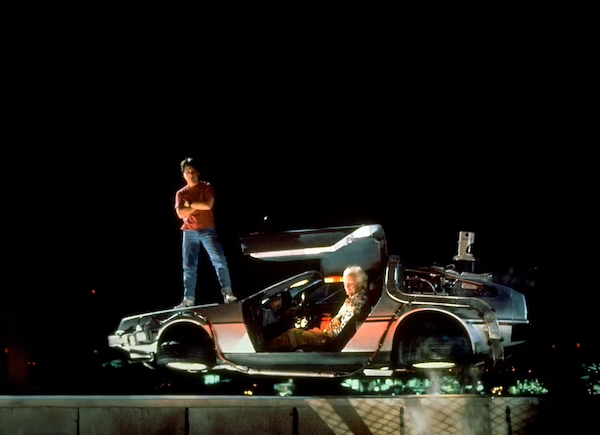
Having conquered music and film, it shouldn’t be a surprise to learn that the 1980s and 90s have now cast their nostalgic spell over cars, too.
Classic models from the era are booming—as design pieces, everyday drivers and bankable investments. Insurance agency Hagerty even tracks the value of cars from this period in a standalone “RADindex”, which hit an all-time high in 2025.
In one sense, this is a natural generational shift. “The things that we had on our wall when we were youngsters… Once we get to a certain age and have a bit of disposable income, suddenly we start driving prices up,” says James Banks, the founder of La Source, which specialises in high-value hypercars and restored classics.
But the sheer cultural might of the late-20th century makes this shift feel more seismic.
“Movies and social media have a very strong influence,” says Ryuzaburo Yamazaki, the auction director at Bingo Sports, Japan’s leading automotive retailer for international enthusiasts and collectors, who is seeing the jump in interest—and prices—first-hand. “It feels like cars are being used as one of the items for realising or expressing the worldview and lifestyle people admired on screen,” he says.
Perhaps it’s no wonder that the DeLorean DMC-12, with its starring role in Back to the Future, is one of last year’s biggest movers, alongside emerging icons such as the Audi Quattro and the Bruno Sacco-designed Mercedes 190. Pioneering Japanese cars like the Honda Acura NSX and Nissan Skyline are also in demand: Bingo Sports recently sold a Toyota Supra for close to £100,000.
If any film hits the current cultural sweet spot, it might be Ronin, John Frankenheimer’s special-ops thriller from 1998, which is now widely heralded for featuring not one but two of cinema’s greatest car chases (shot on film without CGI). It’s the everyday saloons involved—an Audi S8, BMW E34 5 Series, Peugeot 406—that have become stars for a new generation, though Robert De Niro’s leather jacket deserves a mention of its own.
The pared-back aesthetics and basic tech of that era now offer a clear counterpoint to the advanced, heavy, computer-controlled EVs of today. Designer Frank Stephenson—the man behind the Mini Hatch, BMW X5, Ferrari F430, Fiat 500 and McLaren P1—likens the technological contrast between then and now to Nintendo versus Nasa.
“I think cars back then were a lot simpler. They were easier to work on. They weren’t the technological marvels we have today, where not even a mechanic understands the car sometimes,” he says. “We had very distinctive styling… You look back and think, ‘Wow, those cars really did stand out.’”
Stephenson’s Mark 1 BMW X5 is now being reappraised as an SUV that manages to look elegant. He sketched it out on a two-hour flight. “It was almost a niche project. I thought, ‘What the hell am I doing? I’m designing something no one’s going to want’—but, apparently, they do.”
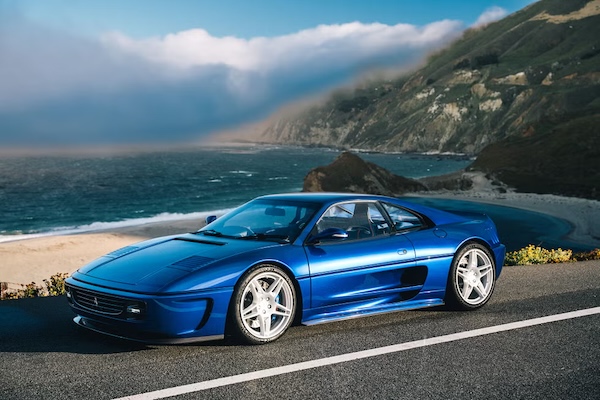
On YouTube and Instagram, accounts celebrating models from these decades continue to grow. “You’ve now got all the advanced driver-assistance systems, which tell you when you’re allowed to change lane. A lot of people just want three pedals, a gear stick, a normally aspirated engine and a very light chassis,” says Banks, who coined the term “peak analogue” to describe a mid-1990s Ferrari F355 restored by Evoluto, one of a growing number of restomod companies bringing classics up to date.
The obvious question is where new cars fit into this retro love-in.
In many ways, it’s like comparing apples and pears. The car industry has always fetishised the future more than the past, and modern cars have to operate within the realities of safety compliance, emissions targets and shifting technologies.
Nostalgia, too, is a trap. “It has positive yearnings for the good old days when things were a little bit easier, more colourful, sexy,” says Stephenson. “But it never felt that way at the time.”
For short-term marketing appeal, one tactic available to carmakers is to play on their back catalogue. The electric Renault 5 is a recent example—a nostalgic idea rendered as a good-looking, affordable and characterful new car.
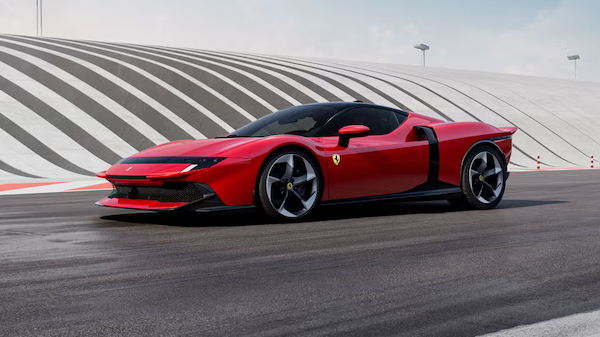
Two more 1980s classics, once found on many a bedroom wall, have been reimagined for the modern age: the Ferrari 849 Testarossa and the Lamborghini Countach LPI 800-4. Both have been divisive, but the Testarossa, with its dramatic wedges, seems to capture a feeling from the past while still looking fresh. For many, the name evokes the Miami Vice aesthetic, though Ferrari has been quick to downplay any retro intention.
BMW is embarking on a complete redefinition of its future—the (second) Neue Klasse era—which will this year include a brand-new i3 saloon. Overall, it’s a decidedly future-facing look, though Kai Langer, the former head of BMW i Design, has referenced the classic E30 (1980s 3 Series) as an influence: three-box proportions, kidney grille, a new take on the famous twin headlights and just a hint of shark nose.
Whether this will be noticeable to the untrained eye remains to be seen. In truth, it probably shouldn’t. Expecting new cars to look like old favourites is part of the problem.
“The whole issue with EVs right now, for me, is that most cars don’t even look like EVs,” says Stephenson, whose design studio is now working on a flying-taxi concept called AutoFlight. “It’s a huge opportunity to make them distinct from combustion cars, but they haven’t gone down that route.”
As the EV era matures, it’s hoped that carmakers will gain the freedom to try designs that appeal to the heart as well as the head. Many admit they’re still working out how.
“I think all brands—particularly performance brands—are trying to find how you create the emotional connection you once had with internal-combustion cars,” says Ben Payne, vice president of design at Lotus, a company that has pivoted from lo-fi simplicity to high-tech EVs. “How do we find the new version of that? Because, for us, it wouldn’t be to replicate the past. We’ve got to find a way to bring that feeling, but expressed in a totally different manner.”
For those that do pull it off? In 40 years’ time, we might be getting nostalgic about them, too.