Seiko turns 145 this year, and the brand is marking the occasion the way it knows best: by making watches that mean something. The four limited-edition pieces curated for this anniversary are drawn from across Seiko's catalogue—a racing chronograph, a dress watch, a GPS solar chronograph, and a vintage revival. Each one varies greatly from the next, but a single thread ties them together: warm gold accents.
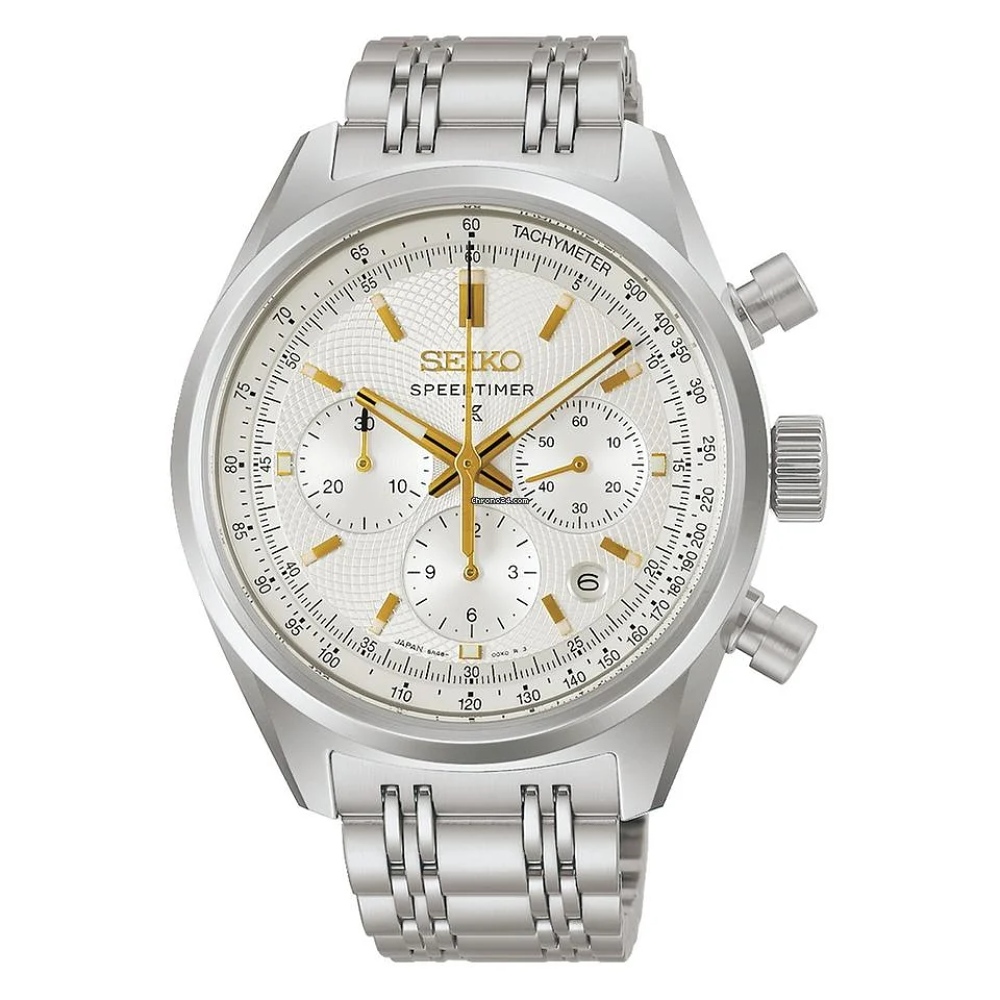
Think of the Prospex as the rugged, adventurous brother of the King Seiko. Also established in the ‘60s, the Speedtimer is a line under the Prospex family that gave the world its first automatic chronograph with a column wheel and vertical clutch. As a result, many of the chronographs we see from Seiko today draw on that heritage—including the limited-edition Speedtimer Mechanical Chronograph 145th Anniversary SRQ059.
Styled as a vintage-leaning racing chronograph with a tachymeter bezel, the watch does away with the usual panda/reverse-panda sub‑dial layout. Instead, it opts for something more considered and classier. The dial and sub-dials are dressed completely in off-white, with gold accents peppered throughout to offset the athleticism expected of a chronograph. The 42mm case reinforces this sensibility, giving it a real heft and presence, while keeping it wearable for many wrists as a daily sports chronograph. The rice bead bracelet make an appearance here too, though on a lesser degree that matches the balance the SRQ059 aims to strike between sporty and classy.
The 30‑minute counter, 12‑hour counter, running seconds, central chronograph seconds, and cheeky date display are all driven by Seiko’s automatic 8R48 calibre, offering around 45 hours of power reserve.
The Seiko Prospex Speedtimer Mechanical Chronograph 145th Anniversary SRQ059 is limited to 700 pieces worldwide, with a retail price of SGD3,634.
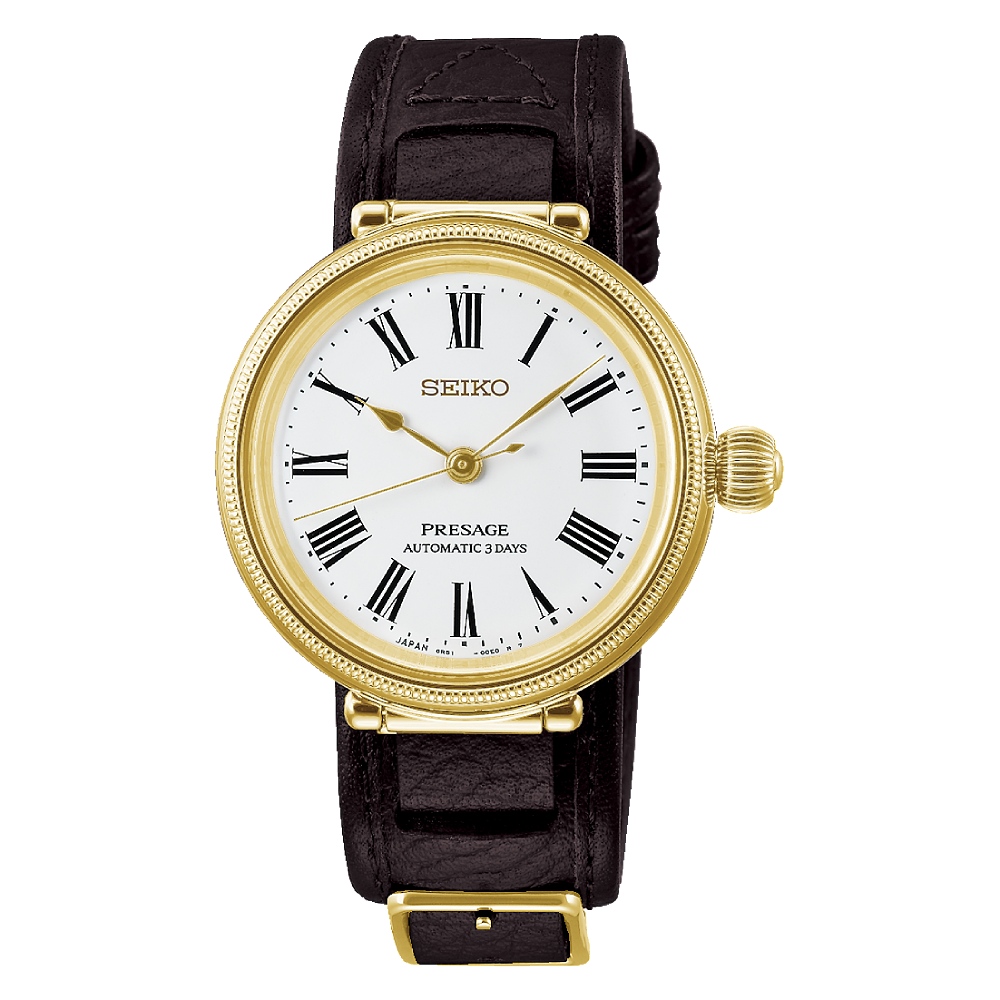
The Presage can be thought of as Seiko’s home for refined dress watches that align most with traditional Japanese aesthetics. It’s natural, then, for the Presage Craftsmanship Series Enamel Dial 145th Anniversary SPB538 to be the most classically presented piece in this quartet—which is saying something considering the historical weight carried by every watch on this list.
The watch takes its cues from two of the most significant watches under Seiko’s catalogue: Seiko’s first-ever watch (the 1895 Timekeeper) and Japan’s first wristwatch (the 1913 Seiko Laurel). It picks and chooses elements from both to form a genuinely antique charm.
For the first time, seconds are displayed centrally rather than on a sub-dial, yielding a cleaner, more legible face. The soft, glossy white enamel dial serves as a canvas for black Roman numerals and gold-coloured leaf-shaped hands to shine. Meanwhile, the onion-style crown and brown pull-through leather strap are design elements lifted straight from Japan’s first wristwatch. Paired with flexible lugs and a 35mm gold-toned stainless-steel case, all of it comes together to echo a classical timepiece—one that sits at an accessible point in the market for true fired‑enamel dials.
The Seiko Presage Craftsmanship Series Enamel Dial 145th Anniversary SPB538 is limited to 9000 pieces worldwide, with a retail price of SGD2,507.
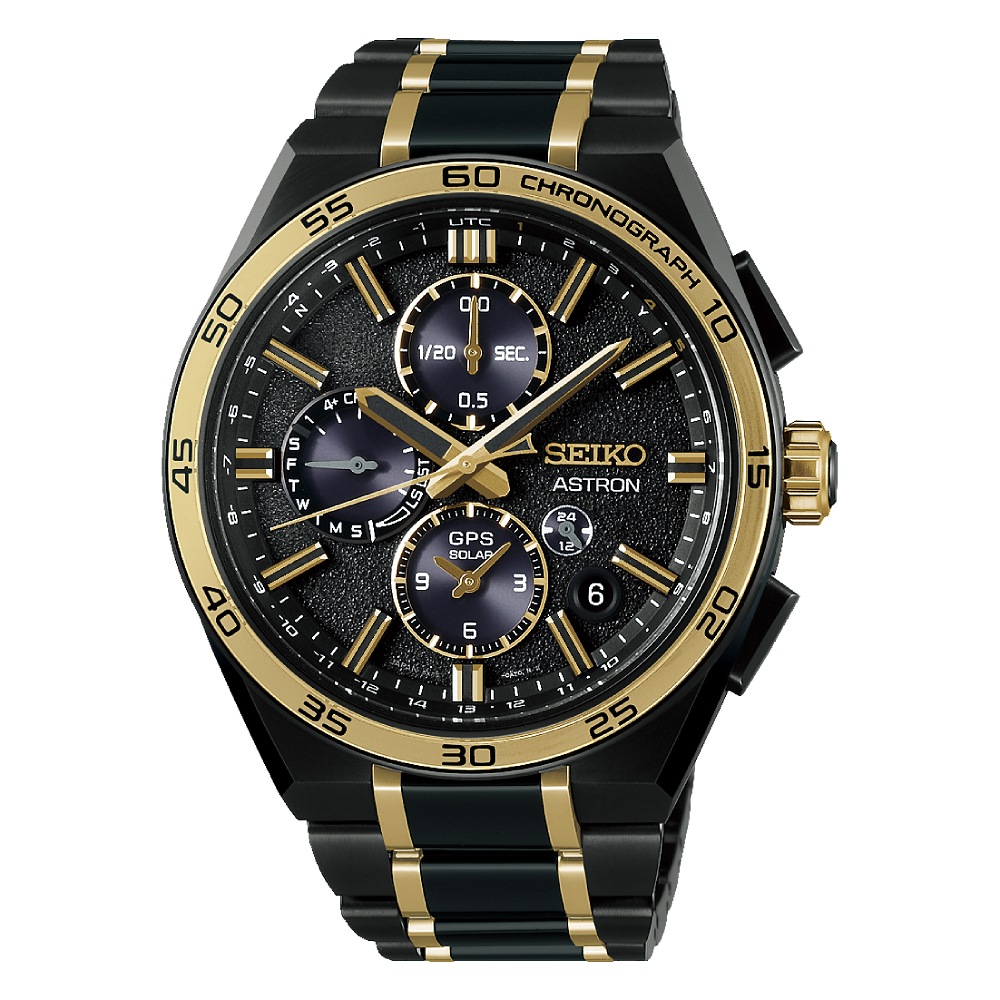
The Seiko Astron is one of the most important watches not just in Seiko’s history, but in watchmaking in general. Introduced in 1969, the Seiko Quartz Astron was the world’s first commercially available quartz wristwatch. Indeed, it launched what many refer to as the Quartz Crisis, disrupting the Swiss-dominated industry almost overnight. In 2012, the name was revived by Seiko to cause yet another disruption: the world’s first solar-powered watch that uses GPS to sync the time anywhere in the world. Users could simply point their watch to the sky to not only receive an updated time zone reading, but also replenish its power source.
The Astron GPS Solar Dual-Time Chronograph 145th Anniversary SSH186 is the latest iteration in this storied collection. Functions are aplenty: a chronograph, world timer, perpetual calendar, and dual-time display are all visible on the sand-textured black dial. Yet, the dial never feels too cluttered—more bold and purposeful, if anything. Sleek, golden lines that show up in markers and hands are clean and confident, striking a poised balance between a tool watch and a dress sport watch. It’s quite impressive that the watch is able to avoid looking like a gadget, considering all the technology housed inside. Though, we suspect the dual hierarchy of gold and black likely has a large part to play in that.
The angular case is constructed of titanium at 44.1mm, but it’ll sit surprisingly well on a range of wrists. The pushers and crown are treated with respect, seamlessly integrated into the case flank—a small detail that goes a long way towards the watch’s sense of refinement.
The Seiko Astron GPS Solar Dual-Time Chronograph 145th Anniversary SSH186 is limited to 1450 pieces worldwide, with a retail price of SGD4,796.
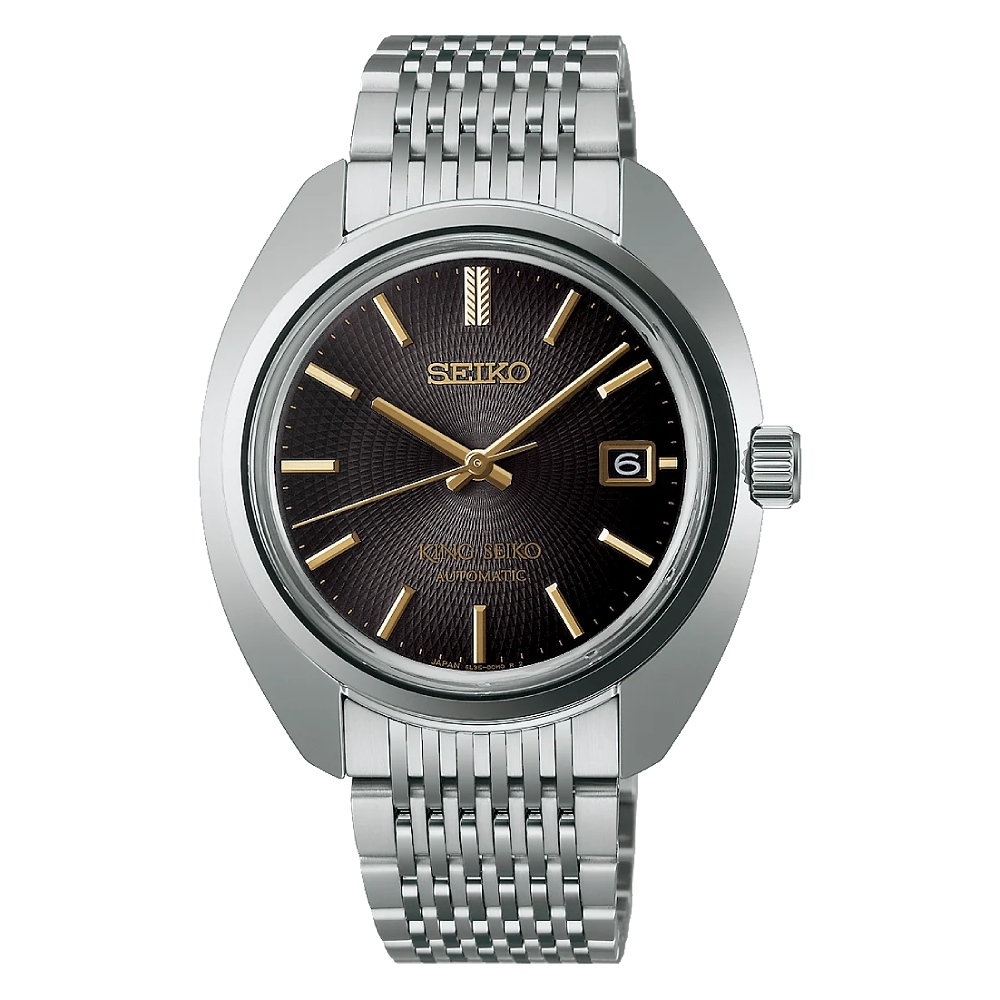
Born in the '60s out of internal competition with Grand Seiko, the King Seiko KS1969 was the result of Seiko's finest engineers collaborating to produce the brand's most accurate watch of its time. The collection slipped into obscurity over the years, before Seiko decided to revive it in 2020.
With a soft case built around gentle curves, the silhouette of the KS1969 could almost be mistaken for a tonneau watch if traced on paper. This softness is supported by the stainless‑steel case measuring 39.4 mm in diameter and 9.9mm thick, giving it a relatively slim, dressy stance on the wrist. Its svelte proportions allow it to sport a box‑shaped sapphire crystal that protrudes slightly above the case, evoking the vintage aesthetic of the era.
Speaking of, the 145th Anniversary Limited Edition SJE121 features a dial heavily inspired by a historical pattern used by Kintaro Hattori (the founder of Seiko) who used to have them engraved on imported pocket watches in the company’s early years. A deep grey gradient that darkens around the edges washes over the dial, giving it visual depth and complexity. This understated mysteriousness is then contrasted by gold-coloured logo, hands, and indices, lending the watch a radiance that quietly announces its elegance.
Perhaps the most satisfying element of the automatic watch, however, lies in its multi‑row steel bracelet with alternating brushed and polished links. It resembles beads of rice arranged neatly in columns—an image which so aptly captures Japanese culture in its orderliness and calm.
No one asked—but if we had to choose, the SJE121 would probably be our pick of the bunch. Much has been said about balance throughout this article—and don't get us wrong, we'd sport every piece on this list if we could in a heartbeat—but no watch here achieves it quite as quietly or as completely as the King Seiko. It carries the spirit of the '60s without resorting to overt retro styling. It honours Japanese culture without being too theatrical. And it manages to feel dressy and understated, yet sporty and approachable. There’s a sense of restraint to the SJE121 that feels increasingly rare, and it’s that quality, more than any single design element, that makes it linger in the mind longer than it should.
The King Seiko KS1969 145th Anniversary Limited Edition SJE121 is limited to 800 pieces worldwide, with a retail price of SGD4,542.
Seiko’s 145th anniversary limited-edition collection is available online, in Seiko Boutiques at Takashimaya, VivoCity and all authorised retailers. Find out more here.