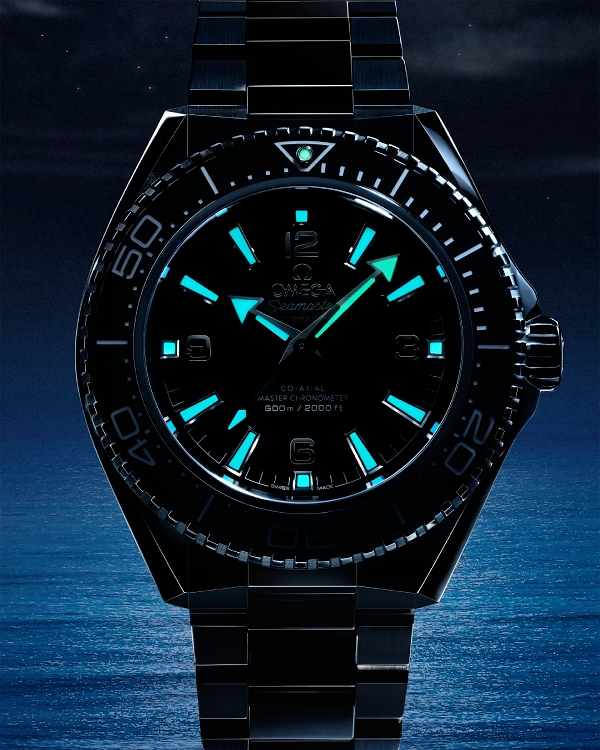
For all the historical richness that comes with being a brand established in 1848, OMEGA doesn’t seem to quite have an “emblematic collection", per se. The Speedmaster is in contention, of course—being the first watch worn on the moon in 1969 by Buzz Aldrin. But what about the Seamaster? It is, after all, the brand’s longest-running collection. With its wave-patterned dial and unidirectional rotating bezel, it’s arguably OMEGA's most recognisable watch. At least to me, as someone who grew up with Daniel Craig’s Bond—it’s undeniably the watch through which I first recognised the brand. And this is me channelling the 10-year-old version of myself, back when the only watches I cared about were orange rubber ones from GAP’s kids’ section.
It’s precisely because of this prominence that the collection has since branched out into smaller sub-collections. One of them is the Planet Ocean—the Seamaster’s more robust child. It’s more technically capable, boasts higher water resistance, and is simply more muscular than your regular Seamaster. Launched just 20 years ago, the Planet Ocean has quickly risen through the ranks of enthusiasts. This is why OMEGA's announcement of its latest revamp is such a big deal. You’d think the brand would build on its existing success by adding more. Instead, the fourth-generation design preaches a simple doctrine:
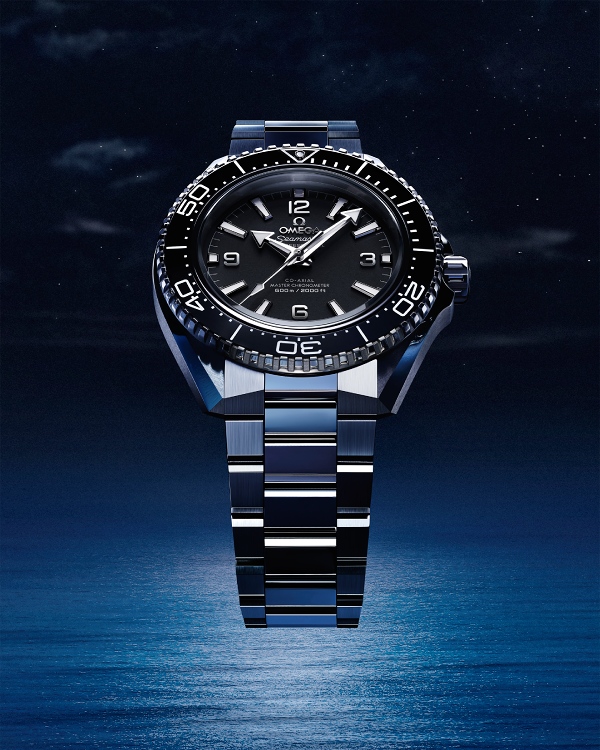
The helium valve that used to sit at 10 o’clock is now gone. No matter how divisive the valve was to the community, its removal still comes as a surprise, given how distinctive it had become in the design language of the rugged collection. Instead, each model now features an inner ring made of titanium, which borrows the strength required to seal the watch when diving at immense depths of 600m. Less is more.
The date display that used to sit at 3 o’clock is also gone, making for a cleaner, more symmetrical dial. Less is more.
The size of the case itself has been reduced from 43.5mm to 42mm, and its thickness from 16.1mm to 13.79mm. Even the lug-to-lug span of the watches now sits at 47.5mm, 2.4mm shorter than that of its predecessor. As a result, the new Planet Oceans are considerably smaller, sleeker, and far more wearable than before. A huge score for anyone battling small-wrist syndrome. Less is more.
This newfound slenderness comes at a cost, though (kinda). The sapphire caseback has been swapped out for a grade 5 titanium screw-in caseback. This allows the fourth Gen Planet Oceans better proportions, while keeping it lighter, improving robustness, and maintaining its 600m water resistance. Less is more.
Speaking of performance, the new models all fall back on ol ‘reliable: OMEGA's in-house automatic calibre 8912, which also powers the Ultra-Deep. Thanks to its twin-barrel system, the new watches will deliver a power reserve of 60 hours. It’s everything we know and trust OMEGA for, precise and reliable. Besides, you really can’t complain about a movement that’s Master Chronometer certified. Less is more.
As you’ve probably gathered, the visual makeup of the watches is the main change being made in the fourth generation—and OMEGA used itself as its north star. They rummaged through their archives, studying Seamaster pieces from the ‘80s and ‘90s, borrowing structural elements of old. That explains the return to a more svelte profile. But it also explains the sharper and more angular surfaces of the case. Even the dial features numerals are now open-worked and squarer to match the case, a subtle nod to the original Planet Ocean. Less is more.
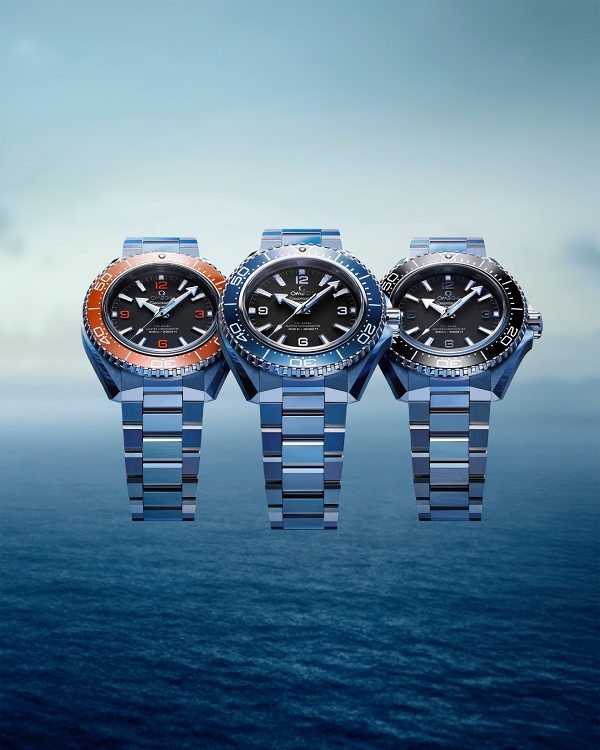
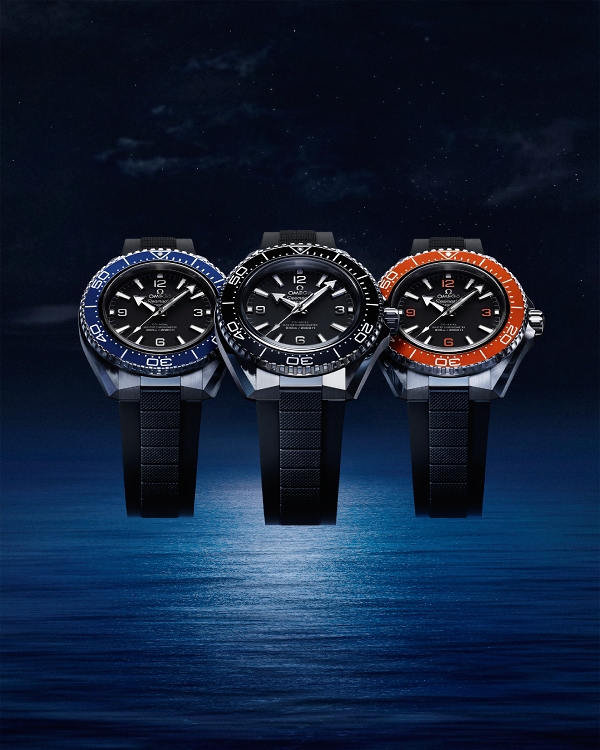
Seven new models will launch under the fourth generation, with each one of them available either in a steel bracelet or a rubber strap. The bracelet, by the way, has been reworked into a three-link design that has been brushed and polished for visual interest. It’s also much slimmer now and has a folding clasp that’s adjustable to six positions with a bonus diving extension.
There will be three main colours in the lineup—black, blue, and the signature orange that has defined the Planet Ocean’s diving history.
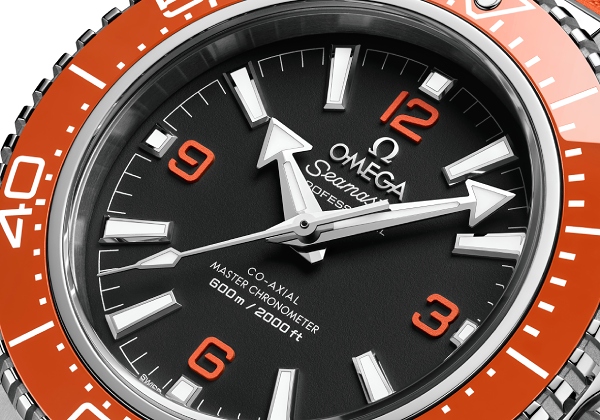
These colours won’t show on the dial, though—each model will feature a matte black face. Instead, the colours will reveal themselves on the indices and unidirectional bezel of the watches. Rather apt, considering how crucial that bezel has always been in the Planet Ocean’s identity. And it will perhaps, be the reason why it catches the eye of another 10-year-old boy, before his attention ultimately returns to his blooming collection of rubber watches.