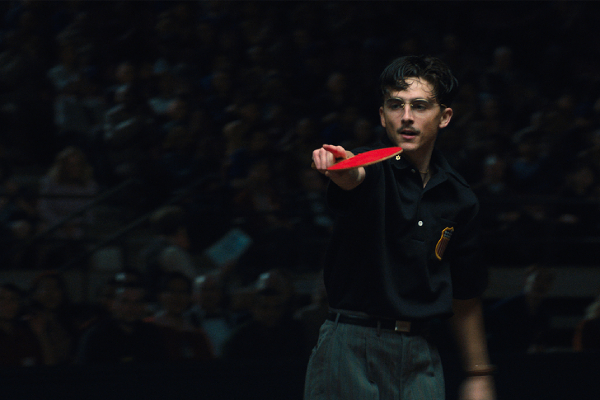
The year was 1948. Marty Reisman had just lifted the bronze trophy at the World Table Tennis Championships at eighteen years old. It would be his first of many to come. We’d like to say that he was a wide-eyed teenager, a spotless vessel ready to receive upon himself the otherworldly potential everyone knew he possessed. An open runway primed for takeoff with nary a turbulence towards his path to greatness. But that simply wasn’t the case.
That’s not to say Marty wasn’t a bright talent, he was. But a brief introduction to his upbringing will give you a better sense of the eccentric man who inspired A24’s latest venture starring Timothée Chalamet, which has already broken records at the theatres, earning the highest per-theater average gross for a movie in almost a decade.
Marty grew up in the Lower East Side of Manhattan, New York City, during the Great Depression in 1930. He was born into a poor, Jewish family where he was often left to fend for himself under the care of his father, who made a living driving a yellow cab in the day, before gambling it all away in the night. As a byproduct of a society that clawed for every cent not for luxury, but for survival, Marty was conditioned from an early age to live with money at the forefront of his mind. But he was slight and thin, likely due to malnutrition, which made chasing the proverbial “bag” more challenging than it already was. We haven’t even gotten to the nosebleeds, bouts of blindness, and panic attacks.
Marty’s life would forever change when a doctor recommended playing table tennis to help with his eyes. So Marty began slinging ping-pong balls on East Broadway, where it didn’t take long for him to realise he had it. It didn’t take long for his father realise the same thing. He soon introduced his son to the world where probability and money intersected—and Marty was off to the races.
He hustled whoever dared to underestimate the scrawny, four-eyed kid. School eventually became an afterthought he’d leave behind. Instead, his education would be derived from bartenders, greasy characters in the neighbourhood, fixers, and small-time wise guys. Instead of a coach, he cut his teeth playing against the best players in the country—men often twice his age. It was at these clubs that Marty did what his father never could; bet on something he was sure of. And the only thing Marty was sure of was Marty.
People around the professional circles of Table Tennis soon caught wind of the cadaverous-looking kid with glasses. It didn’t take long before he was competing for world championships in North Africa, Brazil, Scandinavia and Britain. His breakthrough came when he unexpectedly defeated Hungarian five-time world champion Viktor Barna at Wembley Arena.
But the bright lights of the global stage never did much to scrub Marty off his origins in the smoke-filled clubs of New York City. You take the man out of the city, not the city out of the man. Just four years after World War II, he hauled a suitcase full of lingerie to sell to women in Britain at marked-up prices. He continued betting on himself in matches as money matches took place behind the scenes, and Marty relished every minute of it.
“We turned that back room in Wembley into a gambling casino, basically, you know?”
1948 marked the most successful year for Marty, winning three bronze medals at the World Championships on top of winning the English Open. But when he returned from Britain, he fell into hot soup with the US Table Tennis Association, not for gambling, but for a scandal involving hotel expenses whilst on his trip.
After a suspension and an underwhelming 1951 World Championship, Marty entered the 1952 Bombay Games at just twenty-two years old. Still firmly in his prime and among the best paddlers America had to offer, he’d shaken off the rust the year prior. The 1952 World Championship was finally his to take.
Until he came up against a competitor he hadn’t heard of before: Hiroji Satoh. Similar to Marty, he was slight in frame, bespectacled, with hair slicked back and wispy in appearance. Harmless on all accounts, but this was the man who would forever derail Marty’s career.
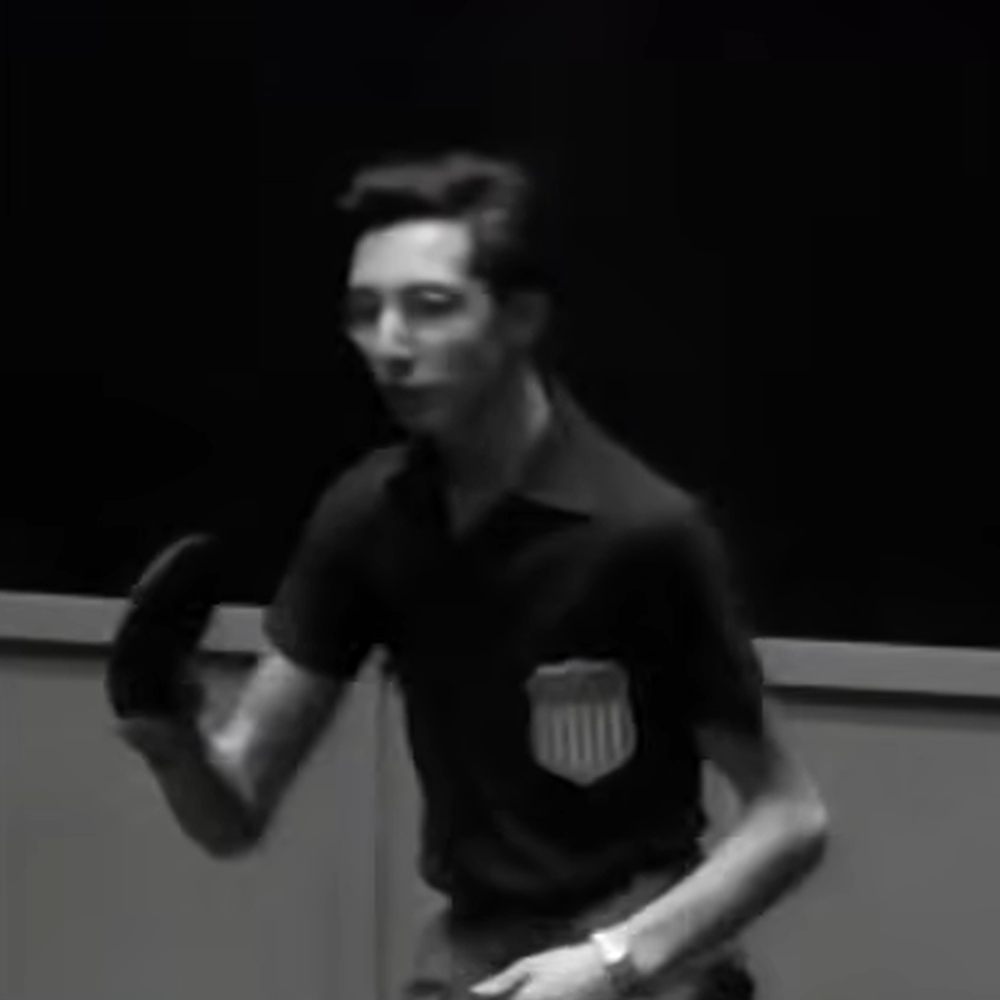
Marty immediately noticed the ball fly at him in a way he hadn’t seen before, so much so that it was almost eerie. He described the ball as “floating like a knuckleball, a dead ball with no spin whatsoever. On other occasions, the spin was overpowering." But there was more—a huge part of Marty’s game was predicated on hearing. He had instinctively learned to anticipate the trajectory of the ball—its spin, velocity, the works—through the sound it made coming off the paddle. But Satoh’s paddle was nearly silent, no matter how hard he returned the ball, rendering the innate skill Marty possessed useless. “We were all conditioned to react to the sound of the racket hitting the ball. But with Satoh that was impossible. Suddenly, we were all deaf-mutes in a game that required dialogue."
Disadvantaged and disoriented, Marty still managed to pull out a win for the first game. He would, however, lose the match in four. Later, officials revealed that Satoh had plastered one side of his paddle with a three-quarter-inch layer of smooth foam rubber—the same material that would redefine table tennis into the sport we know today.
"He gave me that little bow; a nice man, I thought, but oh how I hated him."
For greater context, players once used plywood rackets topped with rubber pimples, a setup that encouraged long rallies. This would sometimes result in players volleying for over an hour for a single point. Having a sponge layer eliminated all that. With the ball propelling at greater speeds and cartoonish spins, points were now won at lightning-fast speeds compared to before.
The game would eventually adopt foam paddles as its standard, eventually leading to the “sandwich rubber” paddles we have today. But Marty always found them offensive as it eliminated all rhythm from the game. He refused to adapt his game to introducing such fraudulence to his life. Overnight, former champions who either failed or refused to adapt were reduced to has-beens, giving room to a whole new era of competitors. This set the stage for China to enter the arena as serious competitors. It didn’t take long for their top players to usurp their western counterparts on the rankings and so began the era of Asian dominance in the sport.
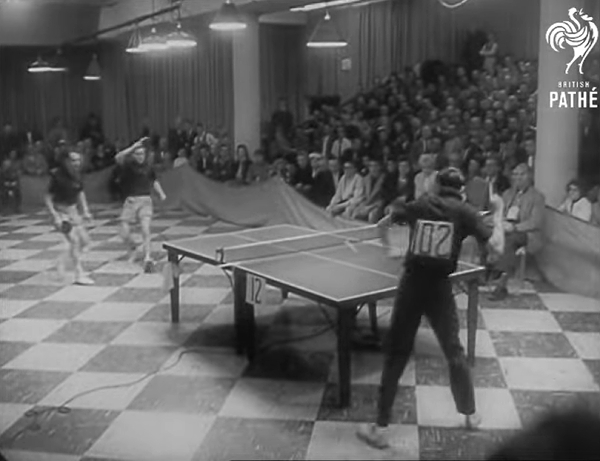
That game essentially marked the end of Marty’s elite status in the competitive stage, though the hustling never stopped. After his professional career, he would travel around the world performing in exhibition matches, even touring with the Harlem Globetrotters at one point. For USD500 a week, he’d perform trick shots through Europe, the Middle East, and Asia, entertaining thousands of fans during the halftime show of games.
By the ‘60s and ‘70s, his fame slowly diminished, along with the golden era of table tennis in America. Gone were the sartorial glamour of polyester shorts and hazy ambient clubs, where the thocking of paddles reverberated. But in the ’90s, nostalgia for hardbat table tennis resurfaced—and with it, Marty. This set the stage for the prodigal son’s return to the game.
In 1997, the United States Table Tennis Association hosted its first national hardbat tournament. There, a 67-year-old Marty competed against competitors a third of his age, and won. He became the oldest athlete to ever win an open national competition in a racket sport. A poetic end to his career, considering he got his start laying waste to men twice as old as him.
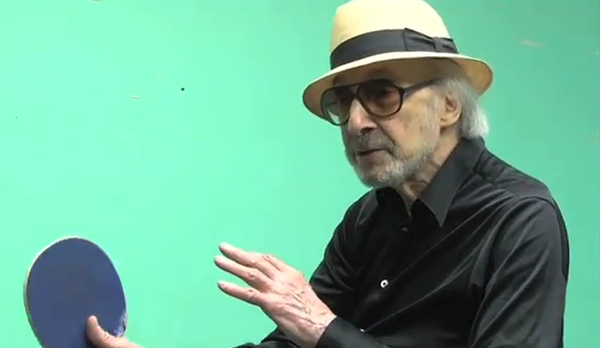
Marty Reisman passed in 2012, closing the curtain on table tennis’s most distinctive hustler, champion, and showman of seven decades. He finished with over 22 major titles between 1946 and 2002. While Marty Supreme is by no means a biopic, it appears to capture Marty’s showmanship and whimsy.
At the very least, it reminds people of the forgotten golden era of table tennis in America, where money matches in smoke-filled halls dominated the sport. At most, it’ll make table tennis cool again, and inspire an entire generation to dream big, and just perhaps, spawn the next ping pong slinging great. We might even see it inspire the next Marty Reisman, but with a life this colourful, we’re not holding our breath.
The Singapore release date for Marty Supreme is still inconclusive (we miss you, projector)