
To the layman, Apple’s latest wearables are status signals. I can’t be sure, but whenever someone has an AirPod or an Apple Watch, it immediately tells me that they are either doing well for themselves or are vapid show-offs. Then, I got myself an AirPod and an Apple Watch, and I created another category of users: the health-conscious. Or Bryan Johnson. Someone along those lines.
So, yes, while it is easy to recognise an Apple product, beneath its showiness, is what consumer health tech should be: subtle, integrated and useful when you actually move. We test out the AirPods Pro 3 and the Apple Watch Ultra 3 to see how these devices can help one live better.
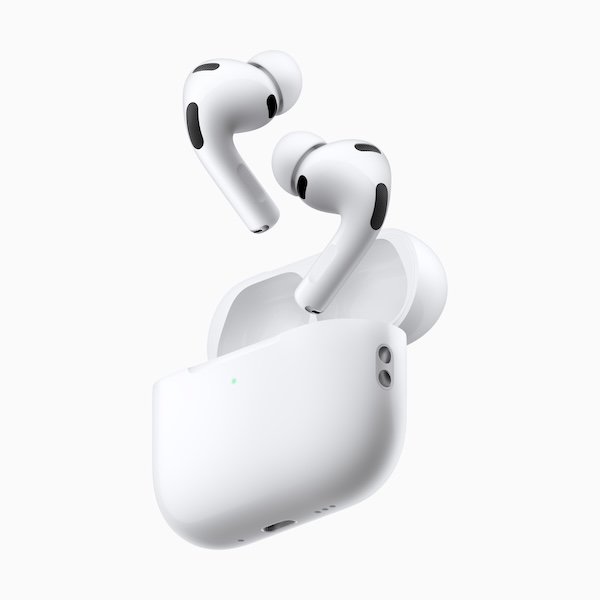
There’s a markedly improved ANC and a more secure fit for ears, and it has IP57 water/sweat resistance. But we also found out how Apple’s AirPod Pro 2 can be used as hearing aids. The next generation of AirPod Pro still has that FDA-approved hearing aid feature, it also has a heart-rate sensor in the in-ear buds. A tiny photoplethysmography (PPG) sensor—a pulsed infrared LED that measures light absorption from blood flow—is fitted into the AirPods Pro 3 and is specifically designed to read your heart rate during workouts.
But why the ears? Well, the ear is a relatively stable site that is less affected by arm movement than wrist sensors and is able to yield better readings during activities. And if you run, you’re probably listening to a murder podcast or that “cool” playlist you’ve made; you might as well let your AirPods measure your heart rate.
But this shouldn’t be treated as a clinical heart monitor. For anything like arrhythmia detection, the ECG on the wrist is still the better tool... something like the Apple Watch Ultra 3.
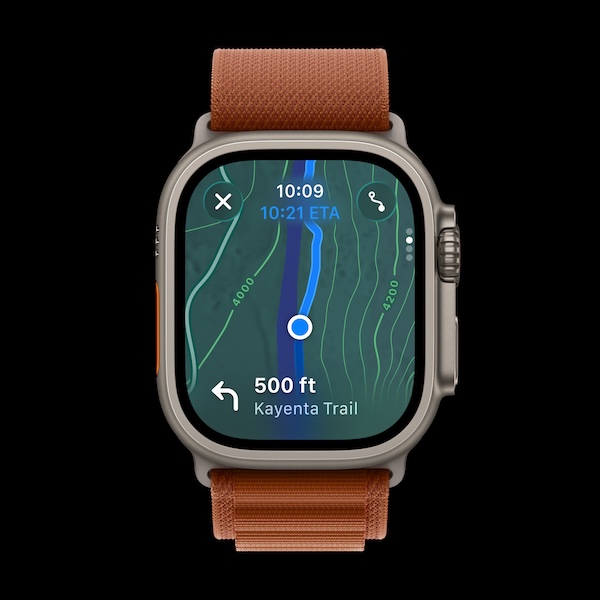
I wore the Apple Watch Ultra 2 before having the Ultra 3 in my possession. The Ultra 3 expands on the longstanding Apple Watch suite—ECG, blood-oxygen measurements, irregular rhythm notifications, sleep tracking and guided breathing—and brings a larger display and longer battery life.
It has now caught up to the rest of the smart wearables and monitors your sleep health. Called Sleep Score, it is built into watchOS 26 and available on the Apple Watch Ultra 3. Sleep Score offers a simpler, deeper way to understand night-time rest. Rather than just logging hours asleep, it grades the quality of it.
Using built-in sensors that include heart rate, wrist temperature, blood-oxygen levels and respiratory data, all of these factors are extrapolated to deliver said Sleep Score. If the score is lacking, the Ultra 3 offers actionable insight into improving it.
Another favourite feature of the Apple Watch Ultra 3: dual-frequency GPS. This is very useful, especially when you’re running in challenging environments—dense forest, mountainous terrain, Yishun—the two frequencies correct for signal errors and reflections that can affect standard single-frequency GPS, thus allowing you to always know where you are and be able to find your way home.
The AirPods Pro 3 make heart-rate tracking genuinely wearable for people who already train with earbuds; the Watch Ultra 3 expands the definition of what a wrist device can do. Together, they form a practical ecosystem, where the result is a consumer health experience that prioritises long-term change.
Apple’s AirPods Pro 3 and Watch Ultra 3 are out now