Street photography is a visual art form that captures the unscripted moments of life. On paper, it sounds simple, and can be broken down using a straightforward formula: candid encounter + stranger + click of a camera = street photography. But things are rarely that simple when it comes to art, are they? Especially when it comes to matters of the human race, when its very purpose is to document fleeting snapshots of the human condition as it unfolds, its complexity multiplies.
What happens then, when a psychologist decides to pick up a camera? Psychologists, after all, devote their lives to studying the human mind and behaviour. Under those lenses, how might their photographs differ from the average street photographer’s? To find out, we speak to Dr Michael J. Gerson, one such individual uniquely positioned to answer this question.
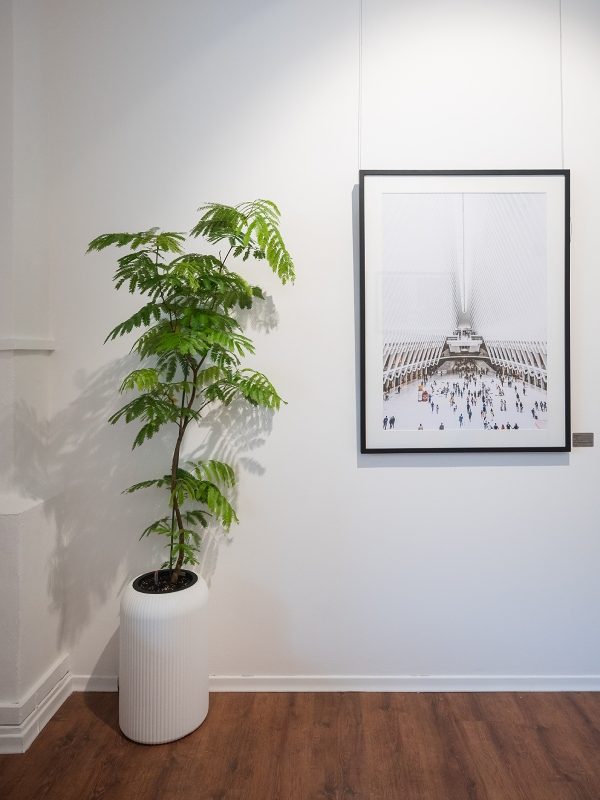
The New York–based photographer and psychologist began populating his visual diary five decades ago, capturing human portraits from bustling cities to rural landscapes, from rapturous joy to bleak melancholy. Held until 8 December 2025, his solo exhibition, Shades of Life, at Dempsey Hill’s Artitude Galeria will showcase his life’s work in revealing the human condition through his eyes.
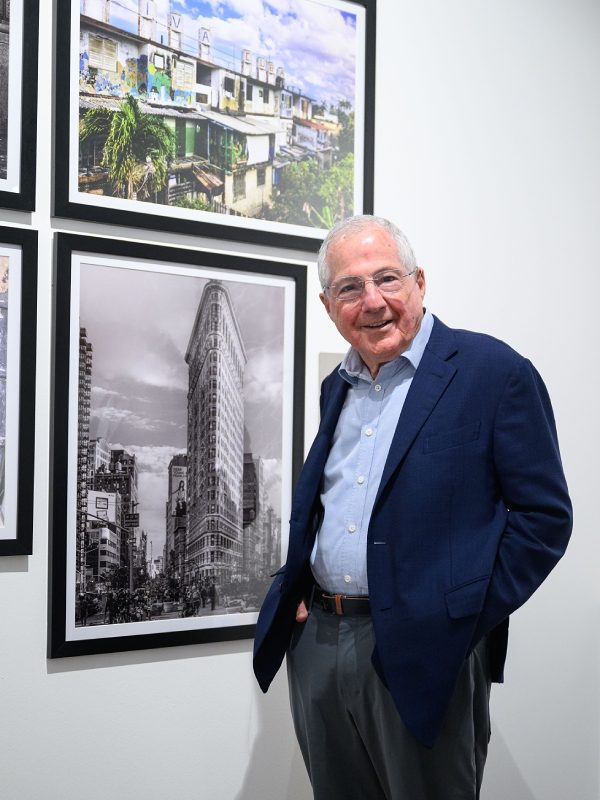
ESQUIRE SINGAPORE: What’s the first thing you usually notice about someone?
MICHAEL GERSON: I notice their facial expression. Like with you—you’re smiling, sort of a half-smile. It’s kind, open, warm. There are a lot of times when people—and you can tell—shut down immediately, and there’s a big difference. So the first thing I look at is facial expression, movement of the eyes, basically the non-verbal cues.
ESQ: What’s a moment from your own life you wish someone had photographed?
MG: Last night, when I walked in here and saw my photos on the wall, my expression must’ve been pure shock and awe. I wish someone had photographed that.
ESQ: Is there a specific story of someone you’ve photographed that stayed with you?
MG: I have a couple. I asked my guide to take me to Soweto, South Africa. He said that's not really a place that one would want to go, but I insisted. He dropped me off in a slum area, and people saw me with the camera. They came over, invited and showed me into their homes, one after another. They said they wanted the world to see how they’re living and what’s being done to them. That really surprised me.
In Cuba, once, I met a man on the street, who I’d consider homeless. He dressed that way. I’d just come out of a cigar store with some Cuban cigars, so I gave him one. He lit up, gave me the biggest smile, and started motioning to me. I got a couple of quick shots of him.

ESQ: Which country is your favourite place to take photographs?
MG: I have a couple. Tanzania in Africa is absolutely fascinating. Have you ever been to Africa? I went to a cow orchard with hundreds of yards of cattle, people dressed in their finery, and I was the only white person among what must’ve been over a thousand people. They were all so nice, trying to sell me cows. I told them I’d buy one, but getting it on the plane would be hard (laughing).
And then Cuba. I went the moment President Obama said it was okay to visit. My wife and I arrived before the hotels and before they knew what to do with tourists. It was incredibly enjoyable. People were so kind and thoughtful.
ESQ: How has travel changed the way you view the world?
MG: It’s changed a lot. I’ve learned that people everywhere are basically the same and want the same things—regardless of the country. They want to earn a living, support their family, have friends, and not be afraid. Every country I’ve gone to, I’ve seen those similarities.
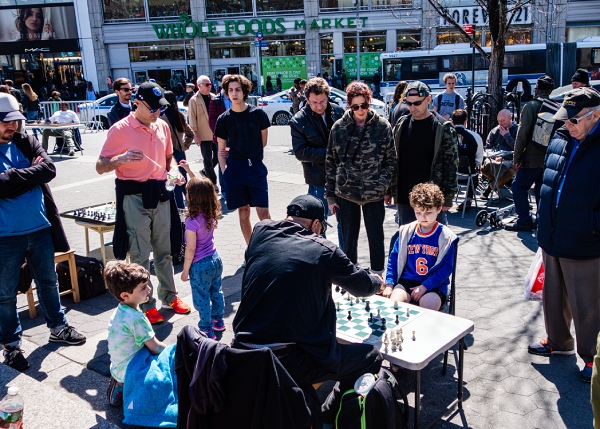
ESQ: It’s interesting you say that, because I felt a sense of familiarity with the people in your photos, even though I could never relate to their conditions.
MG: I’m glad you picked up on that. That’s exactly how I felt. I didn’t go to one country and try to recreate something from another. I just photographed interesting people and situations, and the similarities revealed themselves.
ESQ: What kind of people do you think Singaporeans are?
MG: Really thoughtful and kind. Want me to give you an example? When I shoot all over the world, people usually ignore me, push by me, or aren’t happy I’m photographing them. Here, I put my camera to my face and people stop. They wait for me to finish, or they walk under. I’ve never seen this anywhere else.
ESQ: I’m shocked because Singaporeans are known to have a cold exterior.
MG: Really? I couldn’t be more surprised. The minute I got to the airport, I had a wrong number on my passport that didn’t match my health card. They were so nice to help me fix it. In New York, they’d put me in a room for two hours and not talk to me.
ESQ: What have you learned about the human condition from your work?
MG: The same thing I mentioned before: people want the same things everywhere, even in countries that are at odds. People just want peace. They want to earn a living, support their families, and live without worry. Even when countries hate each other across the border, the people themselves want the same things—everywhere you go.
All prints are sold in sizes 50 x 70 cm and 50 x 100 cm, SGD450 and SGD750 respectively. Proceeds will all go to charity.
The "Shades of Life" photo exhibition will run from now till 8 December 2025 at Artitude Galeria, Block 9 Dempsey Rd, #01-11, Singapore 247697