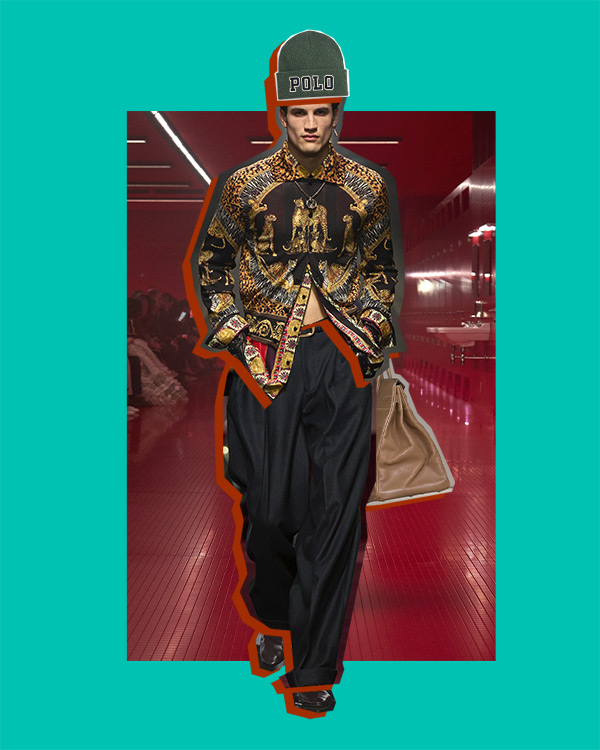
This past fashion week season in Milan and Paris was the most supercharged in recent memory. It was mostly contributed by the high-stakes debuts of newly installed creative directors at some of the biggest fashion houses. Louise Trotter focused on luxurious craft and scrumptious silhouettes for Bottega Veneta, Dario Vitale rejigged Versace, Gucci gained renewed excitement at the hand of Demna, Duran Lantink showcased a daring vision perfect for Jean Paul Gaultier, and Matthieu Blazy modernised Chanel—only a sampling of what was on show.
With any new creative direction at such prestigious (and often, beloved) houses, criticisms and polarising reactions are inevitable. Fashion loses its allure when it’s universally appealing, and we don’t all have the same tastes nor sartorial inclinations. Imagine how bland it would be if a designer were to create a collection that was liked by everyone without challenging our perception of desirability and beauty, or worse, having no semblance of fresh ideas. Scroll through the social media comments and TikTok videos that have sprouted since the recent debuts, and you might notice a familiar trend of thought: “This doesn’t look like (insert brand name).” or “Bring back the old (insert brand name).”
Dior’s appointment of Jonathan Anderson—the same wunderkind who grew Loewe into the thinking man’s label of choice—as its sole creative director across both womenswear and menswear has undoubtedly reined in a new era for the House.
While Anderson’s starting point was to return the House’s logo to its 1946 typographic signature in place of the all-caps version that it has been sporting since 2018, both his womenswear and menswear collections for the House have been relatively logo-less. Save for a number of commercial ready-to-wear pieces, such as sweaters and ties, as well as a selection of bag shapes, Anderson opted for the silhouettes to pay reverence to the House. One may not be able to immediately connect a pair of oddly shaped cargo shorts to Dior, but upon further investigation, it would soon become apparent that the precise folds and drapes are adapted from one of Christian Dior’s iconic dresses, the Delft. Perhaps the most Dior piece in the entire collection—or at least one that even a casual follower of fashion could be privy to—is Anderson’s update of the Bar jacket that’s been reproportioned for men.
At Chanel, Blazy approached the revered House in a similar manner to how he redefined Bottega Veneta into the epitome of luxury. He built a collection that tapped into the emotions of Chanel while focusing on texture and construction, instead of plastering the double-C emblem on everything and anything. There was a considered thought process of retaining that Chanel aesthetic—the tweed, the pearls, and the heritage were all there—but nothing looked like it was a replication of Chanel past. The same goes for his successor at Bottega Veneta, Trotter, who focused on ensuring that the look and feel of her debut was incredibly luxurious with a spectacular use of materials and impeccable construction that made every piece appear expensive. And yes, Bottega Veneta may already have a minimal, unbranded aesthetic, but even Trotter’s manipulation of its signature Intrecciato spoke to a more subtle execution. The leather strips have been thinned down to their original size, resulting in a tighter Intrecciato with smaller woven squares.
“The shift we’re witnessing at the top of fashion is more than a creative shuffle. It’s a cultural correction to the years of obviously branded fashion that we’ve been inundated with.”
Questions and criticisms about whether a brand feels or looks like it should, point to a singular problem of familiarity—something that fashion shouldn’t be. What is the point, if after a change in creative direction, a collection by a brand still looks familiar? We’ve been conditioned to think that a brand must look like itself. And loudly so, in every stitch. There’s an obsession with recognisability that creatives like Anderson, Blazy and Trotter have been handed the reins to dismantle.
What does it even mean that a brand should look like itself? Does an obvious Gucci belt immediately signal that a look is inherently Gucci? (It is coming back by the way, thanks to Demna.) Does a rehashing of archival pieces and patterns revived with minor modern customisations count? Or would it make more sense for the spirit of a fashion house to be felt and seen through an entirely new lens? Fashion, at its core, is supposed to be a mirror to the times we’re living in, and familiarity seems like an antithesis to that.
The shift we’re witnessing at the top of fashion is more than a creative shuffle. It’s a cultural correction to the years of obviously branded fashion that we’ve been inundated with. I wouldn’t necessarily call it “quiet luxury”, but rather a further evolution of that, where luxury becomes a private experience. There’s absolutely no need for everyone else to know that you’re wearing a pair of Brunello Cucinelli loafers, or a sleek pair of trousers from The Row—what matters is that you do and you feel exceptional in them. Fashion shouldn’t be about broadcasting how attuned to trends you are or how much you’ve spent on a full-monogrammed suit; fashion should be about personal style.
It’s all in the numbers. The pendulum has swung back and it’s evident in how poorly luxury sales have been for brands capitalising on overtly branded fashion. LVMH’s recent financial reports reflect this slowdown. For the entire year of 2024, LVMH reported a revenue of EUR41 billion for its fashion division—a one per cent decrease from the previous year. And in the first nine months of this year, the same division suffered an eight per cent decline compared to the same period in 2024. The fashion and leather goods division is LVMH’s largest in its portfolio, and while the company doesn’t break down figures by brands, its two biggest fashion houses are Louis Vuitton and Dior, which are known to rely on branding on their products. Gucci’s parent company Kering, too is suffering the same fate, albeit in much more dire numbers.
I’ve heard of this old-fashioned way of thinking countless times, that if you’re spending thousands on a piece of luxury fashion, it should be distinctly obvious; if it doesn’t, it’s “not worth it”. To be fair, this approach may have its merits when applied to pieces that are signature to a brand, such as Tabi footwear by Maison Margiela, the Hermès Haut à courroies, or a Burberry trench coat. But they’re not loud in the sense that they’re distinguished solely by the branding that’s visible on the exterior—they’ve grown to be associated with the brands and are signifiers without the need for obvious branding. And even so, wearing one doesn’t immediately sell one as being stylish or having style.
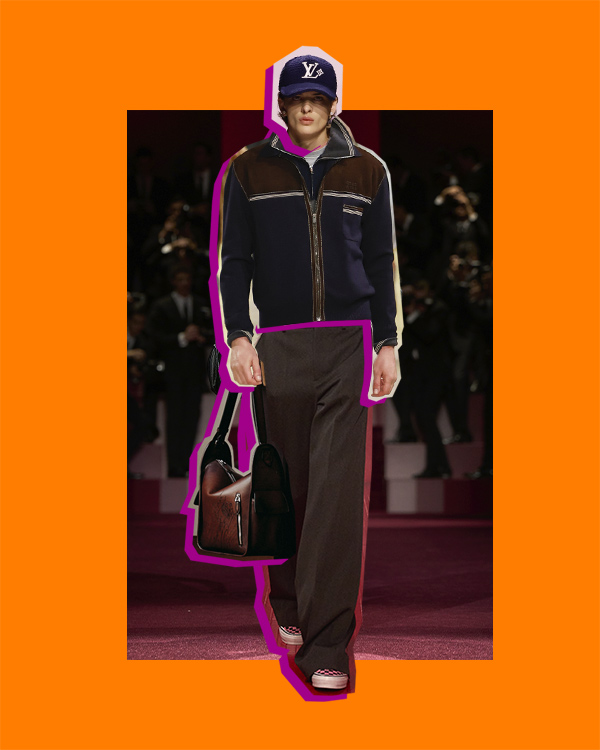
Refinement should be the goal, and not recognition. The less one relies on branding to build an outfit, the more personal one’s style becomes. When you’re trained to be blind to logos and branding, you’re compelled to make more intentional choices based on silhouette, texture, proportion, and mood. You’d want your shirt to fall just right, and trousers to fit how you want them to because you understand what feels right for you based on your own individual identity. You’d want your wardrobe to tell a story instead of being a sales pitch.
We really don’t need fashion that’s indicative of where they come from or who they are by. Because, again, what is the point? Do we hunger for validation by others so much that we have to be clad head to toe in designer clothing? Is wearing look 60 from Balenciaga’s Winter 2025 collection straight from the lookbook a measure of true style? Hardly. In fact, it makes you look like a puppet without a sliver of consciousness.
So perhaps the question isn’t whether something looks “very Dior” or “very Chanel.” The real question should be: Does it look like it came from someone who knows who they are? And when you wear it, does it look like you know who you are?