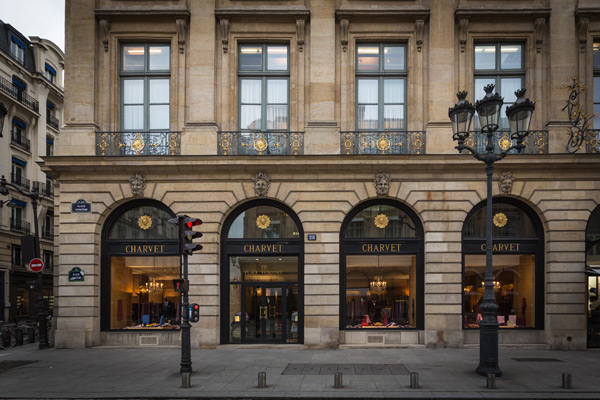
When Matthieu Blazy conceived his first collection for Chanel, he dug deep into the life of founder Gabrielle “Coco” Chanel. The research led him to photos of Gabrielle wearing men’s shirts, specifically that of her lover, English polo player Arthur “Boy” Capel. As it turns out, Capel had a fondness for shirts by French shirtmaker Charvet, and Gabrielle would buy them for him. Gabrielle had also made use of Charvet ties as belts as part of her costume design for the Ballets Russes in the ’20s. Cut to the Chanel Spring/Summer 2026 runway show where three shirts were shown, crafted with the centuries-old expertise of Charvet using the traditional techniques that has made it a relatively well-kept secret by some of the most stylish men and women.
Charvet isn’t part of any big fashion company. While it has changed hands, the Paris-based brand remains wholly independent and family-owned. Joseph-Christophe Charvet founded the brand in 1838 along Paris’ rue de Richelieu and effectively became the first shirtmaker in Paris as well as the world’s first dedicated shirt tailor. Charvet moved to 25 Place Vendôme in 1877, before settling in its current location a few blocks down to 28 Place Vendôme in 1982.
Joseph-Christophe passed the business on to his son, Joseph-Édouard, in 1868. The latter’s sons then joined the family business in the early 20th century. But by 1965, the Charvet heirs have decided to sell the business, and were contacted by an American buyer. Then-French President Charles de Gaulle was protective of the Parisian brand being taken over by an American, and so he asked Denis Colban, Charvet’s main fabric supplier, to help find a French buyer. Colban instead decided to purchase the business and Charvet has been under the care of the Colban family since.
It already says a lot when one of your dedicated clients was the founder of the house of Chanel. Aside from Gabrielle Chanel, Charvet counts a long list of fashion insiders as its clients, including legends like Yves Saint Laurent, André-Leon Talley and Thierry Mugler, to contemporary figures such as Riccardo Tisci, Joseph Altuzarra and more. Charvet’s expertise in shirt-making was unsurprisingly popular among political figures—Charles de Galle, Edward VIII, Winston Churchill, and American presidents John F Kennedy, Jimmy Carter, Ronald Reagan, and Barack Obama, just to name a few. Add in prolific writers and artists into the mix—from Richard Avedon to Marcel Proust to David Hockney—and you’d realise that Charvet’s allure attracts those who value aesthetics and quality.
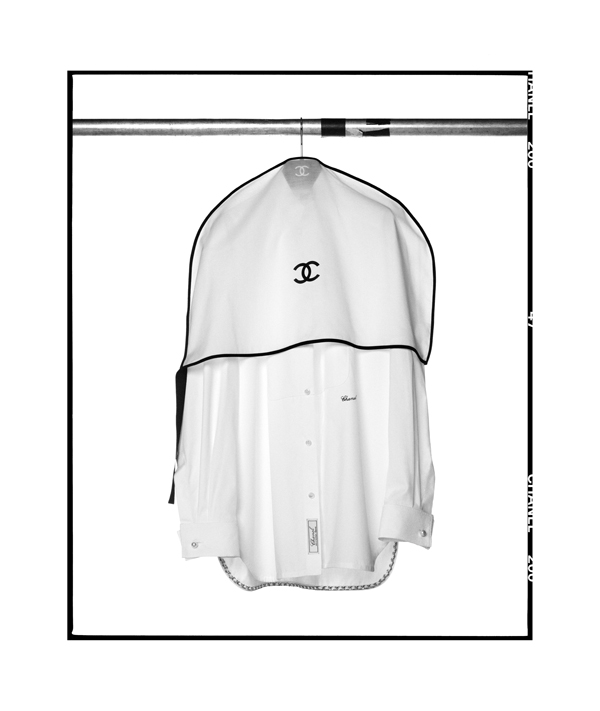
As you’d expect when paying at least EUR480 for a custom shirt—pricey but cheaper than most ready-to-wear shirts from a luxury brand—a Charvet shirt is crafted with utmost precision. Shirt plackets are made to be seamless, while striped patterns are painstakingly aligned to perfection. Even the thread used on button holes are chosen to be of the same hue as the shirt’s fabric. But what makes Charvet shirts especially fit-perfect is the construction of the yoke—the strip of fabric that drapes over the shoulders—that is crafted to follow the curve of one’s back.
Sure, you’ll be able to find Charvet shirts, silks and a host of other ready-to-wear pieces by the brand online on platforms such as MR PORTER, and Mytheresa. But in order to truly get the full experience and explore the extensive breadth of the Charvet universe, you’d have to visit its headquarters—its only physical stockist managed by itself—in Paris.
Thankfully, unlike most other bespoke tailoring brands, there is no minimum order when purchasing a custom Charvet shirt. Its fabric selection is extensive, ranging from poplins to batiste to silks, with a range of collar and cuff styles to choose from. Typically, fittings for custom shirts would often require a couple of appointments across three to four days, and the completed shirt can then be shipped to you. In other words, the perfect souvenir.