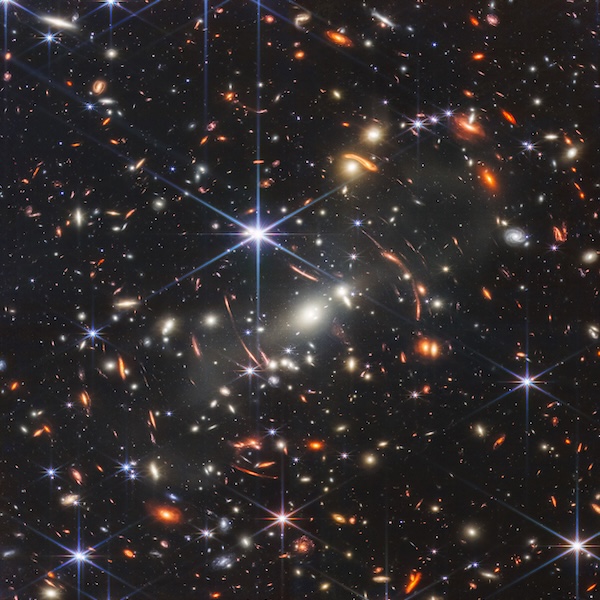
I never have a problem with ice breakers. No, I wasn’t the kid slaughtering bugs and lighting up funeral pyres for them in childhood. I just tell people that I’m terrified of the starlit night sky. It weirds out some. It amuses others. “So, you see, I cannot have my own La La Land moment in an observatory. I wouldn’t watch Interstellar on the big screen. In fifth grade, I hid in my friend’s lap during a school visit to the planetarium,” I rattle off with the enthusiasm of the awkward snot-eating, buck-toothed kid at the back of the class. But, seriously, remember the fuzzy stream of galactic light reaching from the tip of Mount Kailash into the deep sky that everyone loves looking at? I cannot watch it for longer than two seconds.
It's called astrophobia. I was in Ladakh, three years ago, when I found out that I had it.
A cold autumn night had fallen over the tawny massifs of the roof of the world. I was on an assignment, running late for dinner at the resort’s clear-roofed restaurant. As I left the wood cabin, my gaze first fell on the mountains. Up above and all around, my greatest fear in the whole wide world projected its scary starlight on the pale faces of the mountains. Innumerable shining points dotting the dark night. Holes poked in the fabric of the sky that could barely restrain the huge blinding celestial swathe of light. I froze for a couple of seconds, let out a gasp and stepped back. The next second, I found myself tripped over the step behind me, lying on the creaking wooden floorboard.
A couple of years later, I am on a minibus curving around sharp hairpin bends in Uttarakhand. An event pass dangles around neck from side to side like an albatross as I fumble restlessly through my backpack.
What I am looking for is a blue baseball cap. The same cap that I fished out of my bag and wore in order to block out the innumerable shining points in Ladakh that night. The albatross around my neck says Nakshatra Sabha. It’s a stargazing and astronomy conference that I’ve signed up for. I remember my friend telling me my thrill-seeking was getting out of hand now. That I had really lost it.
After years of yapping about Freudian cosmicism, solipsistic metaphysics and more gibberish like that—she confirmed I had finally lost it.
The minibus deposits us at a hotel located close to a campsite, by the banks of the river Pindar. It’s our base close to Benital, India’s first astro village categorised as such. On each of the following three mornings, we will drive up to a rolling meadow along a ridge. All around us, the sky reaches full-stretch into the surreal snows of the higher Himalayas. The mornings are for little workshops demonstrating the place this piece of the rock we live on has in the universe. The afternoons are for geology and astrophotography classes, and witnessing how soon the sun, situated 150 million kilometres away, can gut earthly objects in a couple of seconds. Then the bright goblet of fire goes down and telescopes of all sizes and functions start setting up. A light, frigid wind starts, and in a little while, the thing that I’m most terrified of in the whole wide universe will come up in the sky. The innumerable shining points.
But I’m not destined to die on a hill. Yet. So, the clouds settle in on most nights, leaving us to ponder the rabbit on the moon and its fate to contend with an endless barrage of crater-causing asteroids and its dreary icy lakes. This and whatever else I see of the universe stretching inconceivably far away sends regular frissons of dread upon my skin.
For instance, on the first night, I see the galaxy Andromeda and its great gig in the sky. This fuzzy spiral of light that is our galactic neighbour and remains one of the most stunning night-sky objects, is about 2,500,000 light-years away. In one light-year, light—the fastest object known to us—covers 9.4 trillion kilometres. Should one want to represent the resulting distance in km on paper, the number of zeroes in the cumulative figure would be ridiculously long. The conception of such a distance is so inexhaustibly vast that vastness loses meaning. "Nearness" loses meaning. The concept of "neighbourhood" loses meaning. Essentially, my head loses meaning.
I am not here facing my fear. It’s tired cliché. Scratching the itch is more my thing. I’ve tried looking down skyscrapers. I’ve ridden the world’s fastest rollercoaster sitting second from front. I’ve stood in the middle of the ocean. I’ve even jet-sprayed giant wild spiders down toilet bowls. I have nothing of those fears. Therefore, when I look up each night at this conference on each of those days and still feel a knot in my stomach, I know I am a pretty special case.
Beneath my clownish posturing as a compulsive thrill-seeker, my decision to go stand under the stars has to do with understanding just what this fear makes me. “It looks like anxiety, triggered by looking at an object that your mind perceives as alien,” as Dr Rojo Shalom George, clinical psychologist at National Institute of Mental Health & Neuro Sciences, Bengaluru, will tell me a few months later. And when he does, it would make sense to me because little to no (readily available) research, surveys or data exist around astrophobia. Only Reddit threads, SEO listicle entries and explainer videos with a vague definition arising from literality.
A little flashback: around the same time that I first realised I had what they call a fear of the stars, the first batch of images from Space from the James Webb telescope was released by NASA. I indulged my self-torturing tendencies and looked 13.5 billion years into the past, powering through bouts of dread and nausea. After I was done, I slowly tried piecing it together—this intense discomfort was a response to a cognitive overload. I was terrified of the monstrosity resulting from the compression of the cosmic cliffs, fiery whorls and dusty storms of the Carina Nebula to the photographic fidelity of the screen. It was the same fear that some have of Liminal Spaces, some of the Sublime and some of Lovecraftian horrors.
This is why coming to terms with scale will be a major personal milestone at the stargazing retreat. One sunny morning, we see—through an actual comparison experiment—how freaking alone we really are in our solar system, let alone in the ineffable endlessness of the universe. One participant is handed a basketball painted in yellow—they represent the sun. The group walks a scaled-down number of steps to cover the individual distances between the eight planets, stationing one member each with a correspondingly sized object: ping-pong balls, coloured chocolate pellets, mustard seeds and what have you.
As we do this, we, the walkers, trudge further and further away up the rolling meadow. We haven’t even reached Jupiter when the ‘Sun’ disappears in the distance. If you think about it—and the individual distances between every participant—it’s a scary realisation. Every metre between the "planets" denotes a few million kilometres in real terms. But it also helps perspectivise the acute awareness of magnitude that I’ve felt all these years when I’ve looked up.
No sooner have I told myself that I’m slowly but surely overcoming my bogeyman, than a gangly college-going astrophotographer at the retreat approaches me with his phone at dinner one night.
“Excuse me, bro,” says the gangly astrophotographer who I amused very early on when I apprised him of my affliction on the minibus.
“The clouds didn’t let us see much today. But later on, I captured this on my phone,” he flashes me his phone screen hoping that I haven’t been taking his case with a made-up fear. I can tell he’s muttering something else triumphantly but having frozen in panic, I’m neither able to look away nor listen to the rest of it.
I realise that what I’ve also been afraid of is forgetting. That human experience is extremely finite, extremely limited.
Martin Heidegger, the German philosopher defined it as the fear of slipping into the “inauthentic being”. How I saw it was this. Since we spend most of our waking hours when there’s sunshine, we lose sight of the actual stark solitude and darkness of Space that surrounds us. It is only when we turn away from the Sun, and night falls, that we are reminded of the insignificance of the fact that we know as life. It’s too much truth to process for the human mind, and the acceptance of this unknowability is coded into our being. The real limits of the void are unknowable, like Lovecraft said, and our time is fleeting.
So, when I look at Andromeda—2,500,000 years ago into the past—a second time at the retreat, I conclude that the only way to not be overwhelmed by this cosmic crisis is to know yourself as a passenger in both space and time. You are getting down somewhere. This realisation of impermanence is soothing.
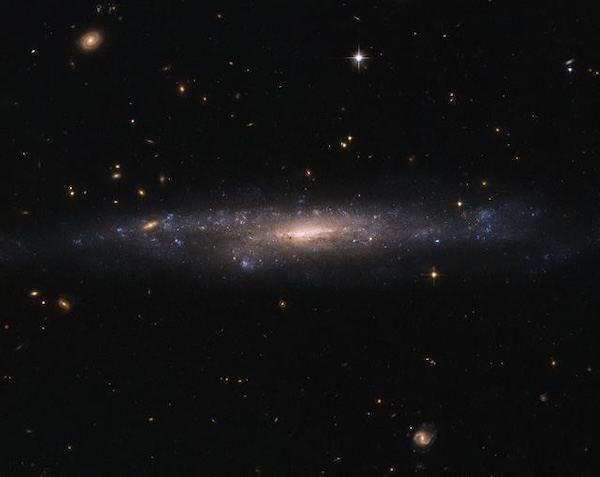
During a conversation on one of the nights, Ramashish Ray, founder of Starscapes Experiences, which organises the Nakshatra Sabha, tells me that our evolution from quadrupeds to bipeds brought our sense of self from under us to above us.The galaxy AndromedaDuring a conversation on one of the nights, Ramashish Ray, founder of Starscapes Experiences, which organises the Nakshatra Sabha, tells me that our evolution from quadrupeds to bipeds brought our sense of self from under us to above us.
“Our consciousness grew from the little we saw immediately ahead of us to the vast immensity above,” he says blankly. With that said, I’m surprised by how quickly we allow ourselves to be drugged with the illusion of the singularity of earthly existence. “As sentient beings, our ability to look up at the stars empowers us to always hold on to the awareness that we are small,” Ray adds.
Dr George, who I mentioned above, dubs this adventure as part of my need for an “emotional catharsis”. I tell him, in a moment of naïve self-diagnosis, that I think I use my astrophobia as a soothing mechanism. That nothing makes any sense and in the context of the perceivable universe, we are both temporally and spatially inconsequential. “With that interpretation for yourself, you’re taking a nihilist approach of sorts. While that might be helpful sometimes, it shouldn’t become a ruse for inaction or defeatism,” he calmly counters. But I’m a firm believer that existential anxiety shapes human consciousness. So, I’ve forged on with my little philosophy experiment.
A little while ago, I found validation for my theory that we are cosmic passengers. In 1969, the American architect Buckminster Fuller left a manual for the successful operation of the ‘spaceship’ that we call Earth. Since then, I’ve actively placed stock in my earthly identity as a passenger.
On one of the nights when our sighting of the beautiful Saturn with its transfixing rings is interrupted by a shift in weather, we are asked to line up at a telescope pointed at the everyday orb above. The largest clearly observable celestial body of our night sky hangs up above desolately. We are about to be reacquainted with the Moon.
And as our guide talks, I am overcome with a strange discombobulation. The fresh realisation of the satellite’s distantly corporeal existence tips me over into a trance. This five-billion-year-old rock that we’ve sung songs about and blamed for our mood swings, but never really get to know, is born anew for me tonight.
Ever since that night, I’ve often found myself gazing at the moon, its frozen grey glimmer on clear nights, all its phases and colours, with a sense of newfound wonder. I can constantly feel its unearthly realness washing over my very earthly illusions. Woah—how much more alone is it out there, I wonder. To what extent do concepts like coldness and gravity alter in terms of how we understand them here on our own rock? It’s an impassive sort of impersonalisation. I mean, they say we must be citizens of the world—but where does it stop then? Are we not citizens of Space?
Whenever I see a satellite pass overhead, I grow conscious of my own existence as a passenger on a spaceship. When I see stars, or when I’m lucky enough to, in the city, I’m able to momentarily escape the clutches of the concept of time. This feeling has swept away the jaded familiarity that humans tend to develop with the night sky over their lives.
It has helped cope with the heaviest of feelings and accept that anxiety is a sign of being alive.