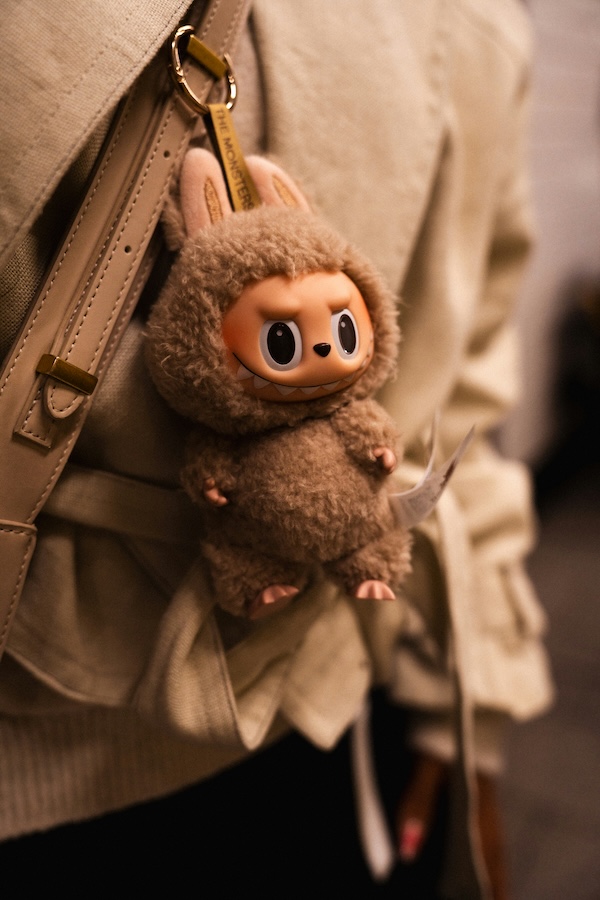
This past August, while Singapore was waving flags and belting out the national anthem, another expression of patriotism was happening on the store shelves. Plush kopi cups and kaya butter toast toys disappeared faster than NDP funpacks. Earlier this year, Milo plushies caused supermarket meltdowns.
This isn’t about kids squabbling over Happy Meal trinkets. It’s adults—millennials, Gen Z, kidults with credit cards—queuing in the hundreds for figurines, plushies, and blind boxes. You can laugh, roll your eyes, or join the line. But make no mistake: Southeast Asia is in the middle of a collectible toy boom, and it’s telling us something deeper about ourselves.
Once upon a time, toys were tucked away in the children’s aisle. Today, they belong in glass cases. Euromonitor reports Southeast Asia is now the fastest-growing region for toys, with a 5.4 per cent annual growth forecast. Pop Mart—the Chinese brand behind Labubu, the fanged bunny with a cult following—saw Southeast Asian revenue skyrocket 400 per cent in just six months.
What explains it? Scarcity. Blind boxes and limited drops turn vinyl into currency. It’s luxury economics in playful form: the dopamine of pulling a rare design, the subtle flex of posting it online first, the whisper of status when someone recognises your collection. These toys aren’t about play. They’re about identity.
Yes, Jellycat and Pop Mart lit the fuse. But what keeps the fire going is demand for designs that speak to local culture. A Fortune Merlion sculpted from recycled bottles resonates more than another Hello Kitty. Kopy, kaya, Milo—these aren’t just cute motifs; they’re shorthand for heritage, for home.
It’s part of a larger nostalgia wave. We’re not just buying toys—we’re buying the past in tangible form. Think of Lego’s recent Game Boy set that lets you hold a blast from the past in your hands. The appeal lies in bridging memory and material: what once lived only in childhood now sits proudly on adult shelves.
Events like Singapore’s Pop Toy Show underline the shift. Its first edition in 2023 was a novelty; its second drew over 300,000 visitors and 500 artists. Collectors weren’t just queuing for Labubu. They clamoured for Daniel Yu’s Mickey Mouse Jiangshi collab and figures remixing Southeast Asian folklore. This isn’t consumption—it’s cultural remix.
If anyone doubts the staying power of this scene, our homegrown Mighty Jaxx provides the proof. Launched in 2012 as a one-man operation, it’s now a multi-million-dollar company distributing to over 60 countries, backed by USD40 million in investment. Their rise shows what happens when technology, art, and pop culture collide.
But the indie scene may be where the most interesting work happens. Studios like Nimble Mystic blur the line between toy and sculpture, creating pieces as likely to end up in galleries as on a collector’s shelf. These aren’t just trinkets. They’re cultural artefacts—totems of identity and memory.
The boom doesn’t stop at design. It’s reshaping how we buy. Carousell has partnered with toy events to facilitate trading, while Malaysian start-up Collektr runs live-stream auctions where influencers host real-time bidding wars. Think Christie’s with TikTok energy.
For younger consumers, this isn’t odd—it’s natural. A livestream feels more authentic, more thrilling, than sterile retail. Buying becomes theatre. Collecting becomes performance.
At first glance, the toy craze looks frivolous. But toys today are shorthand for who we are and what we value. They create a “belonging” in an era when identity is fragmented. Toys tell stories, signal taste, and connect strangers through shared obsession.
That’s why Southeast Asia’s toy scene matters. If we only consume global imports, we miss the point. The real frontier is local: toys that mine our myths, remix our rituals, and mirror our realities. Singaporeans aren’t craving for Americano plushies. We’re craving for kopi-o.
Dismiss it as hype if you like. But collectables have become cultural barometers. They’re playful, yes, but also political—about who defines taste, who profits, and how identity gets expressed in a hyper-branded age.
So, let’s take this seriously. Not just as a market, but as a creative frontier. Mighty Jaxx has already shown global reach is possible. Indie designers are proving toys can be art. Platforms are rewriting how we shop. What’s missing is for Southeast Asia to seize the narrative—not just ride the wave, but make our own.
Behind every Milo plushie and Labubu grin is a bigger story: that in this region, toys are no longer just playthings. They’re the new language of belonging.
David Lee is a lecturer of Design Communication at LASALLE College of the Arts, University of the Arts Singapore