“Don’t worry. It will be fully air-conditioned,” a Berluti rep tells us. The temperature is close to 40 degrees Celsius in Bologna, right in the thick of a summer heatwave. We’re about to take an almost one-hour drive to Ferrara to visit Berluti’s manufacturing centre, Manifattura Berluti. That piece of information is reassuring given the heat, but with news of alleged misconduct by luxury brands when it comes to labour practices, it also feels like a pointed disclaimer—this is, quite literally, no sweatshop.
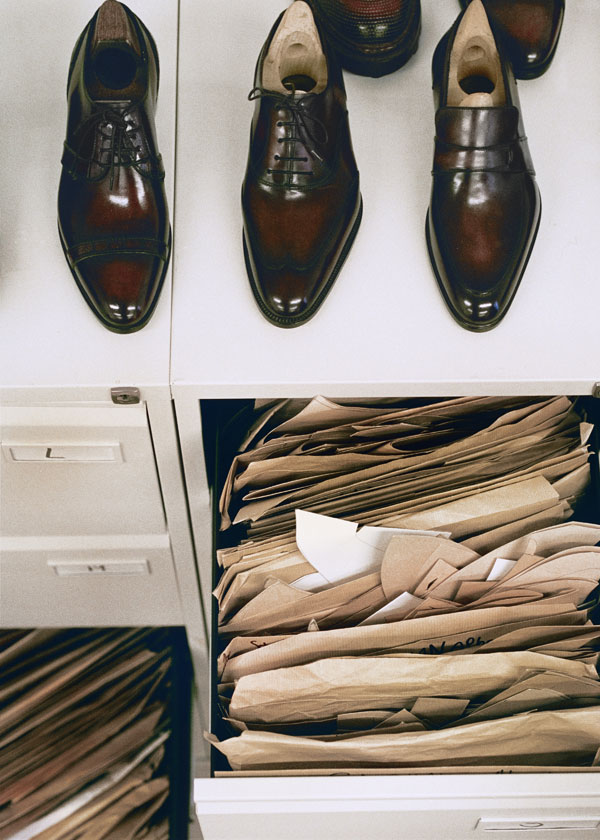
Grey metal doors branded with “Manifattura Berluti” in the brand’s serif script, open up to the manufacturing centre’s mirrored façade lined by lavender blooms. Within the comforts of its interior, we’re greeted by a wall of archival shoe lasts, just in case, one is unsure of the space they’ve just entered.
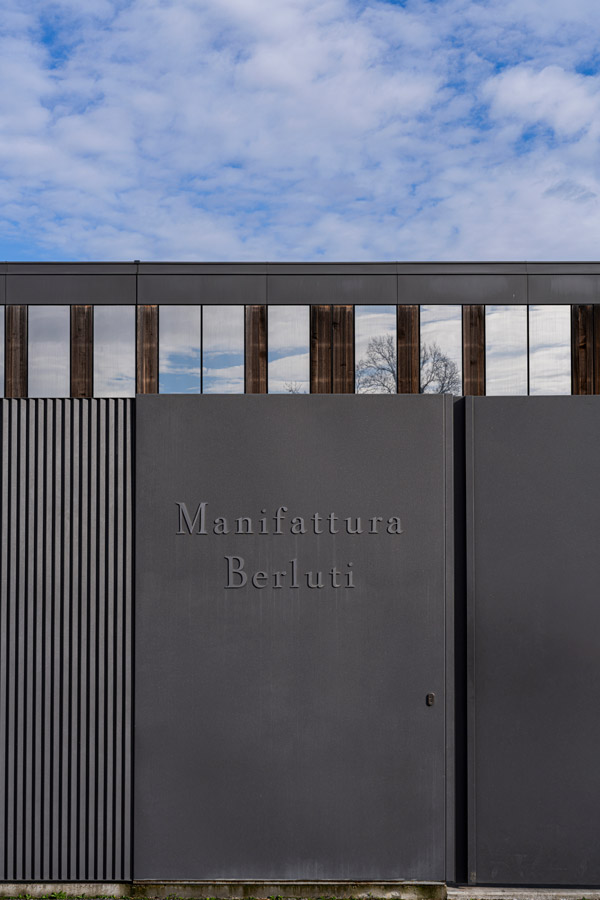
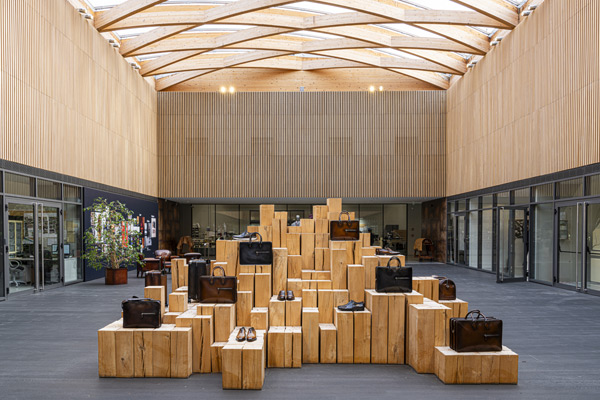
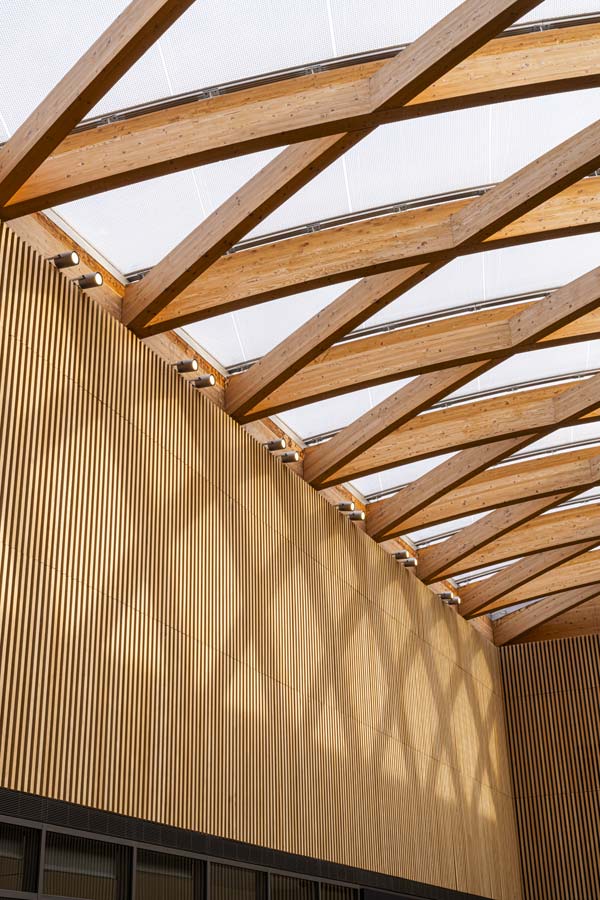
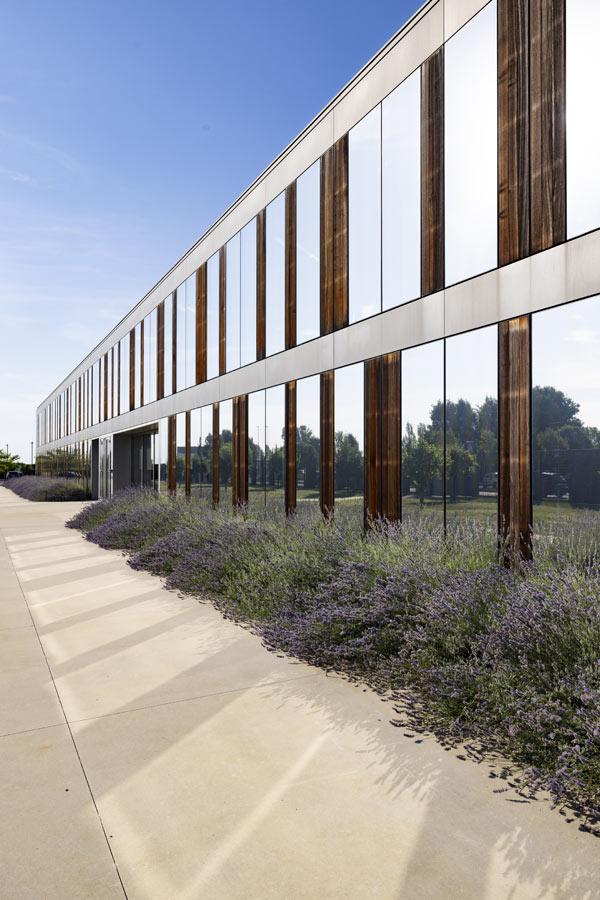
Designed by Paris-based architecture practice Barthélémy Griño, Manifattura Berluti is described as the heart of the brand’s leather craftsmanship. It’s here that the ready-to-wear footwear and leather goods are crafted by skilled artisans; Berluti’s MTM offerings are concentrated at its Paris atelier. The main agora serves as the central landmark connecting the different studios and workspaces of Manifattura Berluti. Its skylight is disrupted by a wooden lattice specifically designed to project shadows that look like massive shoelaces. The use of wood throughout the building is intentional—untreated red cedar that will develop a patina over time, much like Berluti’s signature creations.
Every shoe design starts with a sketch. Berluti’s team of designers send out artistic expressions of designs to the technical team to assist in bringing the designs to life. Translating these artistic sketches into technically and practically sound designs is no mean feat. It’s not just the aesthetics that need to be considered, but more importantly, the ergonomics and comfort that make a pair of Berluti shoes.
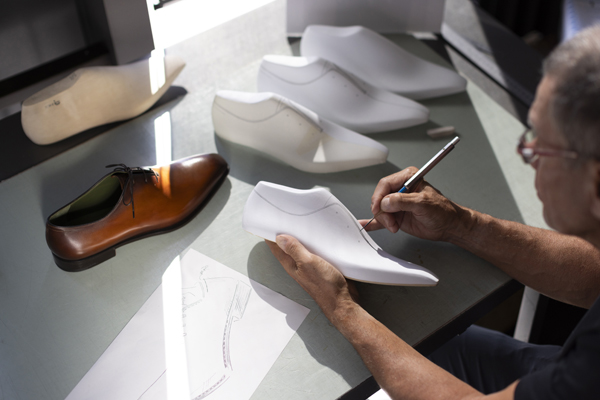
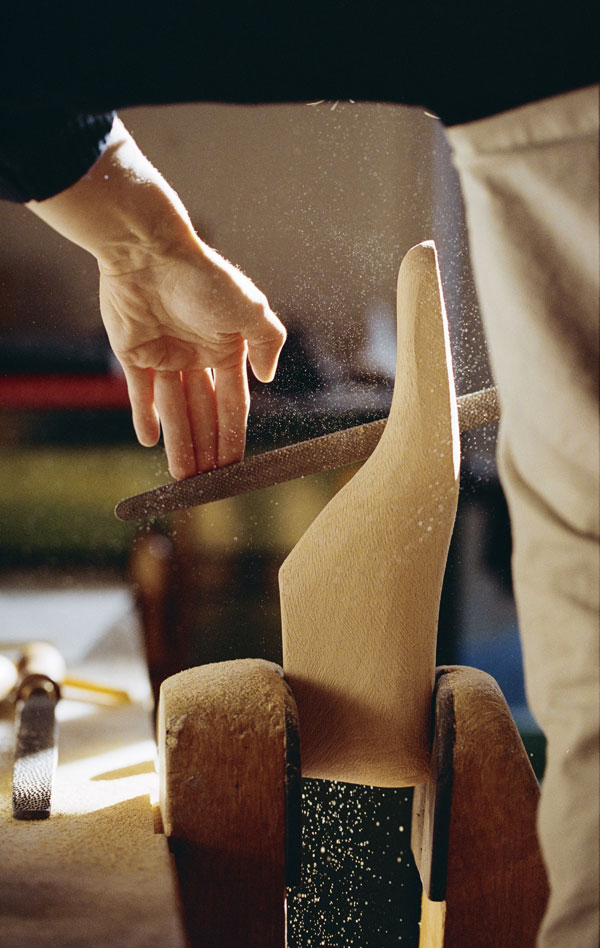
A mould of a Berluti-devised shoe last is reproduced for the technical team to translate a design into a three-dimensional form. The design is drawn out directly on the mould with more detailed technical specifications and then passed on to the designer for confirmation. Upon a final confirmation (we reckon it’s a continuous back-and-forth of discussions, as with any creative exchanges), the design is then translated back into a two-dimensional form as digital patterns. It’s at this point that the technical team considers the inner workings of a shoe design—the reinforcements and lining—before sending it to the cutting floor.
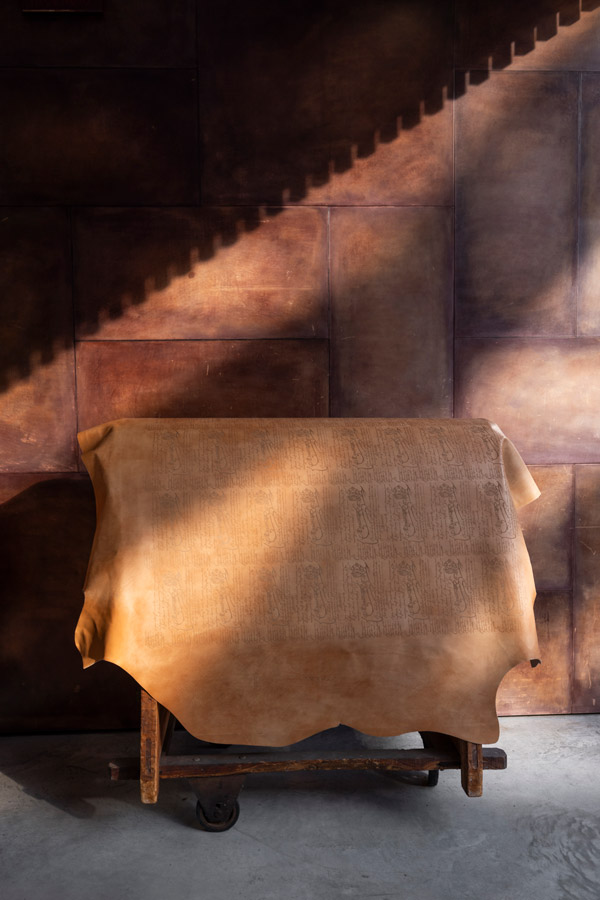
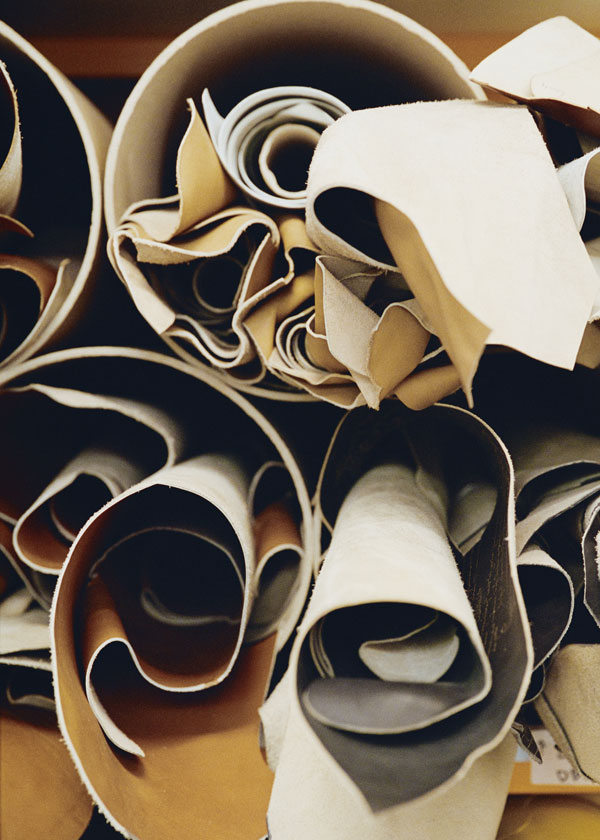
Tucked in a room next to the cutting studio of Manifattura Berluti is a collection of leathers. As part of the brand’s product development process, a lot of different skins are kept and catalogued in order to ascertain the right kind of base for a specific design. Out of the thousands of selections, Berluti is famed for its use of Venezia leather. It was Olga Berluti, granddaughter of the brand’s founder, who developed Berluti’s Venezia leather as the base for the brand’s signature patinas (also an Olga-initiated idea). Select full-grain hides undergo a specific tanning process to result in supple and fine materials that are perfect for Berluti’s patina process.
The selection of skin remains important from before tanning through all the way before it is cut. The quality control is stringent to ensure that the end result is not compromised. Cutters avoid using parts of leather where imperfections are visible, as these may cause issues during the patina process, and pattern pieces are strategically placed based on a leather’s elasticity. As such, one piece of leather typically makes four pairs of shoes; the rest are often used to make smaller leather goods so that there’s minimal waste. Leather offcuts that aren’t used in-house are transformed into fertiliser as part of the brand’s sustainability commitment.
Quality control continues to be paramount even after the leathers are cut—by machine, stamping, or by hand—with the thickness of cut pieces kept as uniform as possible. If they’re not, they’re split evenly by machine to around 1.2mm to 1.4mm thick.
In the same space, the cut pieces are sewn, connecting them together and attaching the support materials. These reinforcements vary based on design, the intended effect as well as hand feel, and can range from paper to microfibre.
Perhaps the most labour-intensive part of shoemaking is in its final assembly, where man and machine work hand-in-hand. Safety is a priority here due to the nature of the machines used; protective shoes are necessary within a certain boundary of the assembly studio.
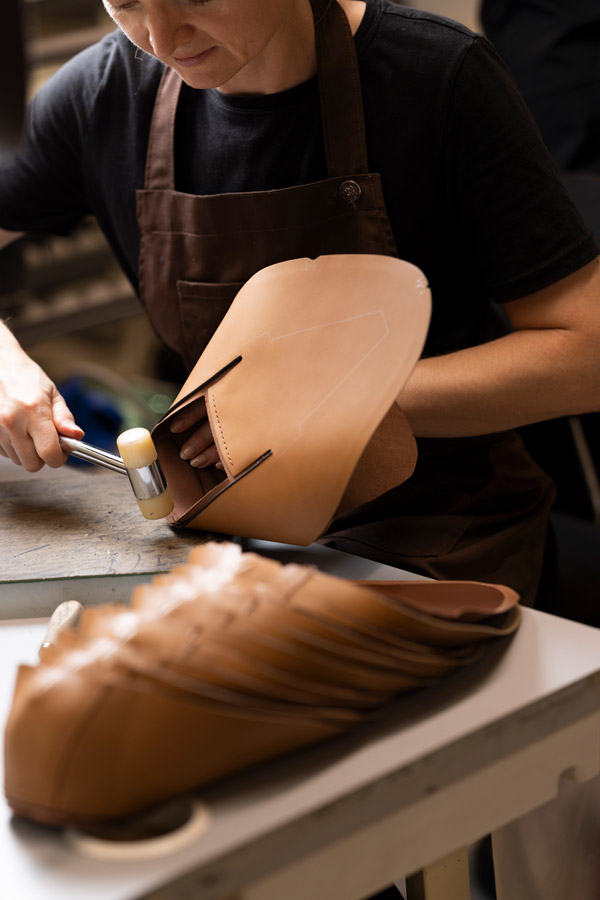
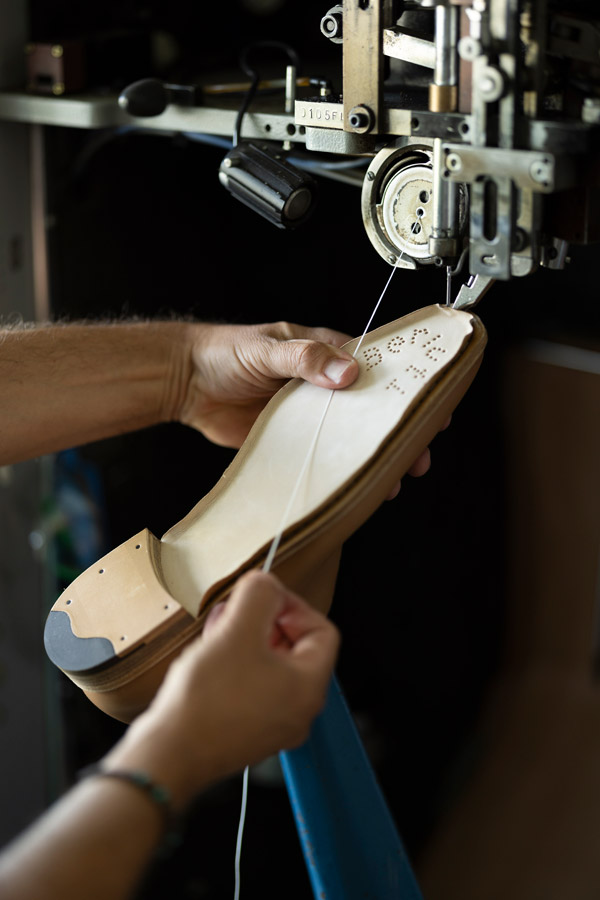
The formation of a wearable Berluti shoe begins from the front to the back. Wrapping the sewn leather pieces on the last, humidity and warmth are constantly added to make the leather more flexible to be moulded and fixed onto the sole of the last. Berluti typically employs the use of the Blake construction, where the upper is sandwiched between the insole and the outer sole and then stitched together from the inside. The result is a cleaner finish (there are no visible stitches) and a more flexible as well as lightweight shoe—one of the shoemaking tenets at Berluti.
Like most shoemakers, Berluti brushes the soles of its footwear to ensure that they’re smooth and uniform. But perhaps unlike most, the brand colours the soles too, applying a similar treatment as its signature patina technique.
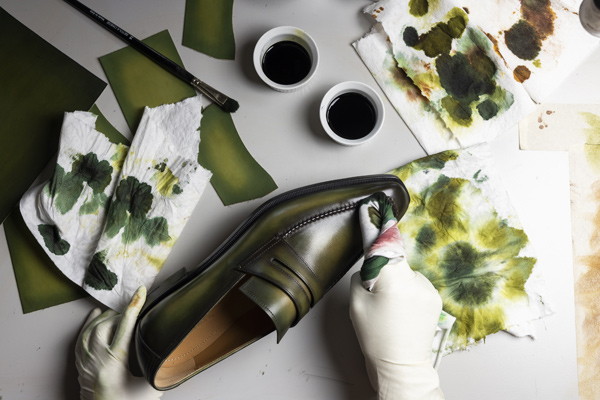
We’ve written at length about Berluti’s patina heritage before. But stepping inside the studio where the magic is concocted is quite the experience. On the wall to the left, vials of pigments labelled with their individual names are stocked on floating shelves.
In preparation for the patina process, assembled shoes are cleaned and treated to open up the pores of their uppers. The rationale is that this allows the colour pigments to be better absorbed. Colours are then washed across the uppers before the signature shadows of a Berluti patina are meticulously added—the entire patina process is done by hand. Once the intended patina is complete, the shoes are then waxed for an alluring shine. A Berluti shoe is now complete.
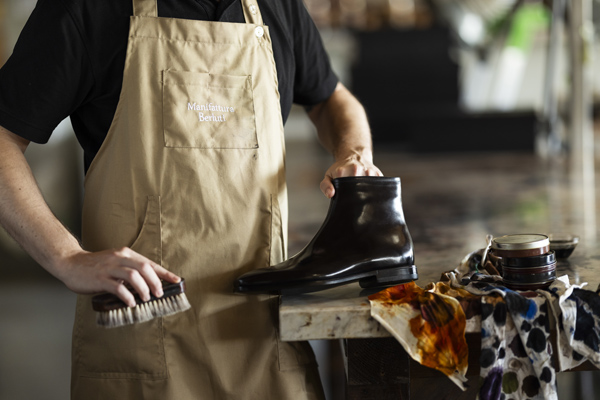
While machines are used throughout most of the processes in crafting a Berluti piece, the artisans behind them, deftly handle and make full use of their capabilities. Established in 2012, the Académie du Savoir-Faire has trained over 300 artisans, of whom 200 are working in Berluti. This partnership with the Centoform training institute and the Emilia Romagna region helps to not only train new artisans but also continue Berluti’s craftsmanship expertise and practices. After all, the brand didn’t get to 130 years without the artistry of its artisans, and part of ensuring the continuum of its craft and designs is to keep the craftsmanship alive and well.
The craft may be true to the brand’s origins, but certain nuances and designs are modernised. Towards the end of the visit, we saw a slew of ready-to-ship Stellar sneakers well ahead of its official launch date. A reimagining of the sneaker created by former artistic director Kris Van Assche, it’s a clear example of how Berluti keeps looking ahead while ensuring that time-honoured traditions and heritage are continuously upheld.