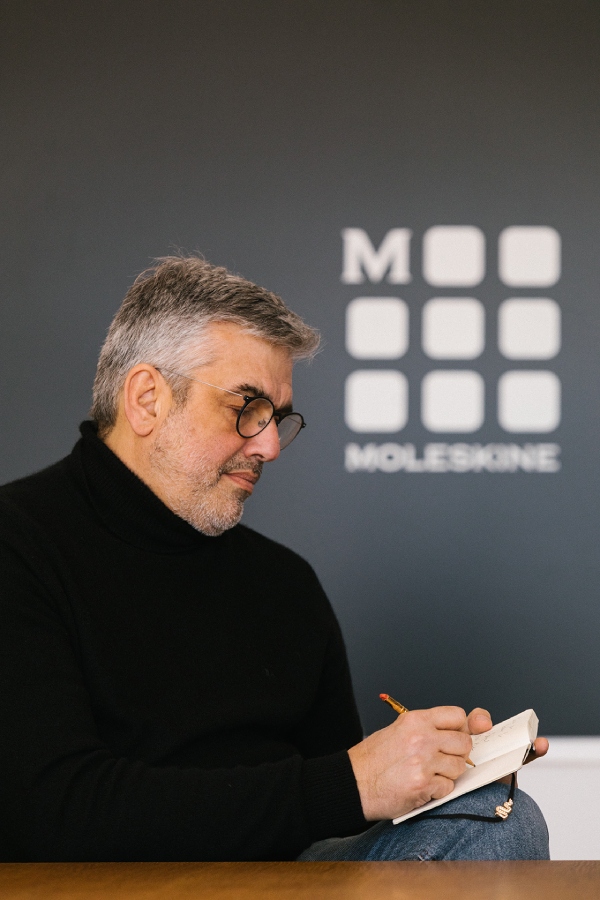
If you’ve ever shopped for a notebook—whether it be for work or just to clear the mind—chances are you’ve reached for a Moleskine. You’ll know them for their sturdy hard covers, sewn bindings, and satisfyingly thick pages. What you might not know, however, is that as of March earlier this year, there’s a new CEO at the helm—Christophe Archaimbault.
We caught up with him to learn more about the man steering this storied brand, with origins tracing back to the 19th century.
ESQUIRE SINGAPORE: You’ve led Pryde Group and Hoang Phuc International, managing brands like Benetton, Kappa, and Dr. Martens. What was your biggest takeaway from each experience?
CHRISTOPHE ARCHAIMBAULT: Leading Pryde Group and Hoang Phuc International gave me a front-row seat to the importance of brand stewardship. Managing globally recognised names like Benetton, Kappa, and Dr. Martens reinforced a key lesson: a brand’s success isn’t just about products — it’s about the emotional connection it builds with people.
Each brand had a strong legacy, but staying relevant meant evolving while staying true to its DNA. Whether through collaborations, cultural initiatives, or adapting to new consumer habits, the goal was always to deepen that connection.
ESQ: How do you see Moleskine adapting to the rise of AI-generated art and writing?
CA: We see these developments not as competition but as opportunities to enhance creativity. AI can offer unique tools and inspiration, but it lacks the human touch, emotional depth, and personal narrative that analogue experiences provide.
While AI-generated content can be intriguing, it is the act of writing or sketching by hand that truly connects individuals to their thoughts and emotions. This connection is something we aim to nurture through our products.
At the same time, we remain attuned to the evolving world, and AI could serve as a valuable enhancement to the suite of apps. Ultimately, we believe that the unique, tactile experiences offered by Moleskine can coexist with AI, enriching the creative process and allowing individuals to express themselves in a myriad of ways.
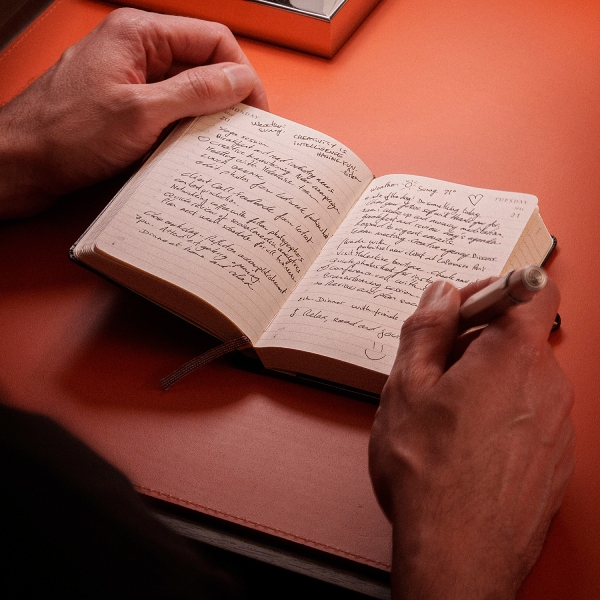
ESQ: Do you believe writing on paper influences a writer’s voice differently than typing on a keyboard?
CA: Absolutely, I believe writing on paper profoundly influences a writer’s voice in ways that typing simply cannot replicate. The tactile experience of putting pen to paper engages the mind and body, allowing for a deeper connection to one’s thoughts and emotions.
When you write by hand, there’s a natural rhythm and flow that encourages reflection and mindfulness. This deliberate pace often leads to richer ideas and more nuanced expression, as it allows writers to process their thoughts in a more meaningful way.
Each pen stroke becomes an intimate dialogue with oneself, fostering creativity and spontaneity. In contrast, typing can sometimes create a more mechanical experience, which may hinder the creative process. The immediacy of digital tools might lead to distractions and a hurried mindset, making it harder to fully engage with one’s voice.
ESQ: You seem very passionate about this. I’m going to let you riff about your love for writing by hand for a while.
CA: Thank you! Writing by hand is a deeply personal and multisensorial experience. Unlike typing, which can feel mechanical, handwriting actively engages the brain in ways that enhance focus, comprehension, and creativity. Research shows that writing by hand activates 14 areas of the brain, improving memory, attention, and cognitive function.

There’s a certain magic in the deliberate pace of handwriting. It promotes deeper processing of thoughts, leading to greater insights and retention. For many creatives, transferring their thoughts onto paper is crucial for maintaining their creative flow. In a world filled with digital distractions, the simple act of jotting down your thoughts can often provide the clearest path to clarity and focus.
ESQ: How have Moleskine products evolved since the brand’s inception?
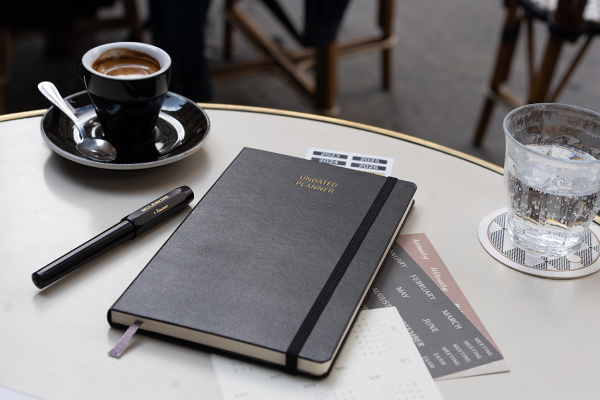
CA: Originally designed as a simple notebook for artists and thinkers like Hemingway and Picasso, we now offer various formats, including planners, sketchbooks, and specialised notebooks for notetaking and journaling. While our Classic Notebook remains a core product, we’ve enhanced it with various paper types and sizes to suit our customers’ preferences.
A significant shift in our evolution has been technology integration, exemplified by the Smart Writing Set. This innovative tool allows users to write by hand while digitally capturing their notes in real time, blending traditional writing with digital convenience.
Moleskine also collaborates with local artists, designers, and cultural institutions to create limited edition collections that celebrate creativity. These partnerships reflect our commitment to supporting the arts and fostering a vibrant community of creators.
ESQ: Are there any new product categories Moleskine is planning on exploring?
CA: Most immediately, we are strategically expanding our adjacent product categories to our core — the notebook. Our priority is to grow our range of premium creative tools, offering a more comprehensive ecosystem for all.
Building on this, we will extend our collection of Kaweco Pens, Blackwing Pencils, and an expanded line of bags, including the Legendary Backpack, ensuring our customers have thoughtfully designed accessories that complement their creative process.
Beyond physical tools, we are exploring advancing our Smart range by enhancing the suite of apps with generative AI, bridging analogue and digital creativity like never before.
ESQ: How does Moleskine continue to inspire artists and writers in Singapore?
CA: In Singapore, we collaborated with 8EyedSpud to design a vibrant, limited-edition Moleskine collection honouring Singapore’s National Day, reflecting local culture through art.
Most recently, we partnered with the Cerebral Palsy Alliance Singapore (CPAS) to showcase the artistic talents of adult artists from GROW, celebrating their creativity through a special collection. As part of our ESG program, “Creative Tools for Social Change”, we also work with NGOs to provide tangible resources for creative empowerment.
ESQ: How do you foster innovation and creativity within the Moleskine team?
CA: One of the ways we nurture creativity is through a culture of collaboration. We believe that the best ideas emerge from diverse perspectives, so we actively encourage cross-functional teamwork and open dialogue.
We also provide our team with the tools and freedom to experiment. Whether it’s refining our classic notebooks or developing cutting-edge Smart Writing tools, we empower our employees to push boundaries while staying true to Moleskine’s heritage.
Creativity thrives when people feel inspired by their surroundings. That’s why we collaborate with artists, cultural institutions, and communities worldwide, bringing fresh perspectives to our designs.

ESQ: What’s the most surprising or unconventional way you’ve seen someone use a Moleskine?
CA: A filmmaker once transformed a Moleskine into a working storyboard for stop-motion animation, sketching each frame by hand and flipping through the pages like a film reel.
Another surprising use was by an architect who carved into the pages to create intricate 3D topographical models. It’s always fascinating to see how people push the boundaries of what a notebook can be.
ESQ: What’s your favourite Moleskine product, and how do you incorporate it into your daily life?
CA: My favourite Moleskine product is the Classic Moleskine Notebook. It’s my constant companion, both personally and professionally. I use it daily to capture fleeting thoughts, brainstorm new ideas, and reflect on what truly matters.
At the end of each day, I take a moment to jot down key reflections and takeaways. This habit keeps me grounded and focused on my goals, reinforcing the importance of slowing down in our fast-paced world.
This interview has been edited for length and clarity.