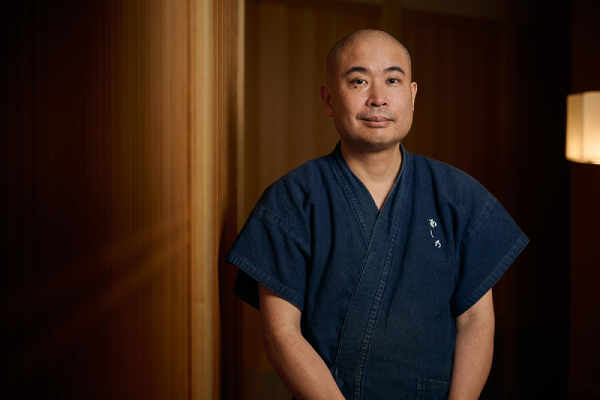
As a young man of 23, Chef Taku Ashino walked across Japan from Tokyo to Aomori—a two‑year pilgrimage that shaped him. It was a journey of self‑discovery, but it was also here that he learned time can teach lessons no technique can match.
That lesson accompanied him into the kitchen. It’s why, in a city where every restaurant boasts its fresh imports—"Flown in from Hokkaido!”— Ashino chooses a different path. He doesn’t chase freshness. Instead, he ages fish for long periods to coax out its deepest flavour. 10 years ago, he introduced this technique to Singapore—10 years in and he’s still championing the craft of ageing.
I spent an afternoon with him at Ashino, his restaurant tucked away on Club Street to taste the difference between aged and fresh. But before that, we spoke for a little while. Just enough for me to understand the man behind the knife, and the philosophy behind every piece of sushi.
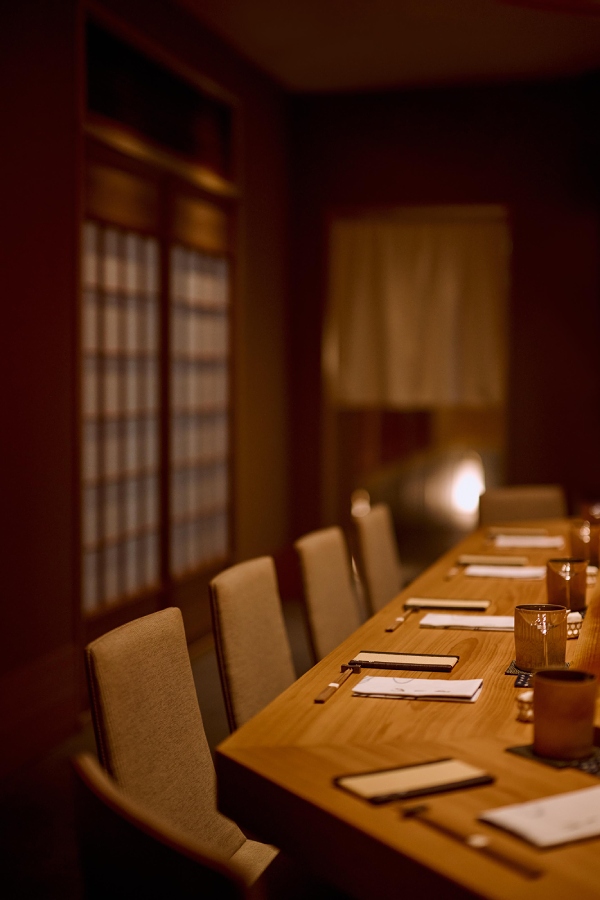
ESQUIRE SINGAPORE: Your journey began with a two-year pilgrimage across Japan. How does that spiritual path still influence your food today?
TAKU ASHINO: Yeah, that is the base of my life.
ESQ: You’ve said sushi is not just food, but a moment of connection. Can you recall a moment where that connection between you and a diner was especially powerful?
TA: There were two guests who picked my sushi as the last meal of their lives.
The two of them were already at the point where they’ve stopped treatment. All their family members asked where they wanted to eat, and they picked my sushi. The two of them said, “no regrets.”
ESQ: How does ageing affect the flavour and texture of the fish?
TA: This one, later you try yourself.
ESQ: Is there a must‑eat dish for guests?
TA: Yeah, the first tuna, the lean meat tuna is our, I won’t say signature, but most of our guests—especially the regulars, those who come back—they feel that eating the first lean meat sushi is leaves the biggest impression. Because of that, the lean meat is the most important part of the tuna for me.
And second, I always serve the soy sauce we’ve been using for 10 years now. So they absorb all the umami of the tuna. That shows our uniqueness—everything is in that one piece of sushi.
ESQ: You mentioned that your approach to sushi is rooted in Buddhist philosophy?
TA: Yeah, I feel familiar with Buddhism, but I’m closer to animism.
Animism comes from “anima.” Anima is a Latin word—it’s a soul. This more privileged style of spirituality existed before Buddhism was born. It's the respect for the spiritual—the animal, the sun, the planet, everything.
It's more for Native Americans, Aborigines, or the Hokkaido natives, the Okinawan people. They still live in the spiritual world, with a deep respect for life. It's different from Christianity, because Christianity makes one God. But animism reveals that everything is spiritual.
ESQ: So, which religion do you practice?
TA: Through my journey, I’ve come to realise that human beings themselves are already spiritual. But especially in modern society, we try not to face that basic truth—that we are spiritual. Instead, capitalism and money attract people more. For example, every day we have to sleep. And when we sleep, where we connect is that basic place we can call the world of anima.
Anima is a soul. So we can’t avoid that we are spiritual. But capitalism tries to make us forget that, focusing us more on money or numbers. Yet our essence can’t be calculated. That’s why every day we have a dream. In the dream world, what can happen is sometimes you chase yourself, but also learn from yourself. So yourself is separated.
But in the unconscious world, it’s not divided. Everything is together. So what I mean by my journey is this: I’ve found my base. I’ve realised what a human being is, and what the spiritual thing is. I always feel the connection.
Because for myself, yes, I am myself, but also you—or anything else can be myself too. So I have that sense as a human being. Through my journey, I think I’ve gotten back to the original essence of being human. So that’s why I say it's basic.
ESQ: What would you say to your 23‑year‑old self when you were just starting out with sushi?
TA: Since I started as a trainee, my mind never changed. Because I knew what I needed to do with my life. So I just do. That’s all. From the moment I met sushi and started training, I just devoted everything to it. And even now, it's still the same.
So it doesn’t matter if it’s the start or now. I know it’s a long, endless road. So I just walk down this endless road and recognise that there's no gate. I’m a gate that has no gate.
Ashino-San—since that’s what everyone calls him—was sharp and to the point when I spoke with him. Quick and precise with no wasted words. It wasn’t after we touched on the topic of religion that I sensed his replies growing longer and his body becoming more engaged.
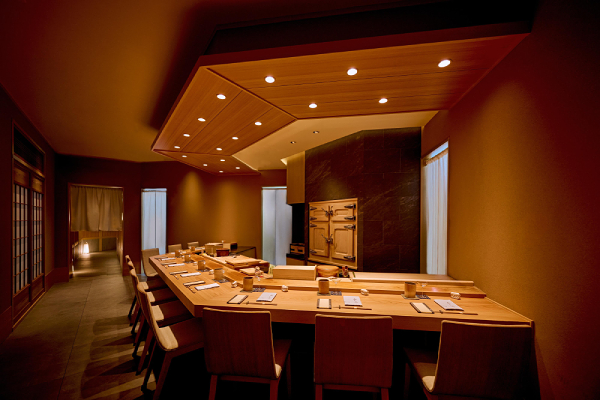
After we’d finished talking, as I watched him work behind the eleven‑seat counter (that’s crafted from 100-year-old Hinoki wood, by the way), another thought came to me: what does he make of Michelin stars?
After all, the idea of chasing something so fleeting seemed at odds with Buddhist philosophy, especially with its emphasis on detachment.
But as I watched him move—hands deft between fish, wasabi, and rice, a faint brush of shoyu across each sushi like a final stroke of calligraphy—I couldn’t bring myself to interrupt. To ask a question like that felt beyond me (and intimidatingly so), so I kept to myself and waited as I sipped on tea, bidding my time.
In the meantime, lunch service began. Over eleven pieces of sushi, I got to taste the three tenets Ashino prides itself upon come to life on my palate. Let me begin.
A process otherwise known as jukusei in Japanese. Think meticulous salting, vinegar curing and controlled ageing of up to forty days. You can see its effect in the fish itself, the translucent shimmer deepening into a rich, glassy glow. You can taste it too. As if absorbing the patience of the process, the fish’s flavours develop into a more mature one, allowing its natural umami to surface.
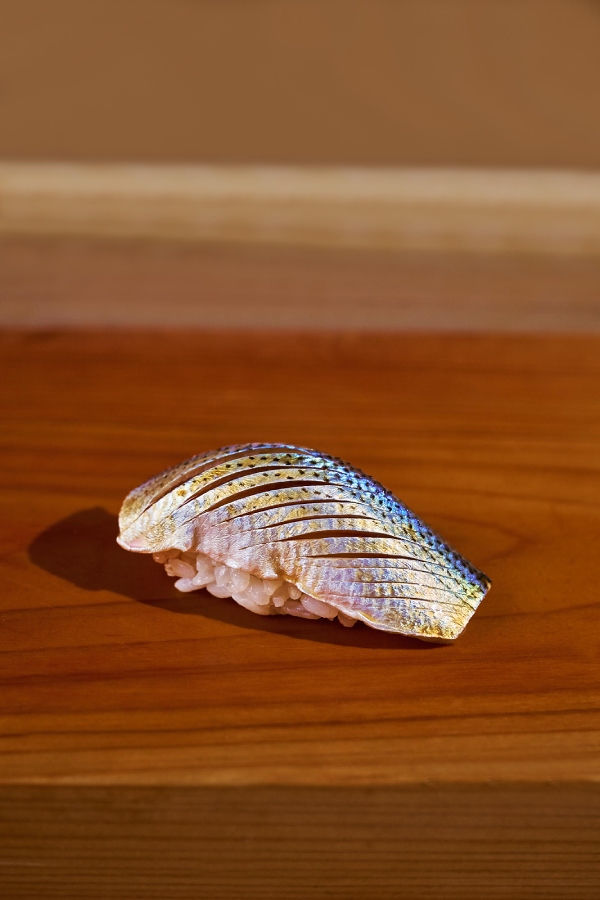
To Ashino-san, serving “fresh” sushi in Singapore is an illusion because of the time it takes for the fish to arrive. He doesn’t fight Father Time; instead, he uses him as his ally.
This depth of flavour rests upon an even older foundation—a 10‑year‑old soy sauce that has been fed periodically since the days of his first outlet at CHIJMES in 2015. This mother sauce has been slowly growing with Ashino-san, accumulating over a decade of flavour to add another layer of maturity and aqueous saltiness to his sushi.
Known to the Japanese as shinkejime—it’s the art of ending a fish’s life swiftly, cleanly, with respect. By severing its spinal cord with a rod, it delays rigour mortis, preventing the production of lactic acid and cortisol, both of which lower the quality of the flesh.
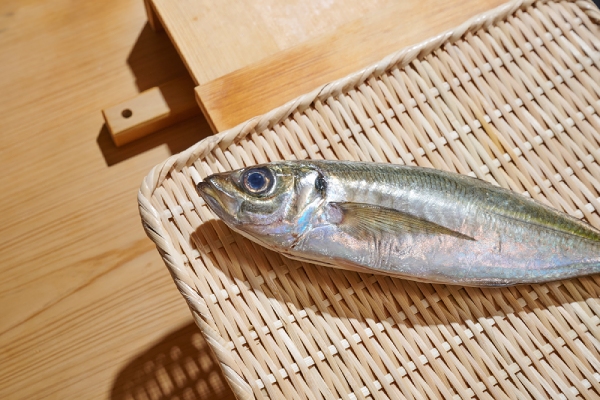
Ashino-san has a well-respected fish supplier in Japan who specialises in this, but he’s been trying his hand at it with local fish, which he serves to his guests. From my visit, I got to try some horse mackerels he caught in Sentosa.
Two slices of the same type of fish—one with shinkejime, one without. The latter tasted fishier, almost murky, while the former was more tender and delicate. Something else I noticed was how the fish without shinkejime slumped between the chopsticks, while the other was firmer.
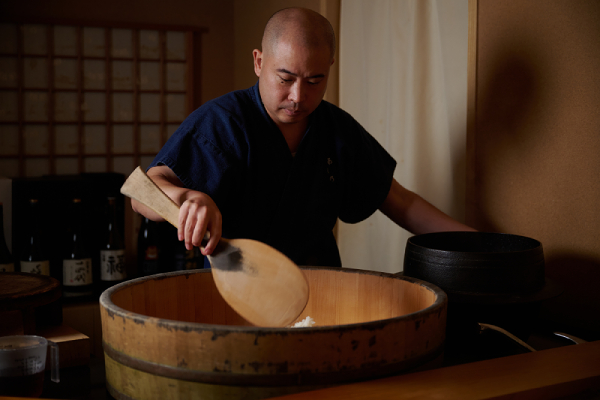
In sushi, where the variables you can adjust are few, Ashino-san leans into what he can control. The ocean gives what it gives, but rice can be perfected.
He washes his rice in mineral water from Mount Fuji, then lowers it into a Nanbu Tetsu iron kettle—the only Japanese restaurant in Singapore to utilise this traditional cooking vessel. The cast iron ensures an even heat distribution and imbues the rice with a faint aroma.
Two rice varieties, Koshikikari and Nahatsu Boshi, are blended until he finds the sweet spot between firm and sticky, sweet and nutty. It’s subtle, but it lifts every piece of sushi just that little bit higher.
Take the Uni sushi, for example. It’s how you’d expect any bite of uni to go—a wave of creamy umami sweetness. But when resting upon Ashino’s rice, it inches away from the other uni sushi I’ve tasted before. It’s a slight edge, but an edge nonetheless.
Unassuming—a scoop of fermented salt ice cream resting by its lonesome in a small bowl. Scooping into it reminded me of a cookie dough’s texture. Tasting it blew my expectations out of the water.
The ice cream was creamy and sweet, but never cloying thanks to the salt keeping it honest. Halfway through, Ashino-san recommends pouring a splash of sake over the ice cream, which adds a soft adult warmth and complexity. I later learned that the ice cream is made in-house. Not with a machine, but churned by hand. Very special.
After I took my last bite and set the spoon on the table, I noticed Ashino-san’s hands stopped moving. They were now finally resting on his hip. I decided that was my chance. So I asked him what I’d been holding onto all throughout lunch. What are your thoughts on having a MICHELIN star?
And in the same way he handles his fish—with precision, no wasted motion and a degree of firmness—he gave his answer.
“I don't care. Many MICHELIN star restaurants use farm fish, a microwave, and are able to get a MICHELIN star. But many of them have closed, and Ashino is still here. So I don't care.”
Sushi Ashino is located at 8 Club Street, #01-12/13 Icon Hotel, 069472