There’s no hiding from AI. It’s everywhere today and now that tools like ChatGPT have revealed just how much generative AI can do, it’ll only continue to grow. Virtually every industry is racing to find out how to use it—in tech-centric ones like gaming, its takeover is inevitable.
There’s no question AI will change the future of video games. In many ways, it already has. The question is how it will change gaming from here on out. Looking at its history and current trends, the future of AI in gaming is uncertain and a little odd.
First, let’s dive into how we got here. The concept of AI in video games is nothing new. The most familiar examples are non-player characters, more affectionately known as NPCs.
If you’re being generous, NPCs have used AI to dictate their actions since the arcade era. Many point to 1978’s Space Invaders as one of the first examples of AI in gaming, as it used patterns to make the titular invaders move. Pac-Man took this to another level by giving each ghost a unique personality.
Most people wouldn’t classify these early examples as AI by today’s standards, but they lay the groundwork for today’s AI. Over time, games like Halo, The Sims and—more recently—Starfield used actual intelligent algorithms to make NPC friendlies and opponents more engaging to play with.
NPCs aren’t the only way games today use AI. Online multiplayer games like PUBG have publicly stated they use machine learning to crack down on cheating. AI also plays a key role in ray tracing and powers some procedural generation features to make game worlds bigger and richer.
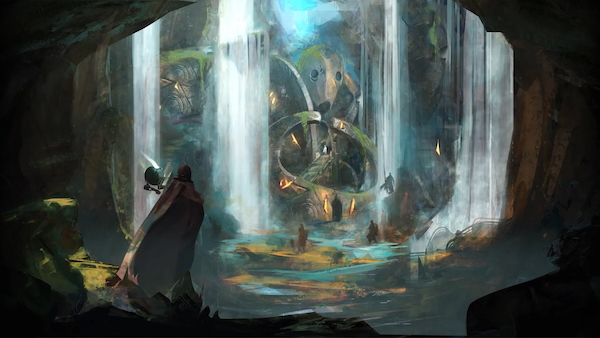
Recently, AI has taken an even bigger role in gaming. One of the most popular examples is AI Dungeon—a text-based RPG that uses GPT-3 to generate unique stories based on your text inputs. The “gameplay” is little more than entering and reading text, but it’s interesting to see the open-ended nature of tabletop RPGs come to the computer.
Inevitably, people took AI Dungeon in the wrong direction. This is where things start to get uncomfortable. As you might expect in a game where you can do virtually anything, it didn’t take long before AI Dungeon started generating sexual content. That content quickly got more obscene, leading the developer to step in and add filters to stop it from generating stories about minors.
The beauty of AI-generated stories is gamers can do anything, but that’s also the terrifying part. AI Dungeon course corrected before things went too far, but who’s to say that’ll be true of AI games in the future?
To be fair, only some games in the future will be entirely AI-driven. In smaller doses, AI could be an exciting and less troublesome step forward for gaming.
As AI grows, the days of CPU teammates running aimlessly in circles or enemy bots charging directly at you could be over. Instead of following a set of predetermined rules, machine learning-powered NPCs could react to new situations in real time.
Enemies could adapt to your playstyle, so you can’t cheese your way through level after level. On the flip side, opponents could adapt to become slightly easier in some cases to make games more accessible. Sure, there’s an argument that adaptability means not everyone will get the game’s “true experience”, but if more people can enjoy it, does the “true difficulty” really matter?
AI will also make games look better. Nvidia already uses AI to de-noise ray-traced games in real time. In layperson’s terms, that means AI fine-tunes lighting effects as you play to ensure the game looks as good as possible no matter where you are or how you’re playing.
As AI improves, these kinds of graphics adjustments will be available without a top-of-the-line GPU. Good graphics don’t equal a good game, but you can’t say they don’t make it more enjoyable. Games could adjust your settings according to how well your computer or console is running. It would be a little sad to say goodbye to hilarious graphical glitches, but gaming would be better off for it.
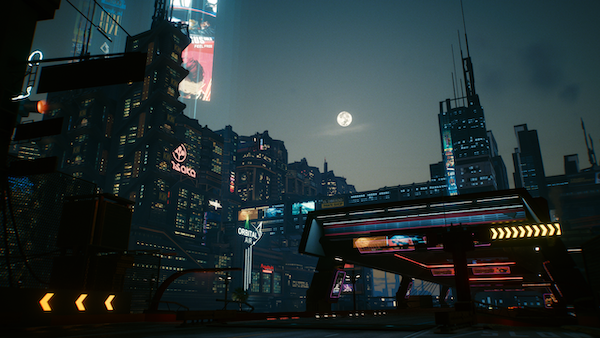
Graphical bugs aren’t the only ones AI can squash. Anyone who has pre-ordered an AAA game in the past few years can attest to how big the bug problem has got—looking at you, Cyberpunk. To be fair to developers, glitches are often the result of crunch time. Games today are complicated, and developers don’t have enough time to catch and fix every issue before release, but AI could fix that.
If studios use AI wisely—and that’s a big “if,” but we’ll get into that later—they could inspect a game’s code and test it during off-hours to see how it performs. That way, quality assurance testing—which normally takes several months—could take mere hours. That means developers can catch more bugs before launch and afford more in-depth testing, even with a tight deadline.
That’s enough praise for the robot overlords for now. For all of AI’s benefits, its future in gaming isn’t all rainbows and sunshine. The technology also has a dark side that will rear its ugly head before too long.
Whenever you talk about AI and automation, one of the first big questions is what it’ll do to jobs. While AI can’t create an entire game from start to finish yet—at least, not a very good one—it can code. It can also create digital art. That darkens the future of some developers’ jobs.
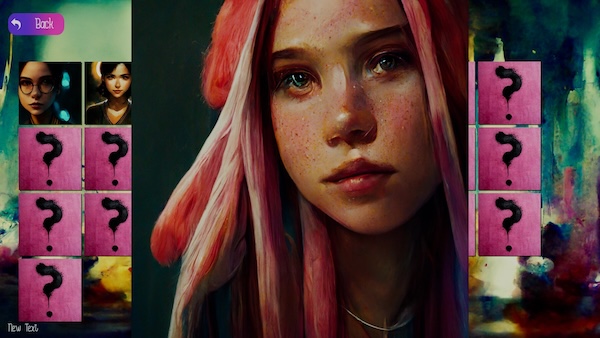
Take This Girl Does Not Exist, for example. It’s a fairly straightforward dating sim, but what sets it apart is AI generated every element of the game, from the dialogue to the artwork. Humans still had to refine and piece all the AI-generated elements together, but AI did a lot of the heavy lifting people with jobs normally do. It won’t be long before generative AI goes even further.
You would hope studios would use AI to streamline people’s work instead of replacing them with it. Recent history, however, paints a different picture—increasing AI usage led to almost 4,000 people losing their jobs in May 2023 alone.
AI in gaming will also introduce some ethical and legal copyright issues. Sure, human artists take inspiration from other artists all the time and we call it homage, not theft, but AI muddies the water.
A group of writers recently sued ChatGPT’s parent company OpenAI for using their writings to train the bot without their permission. Visual artists have brought similar complaints against image-generating bots like Midjourney and Dall-E.
It’s hard to say for sure whether AI is just taking inspiration or outright stealing. If you consider how game studios have already used fan art in official material without the artists’ knowledge or consent, AI art looks more and more like theft.
Some of the effects of AI in gaming will be less serious but still ugly. They may not significantly impact games and their development, but they could be disappointing, different or just plain odd.
If you have spent much time on TikTok lately, you’ve probably witnessed the power and—more often than not—hilarity of AI voice acting. While many text-to-speech models still sound robotic, some are remarkably human. AI recreations of celebrities’ voices are particularly impressive and equally terrifying.
Game developers could use this technology to fill their world with realistic, engaging NPC dialogue. On the plus side, that means no more indie games with line reads straight out of The Room. If it goes too far, though, it could leave games feeling soulless at best and take jobs from voice actors at worst. Once again, it comes down to how studios use it—and game companies don’t have the best track record.
Another ugly issue is that AI is simply too convenient. Yes, there is such a thing. Over-reliance on AI will lead to lazy development. To be clear, there’s nothing inherently wrong with using technology to streamline development. Addressing the industry’s massive crunch problem is important. That said, some game companies will be lazy and take AI-generated or AI-checked code at face value, and that’s not ideal.
That oversight will lead to some games being just as—if not more—buggy than they are now. Alternatively, it could mean admittedly hilarious but still frustrating robotic AI dialogue or NPC actions. AI needs humans to double-check its homework, but people are lazy and big corporations are cheap, so that won’t happen in every instance.
AI abuse will also mean some games will lose their human touch. When human artists, writers, and developers don’t have enough say or involvement, it’ll lead to uncreative, boring games.
Yes, video games should be fun, but fun isn’t the only thing that makes games enjoyable for most people. People play games because they make them feel like part of something bigger. They can help you escape into new, immersive worlds or think about the one you live in from a new perspective.
The best games are those that touch your soul and tug at your heartstrings. Experiences like that require a human touch in development and AI—for all its bells and whistles—can’t recreate that.
Overall, AI’s impact on gaming will be a mixed bag. In some cases, it’ll make games more enjoyable and accessible or reduce developers’ huge workloads. At the same time, it will also threaten some jobs or take away what makes games so special in the first place.
How AI’s impact on games pans out depends on how people use it and how related laws shape up. Until then, AI will present an exciting yet worrying future for video games.
Oscar Collins is the editor-in-chief at Modded