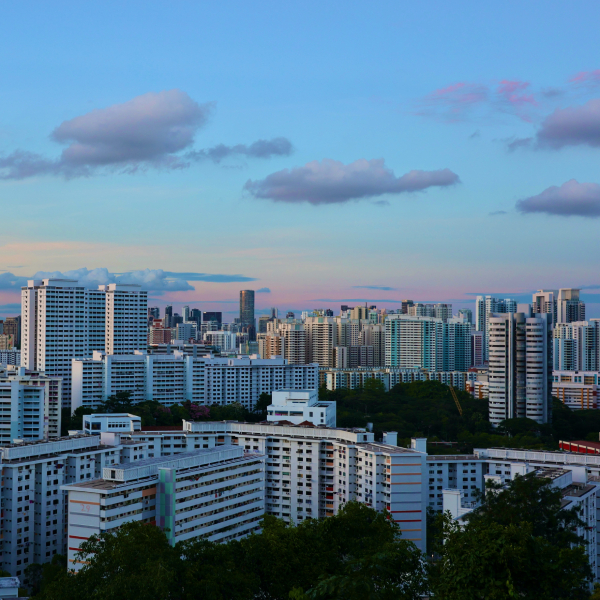
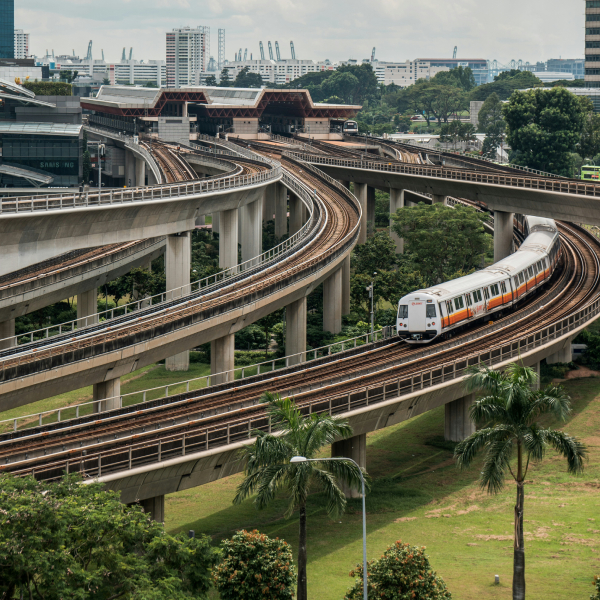
I’ve been thinking about authenticity lately, and nothing exposes the manufactured nature of a place quite like a train ride through the heartland and its supposed soul. I took the MRT that cuts through the arterial system of Singapore like a scalpel through carefully arranged organs. The financial district gave way to the heartlands, those sprawling estates of public housing that politicians invoke whenever they want to sound connected to "real" Singaporeans. What I saw from that train window was a fever dream of urban planning, a place where authenticity had been focus-grouped to death.
Hearts pump blood; they don’t house people. But in Singapore, we’ve made a fetish of the metaphor, as if calling something the heartland could somehow inject warmth into what is essentially a vast experiment in social engineering. The Housing Development Board built filing cabinets for humans, then painted them in cheerful (debatable) pastels and called them home.
I got off the train and walked through one of these heartland neighbourhoods.The void decks hummed with activity: the elderly played xiangqi, teenagers were on their phones, and aunties chatted over CDC vouchers. What I witnessed felt more like parallel play—different groups occupying the same space without truly intersecting, like actors on a stage who’ve learnt their blocking but never rehearsed together.
These HDB flats stretch out in neat rows, each block a variation on the same theme. Whoever designed them believed that equality meant uniformity and that if everyone lived in identical boxes, somehow the contents would become identical too. It’s a profoundly contemporary notion—this idea that the environment shapes character more than character shapes the environment—transplanted into tropical soil, where it grows in strange, unexpected ways.
An elderly man fed pigeons from his third-floor corridor, scattering breadcrumbs with the methodical precision of someone who’d been performing this ritual for years. Below him, where his gestures indicated a kampong once stood, a minimart displayed its fluorescent-lit wares behind security grilles. The transformation was complete: from an organic community to an organised convenience, from a place that grew to a place that was built.
The playground beneath him was a marvel of modern safety standards, featuring soft surfaces, rounded edges, and equipment that had been tested to international specifications. Children played on it with the concentrated efficiency of tiny workers fulfilling their recreational quotas. Their parents sat nearby, scrolling through phones, occasionally looking up to ensure no one was straying beyond the boundaries of approved fun. There were no drainage ditches to explore here, no trees tall enough to tempt climbers.
The paths between heartland blocks are mapped, signposted, and maintained by people who’ve never lived in them. Covered walkways connect everything—the void deck to the playground to the MRT station—creating a network of climate-controlled corridors that shield residents from the very weather that once defined tropical living. You could spend an entire day in the heartland without ever truly being outdoors, without ever experiencing the sticky discomfort that once united all Singaporeans in shared misery.
I stopped at a coffee shop, one of those hawker centres that survive as monuments to an older Singapore and would now cost millions to own. The uncle behind the kopi counter moved with practised efficiency, his routine unchanged despite the gleaming food courts sprouting in nearby malls. His dismissive attitude toward my questions about heartland authenticity was more profound than any sociological analysis could be.
The heartland, I realised, exists primarily in the imagination of people who don’t live there. It’s a concept deployed by urban planners, politicians, and lifestyle journalists who need to believe that somewhere in this city-state, amid all the efficiency and progress, something authentically Singaporean still beats. But authenticity isn’t something you can zone for. You can’t manufacture a soul through architectural guidelines or community programming.
It’s a condition, a way of being that emerges despite urban planning, not because of it. It’s in the uncle’s dismissive efficiency, in the old man’s patient feeding of pigeons, and in the teenagers who’ve claimed a corner of the void deck as their own small country.
It’s in all the ways people have learnt to be human within the constraints of a system designed to optimise their happiness. Walking back to the MRT station, I passed a mural celebrating some version of our heartland heritage. It depicted smiling faces of various ethnicities arranged around images of HDB blocksand hawker stalls, all rendered in the sanitised style of government propaganda.
But the authentic heritage was happening just below the mural: a group of foreign workers sharing dinner on cardboard boxes, their laughter echoing off concrete walls. They’d found a way to make a home in a place that wasn’t built for them, the way people always do. The train back to town was crowded with heartlanders heading to their evening shifts in the city centre—cleaners, security guards, and service workers who keep the machine running.
They looked tired but not defeated, carrying with them whatever it is that makes a place worth living in despite everything that makes it not. That’s what heartland means: the stubborn human insistence on finding the heart in the most unlikely locations. The heart beats in the people who refuse to let urban planning dictate the rhythm of their lives