
For a union to occur, there needs to be a common denominator between two parties. And there's nothing stronger than belief. It's not immediately evident about what Glenfiddich and the Aston Martin Formula One™ Team have in common. One's the producer of the world’s most awarded single malt Scotch whisky, the other is a British-based racing constructor. A world-class single malt and a Formula One car may have little in common on the surface, but both are the product of meticulous work that happens long before the final result is revealed.
Glenfiddich's malt master, Brian Kinsman and the Aston Martin Formula One™ Team's managing technical partner, Adrian Newey, were inspired by the invisible machinations that bubble beneath the surface. Nothing happens in a vacuum. For every zip past the finish line is a well-oiled pit crew; the engine's horsepower; the driver's intuitiveness from years on the track. For every dram of whisky comes years of oversight, and deft maturation that shapes it into what it is today.
For its second year of the collaboration between Glenfiddich and the Aston Martin Formula One™ Team, comes a 16 Year Old Limited Edition Release No.2. Matured across five cask types—two more than the last edition—the whisky's complexity drew from first-fill bourbon barrels; Oloroso sherry casks; wine casks; Port pipes; before finishing in Fino sherry butts.
The result is a refined and assured whisky. Bottled at 43 per cent ABV, it opens with aromas of rich fruit and marzipan, followed by a palate of cream, orchard fruit and toffee before a lingering woody sweetness on the finish. On the palate, a swirl of cream, orchard fruit, and toffee, before finishing with a lingering woody sweetness.
Commemorating this release, Glenfiddich places the focus on the Singapore bar scene. Six iconic drinking holes (ANTI:DOTE, High House, temper., Tess Bar, Writers Bar and VUE) will host their two original Glenfiddich creations each alongside the signature Speyside Spritz.
Our local bars will parlay their creativity with several Glenfiddich whiskies for F1-sounding cocktails that will only be available for this occasion. Cocktails include the ear-catching “Box, Box, Box!” from ANTI:DOTE, which has a Glenfiddich 12 Year Old, Pedro Ximénez, smoked oak, and chocolate; the creamy-tasting Silverstone 16 from Writers Bar that's made from a Glenfiddich 12 Year Old, IPA beer, lemon, raspberry, and egg white; Apex Fizz from temper., which comprises of a Glenfiddich 12 Year Old, grapefruit, and soda—simple ingredients, but the taste is far layered than that.



The Glenfiddich Speyside Spritz will also be available across participating bars, with each venue offering its own interpretation of the serve. Expect a refreshing blend of Glenfiddich 12 Year Old, pear liqueur, fresh lime juice and a splash of soda.
Time is a great equaliser, but what you make with it is what determines the fruit of your labour. Whether it's years of precision, or the experience of craftsmanship, the majority will not witness the unseen work poured into the endeavour. But the effort will be keenly felt in the result.
Patrons can partake in the limited-time cocktail programme, with exclusive serves available at the following bars—ANTI:DOTE, High House, temper., Tess Bar, Writers Bar and VUE. This programme will run until the end of October.
Consumers aged 25 and above can also stand a chance to win an exclusive signed helmet. Receive three chances with every bottle of Glenfiddich 15-Year-Old or above purchased, or one chance with every three Glenfiddich cocktails or qualifying whisky flight purchased at participating bars.
Find out more and enter the giveaway
Skillfully crafted. Enjoy responsibly. Never drink and drive.
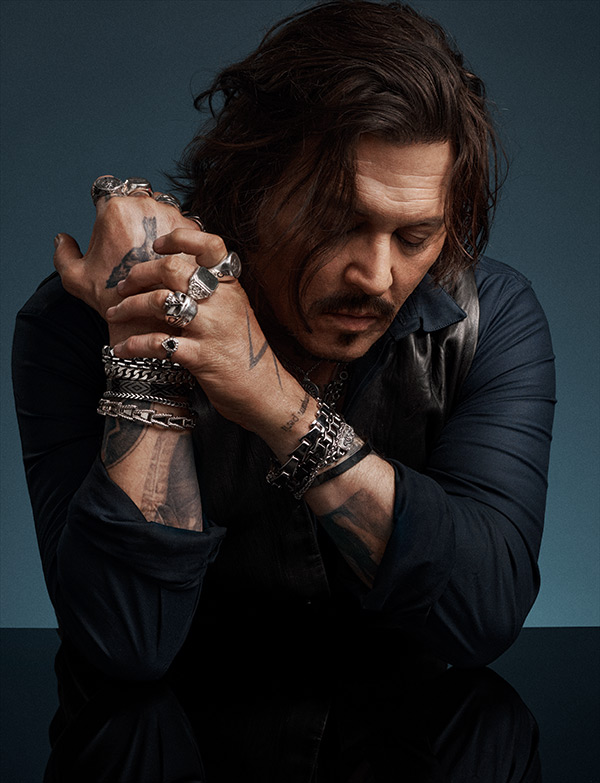
When François Demachy created Sauvage for Dior, it was a men’s fragrance revolution. It has fresh citrus notes grounded by a rich lavender that’s then punched through with the intensity of Ambroxan. Dior’s perfume creation director Francis Kurkdjian refers to this as a “fascinating composition” and one that sets the stage for boundary-pushing ideas. “I wanted to take up the challenge of creating absolute nobility in a men’s extrait. Because an extrait is quite simply the ultimate expression of a fragrance—its quintessence and its culmination,” Kurkdjian said.
Sauvage Extrait is the result of Kurkdjian’s endeavour. Like its name suggests, the very existence of an extrait fragrance means that the most exquisite ingredients were required to craft its olfactory imprint. Kurkdjian introduced oud wood—specifically Vietnamese oud wood that’s known for its rich yet subtle character—to the Sauvage line as the Extrait’s backbone. Dark Atlas cedar and patchouli from Indonesia make up a robust woody accord that’s contrasted with a more luminous woody accord consisting of pale Virginia cedar and vetiver from Madagascar. This play of woody notes as well as the Vietnamese oud wood, all harmonise with the Sauvage’s signature Ambroxan and its Provençal lavender accord.
It takes 42 days for the Sauvage Extrait composition to mature and macerate. But with anything of exceptional quality, the wait is merely part of the process. Sauvage Extrait reaches record concentration levels with remarkable longevity on the skin—like the tattoos that are part of the personality and image of the face of Dior Sauvage, Johnny Depp.
If previous campaigns of the different iterations of Sauvage have always focused on its freedom-baring aspect, this time around, Sauvage Extrait takes to a place of solitude. Deep in thought with an intensity to match that of the new expression, this is perhaps the one that Depp embodies the most.
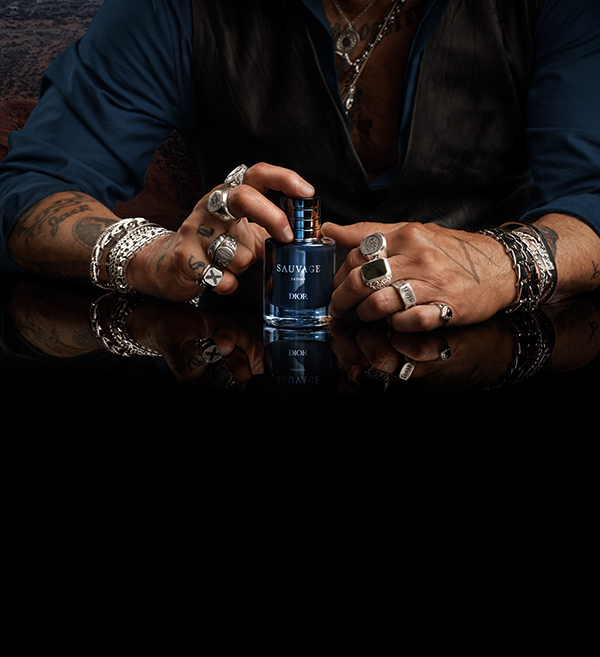
“When I was last with Francis Kurkdjian, he put these wonderful scents together and challenged me with a guessing game, which was a way for him to allude to this new adventure. Francis is both an artist and a scientist… He has a unique way of recording a smell that you react to in an emotional way.”
“There is a common relationship between scent and what I do in my day job. You smell one scent—sometimes a very simple one, like lavender or honeysuckle—and immediately, without asking for it, you are transported to a moment in your life. A scent can take you back to another time, place or memory the same way music can take you back to a very precise place in your life. Scent is one of our most important gifts.”
“I got my first tattoo when I was 17. Like I was saying about scents and memories, my tattoos represent different moments and chapters of my life. They are all tied to memories or dedications of love, for my kids, and for some of the people that I have lost.”
“I have always admired those who are committed to their art: Charles Baudelaire, Vincent Van Gogh, Antonin Artaud, Marlon Brando, Lenny Bruce, Chuck D… There are so many of them. I also painted Patti Smith, who is my balance in the world, my fairy godmother, an angel who I am so blessed to have as my dear friend and sister. More generally, I suppose the folks that seem to grab a hold of me are the ones who display everything, that have honesty and a great kindness. When I was a young man, I couldn’t even have dreamed of becoming friends with Keith Richards, Patti or Jeff Beck… These experiences have been amazing.”
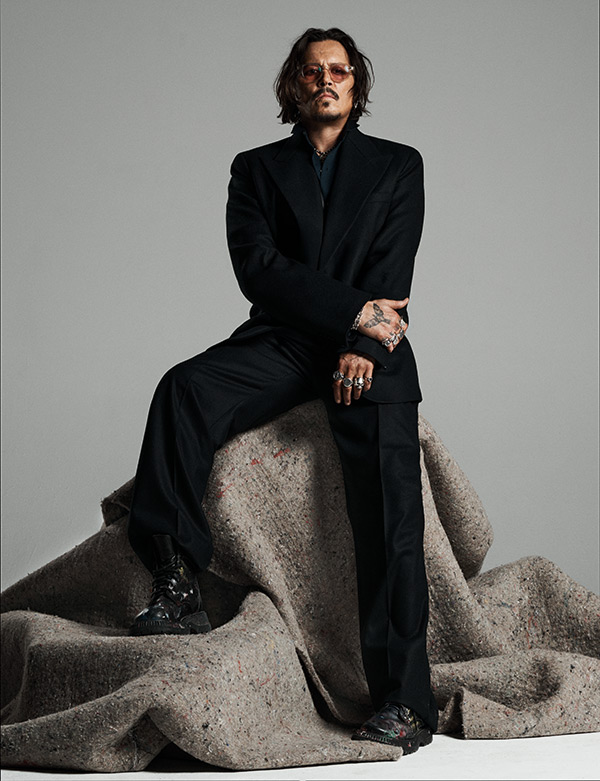
“I watch a lot of documentaries. They’re a great way of sorting through various volumes of the encyclopaedia. I also dig into the works of some heroes of mine. For instance, Amadeo Modigliani, who didn’t sell a single painting during his lifetime. Thinking of it makes me realise how lucky I’ve been to have a chance to be in movies and act. I feel incredibly fortunate.”
“The moment I arrive in the Bahamas, I’m instantly and totally anonymous. There, I can find the isolation that helps me decompress from the months spent making films and travelling around. I arrive and I don’t have to say a word to anyone for days. Talk about being a lucky fellow.”
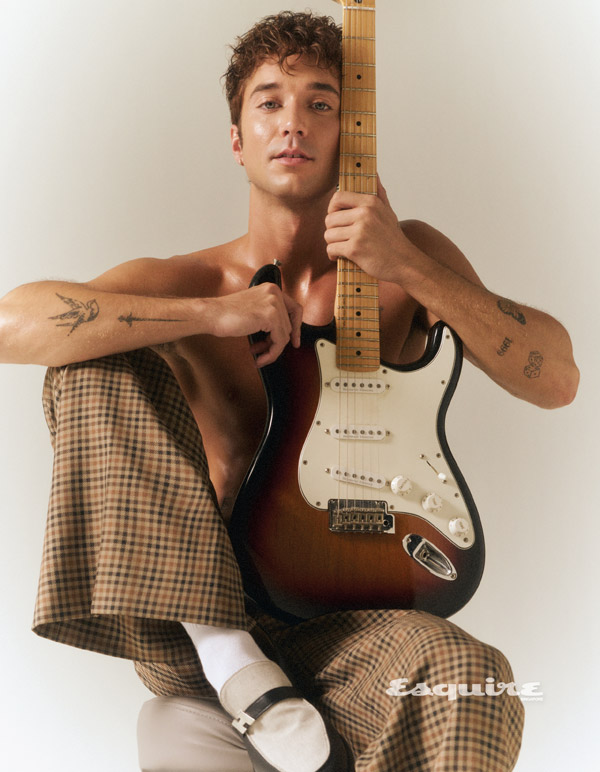
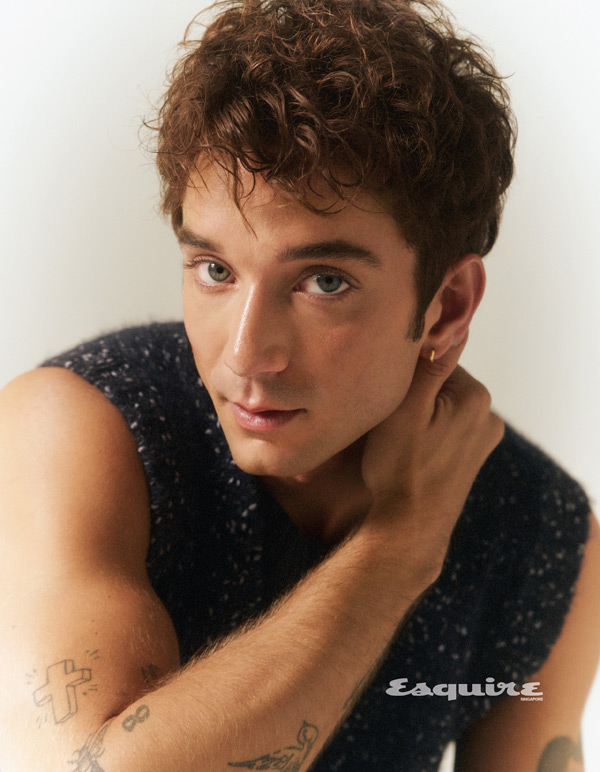
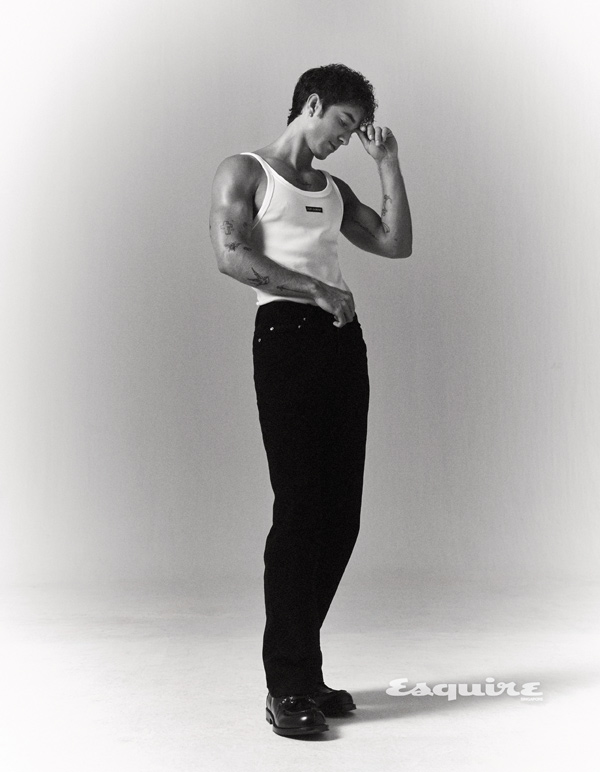
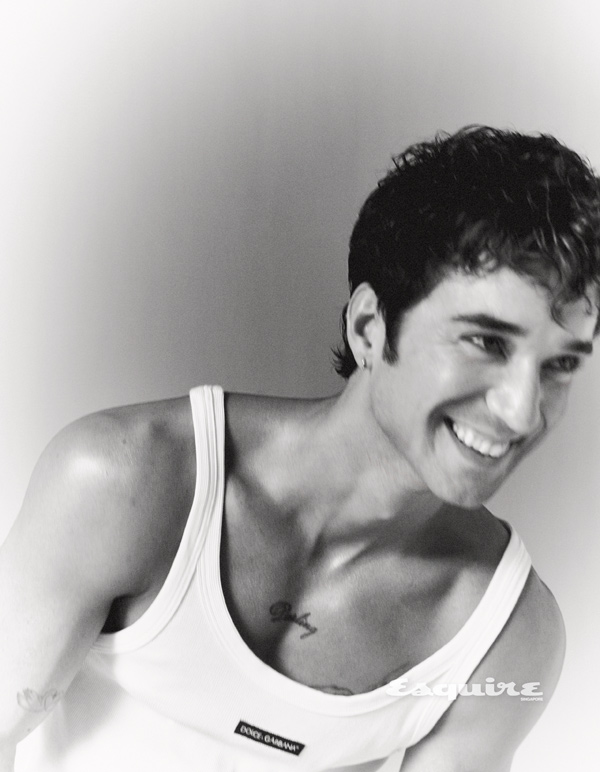
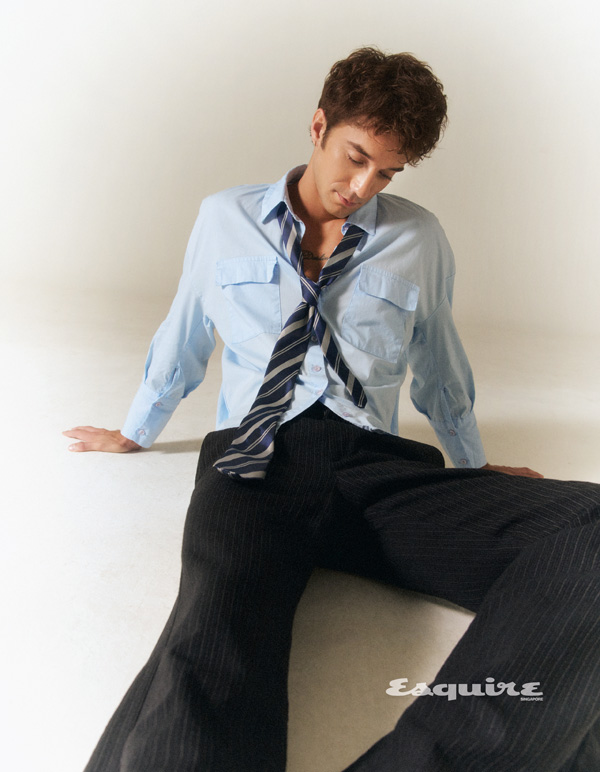
When Daniel Seavey stepped into the spotlight at the brink of 16, the world was his oyster. Crossing the threshold from American Idol finalist to boyband star, it felt like there was nothing to worry about and nothing to lose. Until he lost a lot of it.
Emerging from the personal and professional storms, the singer-songwriter has since learnt more about what he had to independently offer the world. There is a growing gratitude towards the musical gift he possesses; a means that kept him afloat to overcome those very hardships.
He doesn’t leave his team and family out of the equation, attributing them as the source of his optimism. Which he seemingly has in heaps. The bubbly 27-year-old emanates an adolescent effervescence throughout the conversation. Before he gushes on soccer and meditation as his recent fixations, he settles into a glossy metal chair and kicks us off with an acute observation.
DANIEL SEAVEY: This looks like an electric chair.
ESQUIRE SINGAPORE: Or those sort of lie detector interviews. Have you ever done–
DS: Crime? No.
ESQ: If you were ever to be convicted for a crime, what do you think it would be for?
DS: Looking too freakin’ good, probably.
ESQ: And humility, clearly. Or being a musical genius. I read you played four instruments by age 10?
DS: Affirmative. Um, this is so nerdy, but I’ve always said it kind of feels like a language. Like with grammar structures, music is made up of the same notes just in different places. I feel like my gift is being able to know where a note on a piano lies versus on a cello versus on a saxophone. It just made sense to me at a really young age how they all connect.
ESQ: How many instruments do you play now?
DS: I don’t know. I think if you give me [a new] one, I could learn it pretty [quickly]. Navigating an instrument just clicks really [easily] for me. The music side has never been very confusing; it kind of happens naturally. I don’t know how to necessarily explain what I’m doing; I just do it, you know?
ESQ: Is there one you enjoy the most?
DS: Right now, I love playing the cello. I love that when you are playing it, you literally feel it resonating through you because it’s leaning on [your body]. I still love the electric guitar; it was my go-to for a while but [my favourite] changes for sure. The first instrument I learnt was the piano. And if I was gonna tell someone what instrument to learn first, I think the piano is the best start because the notes are so blatantly in front of you to visually inform you where they are.
ESQ: Well, I tried, and it didn’t go so well.
DS: It didn’t inform you enough? You gotta keep trying. It’ll click, I’m telling you.
ESQ: No, not everybody is like you.
DS: Not everyone’s autistic. No, but it’s been really validating and full circle for me to now get to play all these instruments on stage and watch people care about that nerdy side of me.
ESQ: Is it hard to not seek validation from people for what you do, or does that happen inadvertently?
DS: This business can really be tough on your perception of yourself. In some ways, I was really loved and validated by the amazing fans we had in the band. Then there were sides of me that I was nervous to share with them, so they wouldn’t even know to validate that. At some point, I tried to get over the idea of only doing something for validation. Leaning into my instrumentation; doing less stuff about the looks and more about the music. I had low expectations that people would receive it well. I just wanted to do it for me. The fact that they did and just loved it in the way they have has been life-changing. Easier said than done, of course. I had to unlearn a lot of things and return to this childlike state of just loving something and not thinking twice about any of it.
ESQ: What were some of the things you had to unlearn?
DS: Making songs for the sake of performance. Especially coming from a boy band; it’s so embedded in. It wasn’t a terrible thing, just a different game that I was happy to play then. The music I was making for myself just meant too much to me to turn it into a numbers game. I was really trying to push for something authentic with it.
ESQ: I read that you completely rewrote your debut album.
DS: I think trying to find your identity and sound is a constant process that a lot of artists can relate to. When I first came into my solo career, it was a very bumpy road, and a lot of the crazy stuff translated through my music. I felt like I was almost getting in the way of myself. I missed myself before all the dark chaos, so I did a lot of internal work in my life to try to get back to a point where I could be optimistic. Then naturally, the music started to feel that way as well. I just wanted my first album to be something that felt like the essence of me, and I definitely felt like what came out was a good representation of Daniel. It’s funny, listening back now, there are lessons that I feel like I’m teaching myself. I hear some really raw thoughts, but having my own perspective to add on top of it now feels like it was right to let it sit the way it has. I don’t think it’ll never see the light of day.
ESQ: How differently do you see yourself now after the tough season you’ve weathered?
DS: I’ve been trying to acknowledge the abnormalness of this gift. I really had a tendency to downplay it in some unhealthy ways. Trying to make people feel okay in a room, but sticking out like a sore thumb. Lately, I’m finding a better balance of accepting who I am, leading with good intention and not worrying about the rest. Looking at it with appreciation rather than as this curse that I inherited. I also realised that everybody in their own context of life, has things that make them stand out, that might make others feel weird. So I do think we can all relate to the idea of navigating the world with whatever unique gift we’re bringing to the table.
ESQ: Do you ever wish you could listen to music normally?
DS: For sure. I really envy what it would be like to listen to music without hearing every note while it’s happening. When I hear music, I hear numbers, all the separate instruments. When I’m listening to the verse, I can’t help but think about where the pre-chorus is gonna go. I’m breaking it apart in my head as it’s happening. I would love to hear it for the feeling with nothing else going on, but then again, I also love being able to hear it the way I do.
ESQ: Does that translate to rhythm, i.e. can you dance?
DS: Oh, I got some moves. They’re probably not the best in the world, but I can hold it down.
ESQ: Anyone else in the family caught the music bug?
DS: Not in the slightest. My dad’s nickname in school was tone deaf Jeff. He’d be so mad I brought that up. My mom could sing a little but never admit it. At three years old, when she was spraying my hair to slick it, the sounds it made, I was like, “You’re playing Ode to Joy.” That’s when they were like, “This is a weirdo. We need to get him an instrument.”
“I also realised that everybody in their own context of life, has things that make them stand out, that might make others feel weird. So I do think we can all relate to the idea of navigating the world with whatever unique gift we’re bringing to the table.”
ESQ: Any other memories like that?
DS: There was an extra credit class in my high school for orchestra, but we were really broke growing up. I was too embarrassed to admit that I couldn’t afford a cello, so I just lied and said that I had one at home. I think it’s how I learnt perfect pitch, ‘cause I would go home and I would play the air cello to practice and hear the note in my head. I ended up getting first chair that way. My mom caught me faking her signature for the practice log, brought it to my teacher, and she was like, how have you been practising? She then lent me one of hers, so that was sweet of her.
ESQ: What is it about music that you truly enjoy?
DS: It’s all feeling based. I overthink a lot of things in life, and it lets me just shut my brain off and get into my body, and I love that about it. When I’m playing music, it’s so, so fun for me. Like the way you could watch TV shows forever and there’s always something new and entertaining to watch, music’s the same way. There’s always more to navigate and discover, so it’s just endless fun.
This interview has been edited for length and clarity.
Photography: Shawn Paul Tan
Creative Direction and Styling: Asri Jasman
Hair: Christian M using SCHWARZKOPF PROFESSIONAL
Makeup: Kenneth Chia using LANCÔME
Photography Assistant: Melvin Leong
Styling Assistant: Erica Zheng
There are many things that distinguish a brand or a fashion house from another. A name in itself is a branding device, but beyond that, it is not unusual for one to be recognised from a multitude of other signifiers.
Dior is a fine example. You’d just as easily recognise Christian Dior by the founder’s last name, which has become synonymous with a refined sense of sartorial elegance. Even shortened to initials, CD calls to Dior in subtle ways. There’s also the Dior Oblique adorning everything from ready-to-wear to accessories as a distinct foundational recurring pattern.
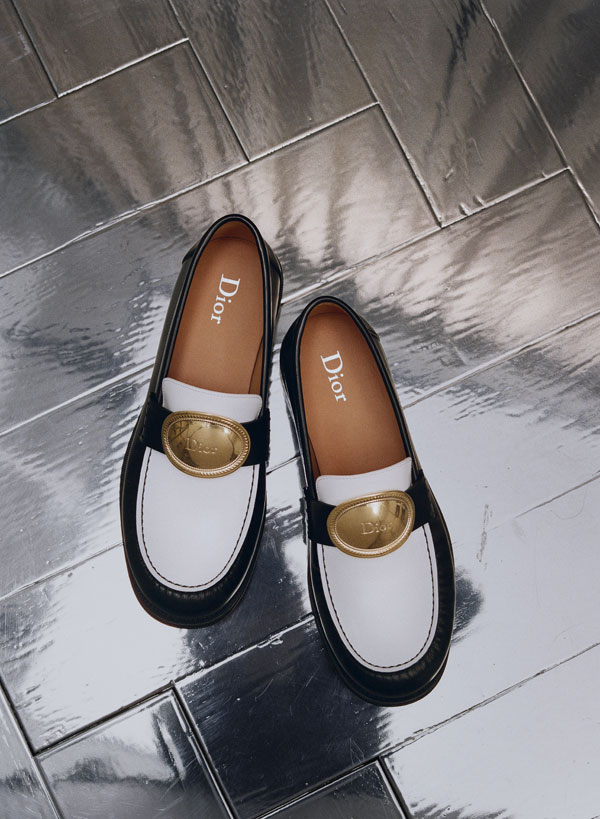
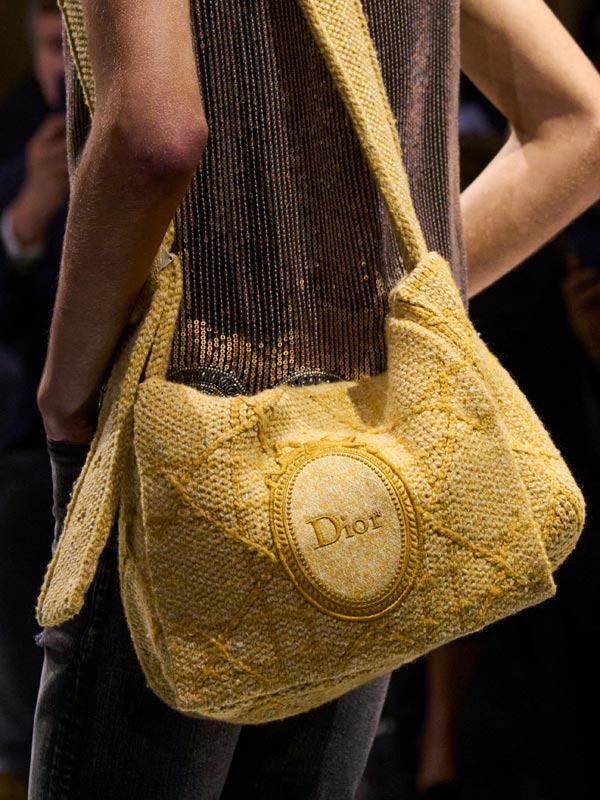
The Dior Médaillon is unlike the House’s other signifiers. It wasn’t drawn from the Christian Dior name, but rather, inspired by the House’s very beginnings. The story goes that when Monsieur Dior first established his couture house at the historic 30 Avenue Montaigne address in Paris, the boutique was furnished with Louis XVI-style médaillon chairs. These were seating for the House’s clients during his early fashion presentations. The oval-shaped backs of these chairs was adopted as a Dior emblem in 1946, around the same time that 30 Avenue Montaigne came to be.
Eighty years later, creative director Jonathan Anderson is set to give the Médaillon its deserving spot as a House icon. Anderson’s love for the arts beyond fashion saw him leaning into the Médaillon from the very beginning of his debut; a Médaillon chair was pictured as one of his many teasers leading up to his first runway show. With the motif recalling the elegance of 18th-century French decorative arts, it’s little wonder that Anderson aims to emphasise its importance as a visual connection to the House.
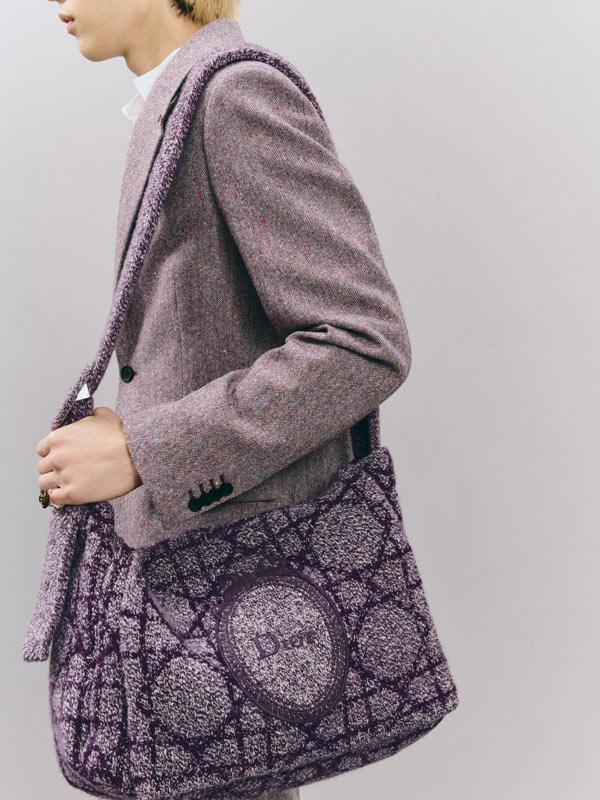
The Winter 2026 menswear collection was the perfect backdrop to reintroduce the Médaillon, especially in the menswear universe. The collection’s tension-filled narrative (an eclectic mix of seemingly opposing ideas) made the Médaillon a fitting element—itself a more feminine motif due to its smooth curves and the bow attached at the top. It appears as the central character on the Médaillon Knit bag the collection’s attention-grabbing accessory. The Médaillon Knit bag, as its name suggests, is knitted entirely from a blend of wool and cashmere. Coloured yarn is twisted with white yarn to create a textured mélange thread using the tweed mouliné technique. The base of the bag is produced using traditional maille-knitting before the House’s Cannage motif (yet another Dior signifier) is hand-embroidered right across the surface. This results in more depth as well as artisanal refinement to the Knit bag. The Médaillon motif is embroidered right at the centre front of the bag for an even more tactile element.

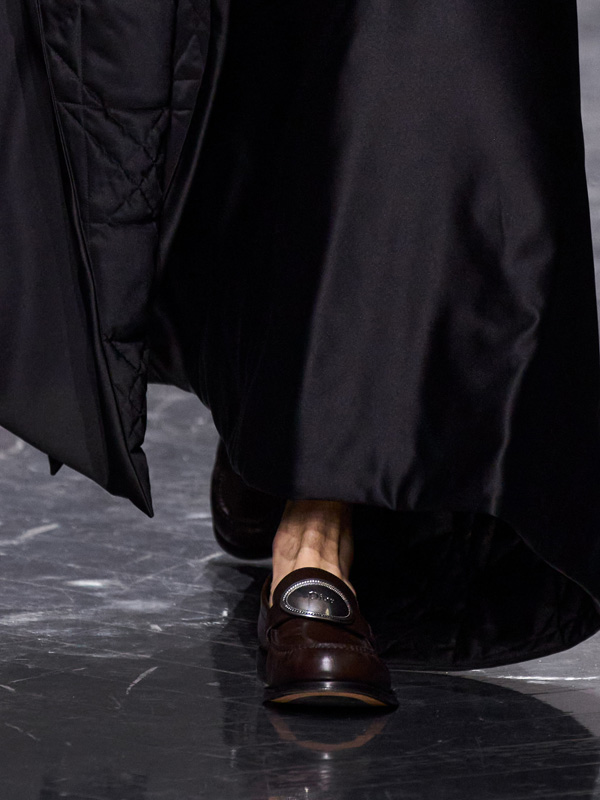
You could not miss the Médaillon Knit bag on the runway even if you tried. But another more subtle application of the motif might have gone unnoticed. The Médaillon loafers offer a contemporary take on the motif. Crafted from smooth calfskin on the outside with a natural lambskin lining, the loafers are designed with a softly rounded toe and a slightly pinched seam. And while it may give off a streamlined, almost formal profile, the Black construction ensures that you would be comfortable in them.
The Dior Médaillon tops off each shoe—a refined metallic buckle smoothened around the edges without the bow element typically found on the motif. And yet, it is still unmistakably Dior.
Having spent decades within the House’s visual vocabulary, the Dior Médaillon isn’t new. But with Anderson’s penchant for digging through the archives and reinforcing the House’s codes, it’s very likely that you would be seeing more of the motif. And that, in our books, is a gold-medal effort on branding.

We get it. The moment we adopted oversized, wide-cut-everything as part of our wardrobe, there’s no turning back. Why would we, when an oversized fit is forgiving and conceals everything that Ozempic removes? But done wrong, or at the very least, not in a way that complements the body’s proportions, an oversized fit could work against you.
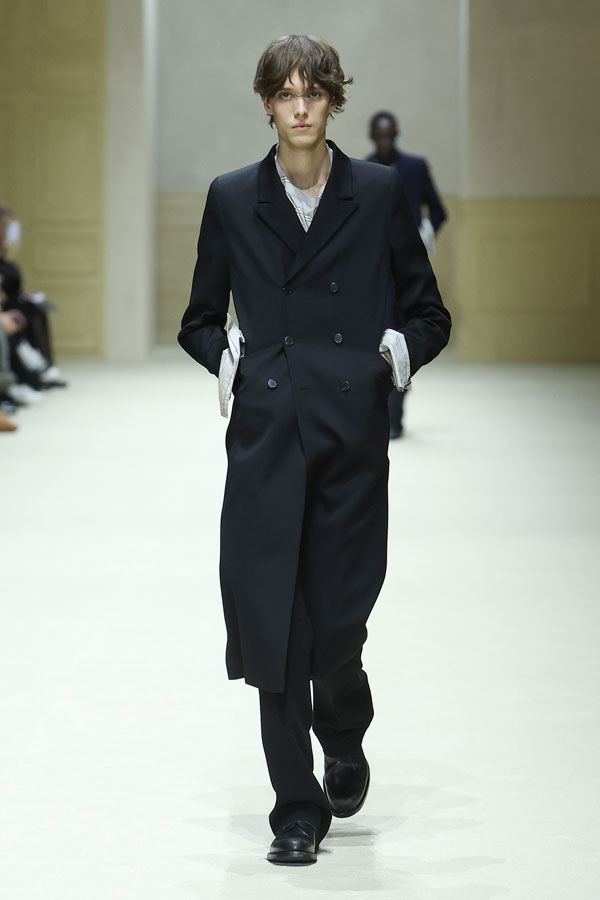
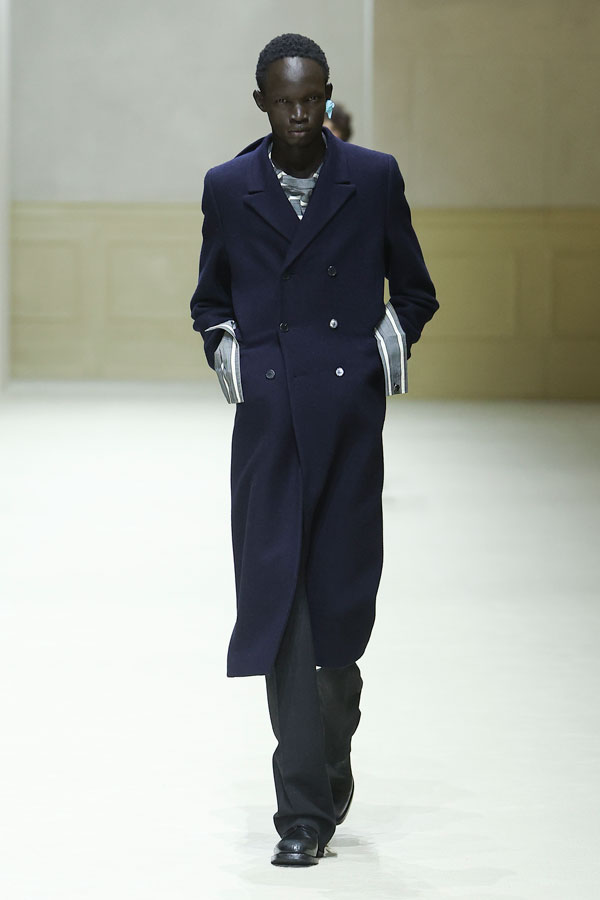
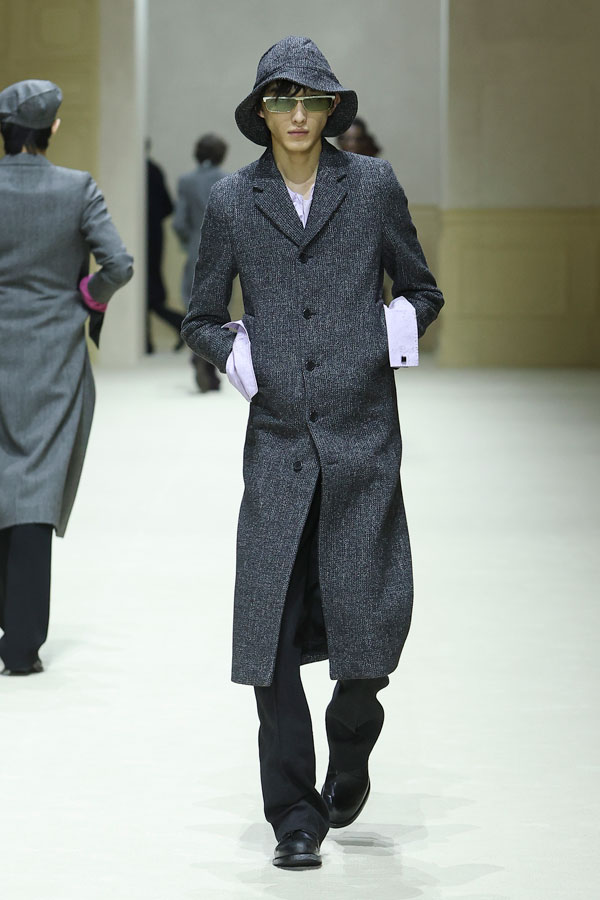
Like it or not, we’re, slowly but surely, moving towards a slimmer cut. And while it doesn’t mean that you have to adopt it straightaway, it’s a reminder that sometimes, a well-fitted silhouette helps, especially as we head into the colder months.
If your go-to winter vacation outerwear is a voluminous coat that allows you to pile layers under it, it’s time to, perhaps, invest in a slimmer-cut coat of midi length. While the temptation to release all those pent-up desires of finally being able to wear multiple layers at once, the truth is: no one likes looking like a sack.
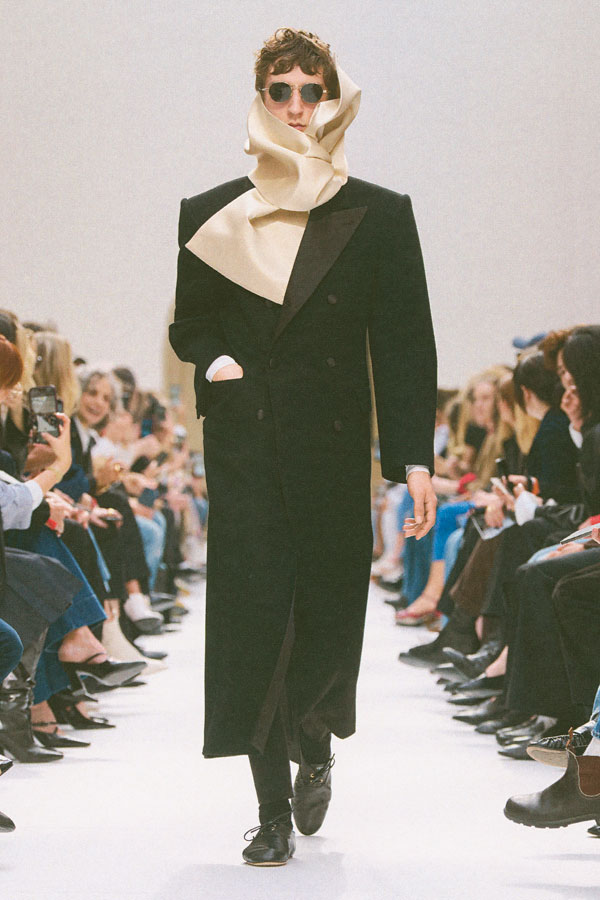
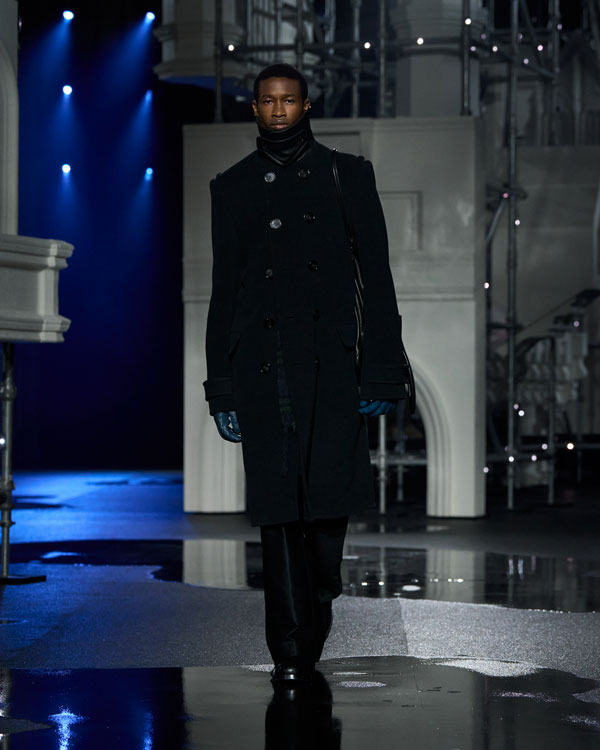
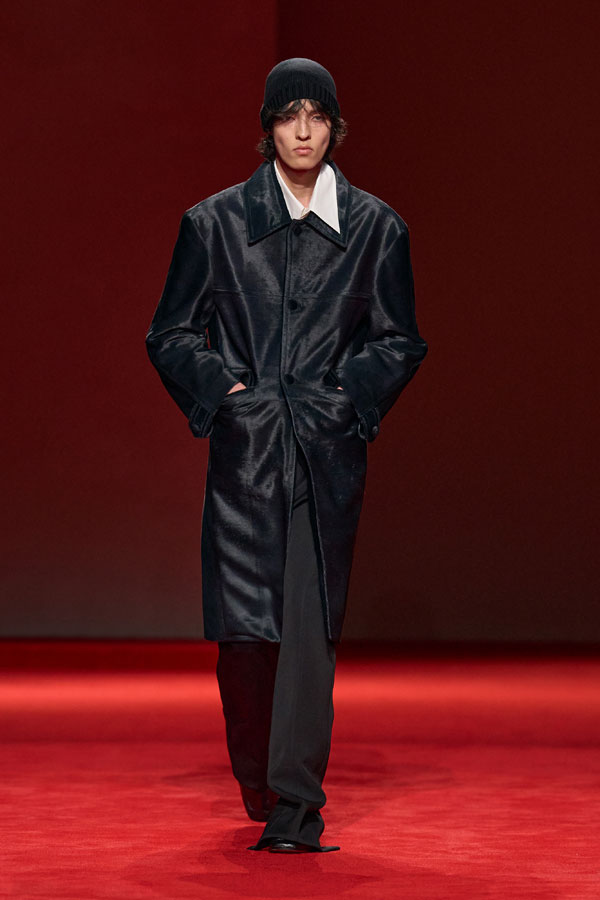
Prada does it exceptionally well this season with their slim, long coats that give the illusion of a more statuesque appearance. The easy approach is to reach for a coat that cuts slightly below the knees, and preferably a single-breasted (double-breasted coats tend to add visual weight). Pair them with slim-cut trousers in a colour close to the coat to further lengthen the silhouette. The idea is to look tall and slim without actually being one or the other. Hey, we all have physical challenges and should be able to use fashion to overcome them.
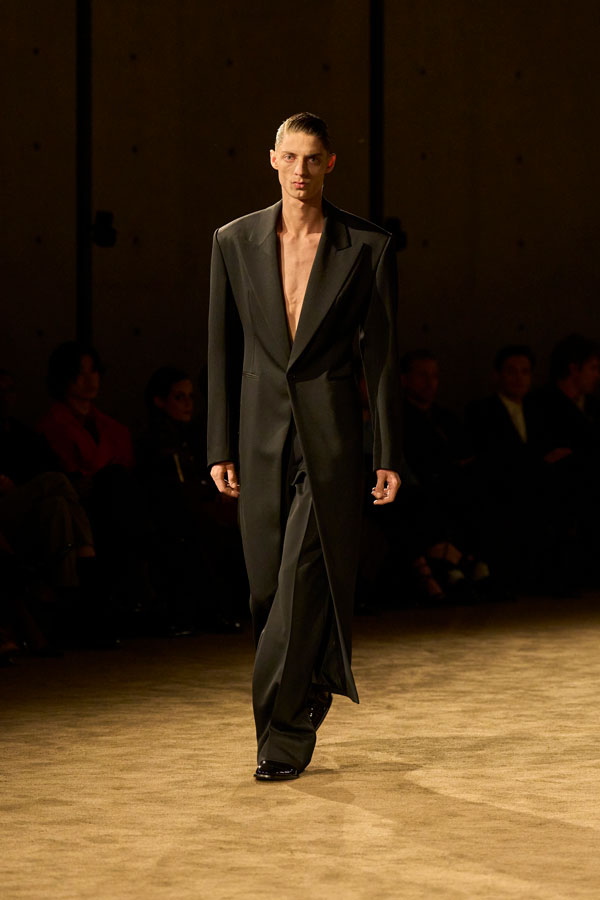
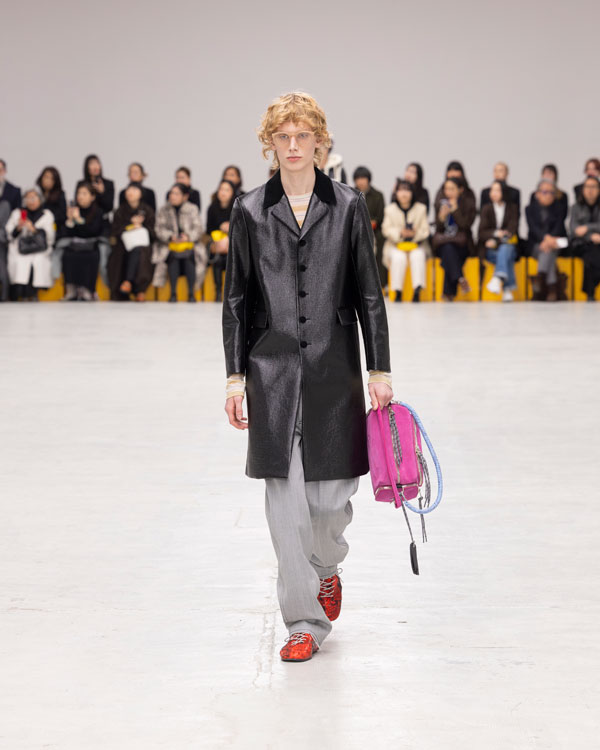
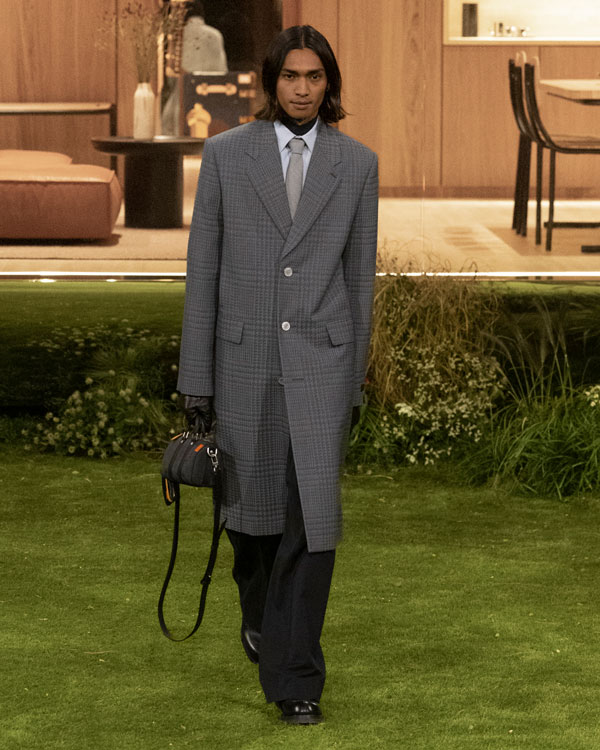
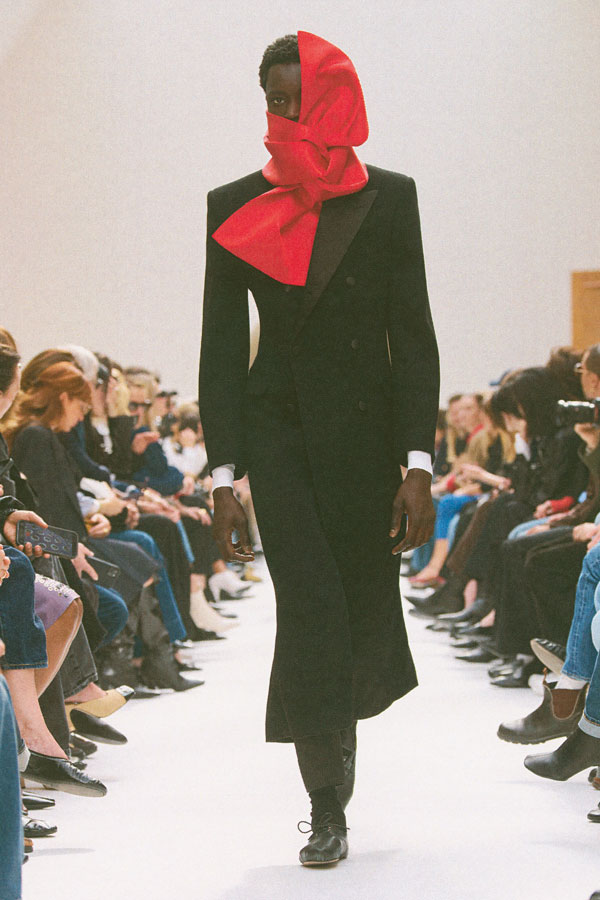
If a going-out top is one of the things to level up your style quotient, Demna feels that the body is the very foundation of looking good. He’s not wrong.
Gucci’s Autumn/Winter 2026 collection (or Gucci Primavera as it’s called) is the creative director’s official debut runway collection. It’s not unlike what we’ve seen from the man leading up to the collection, as he crafts a Gucci that’s relevant to a new identity that speaks to a wider audience. And most importantly, a Gucci that drips with sensual energy.
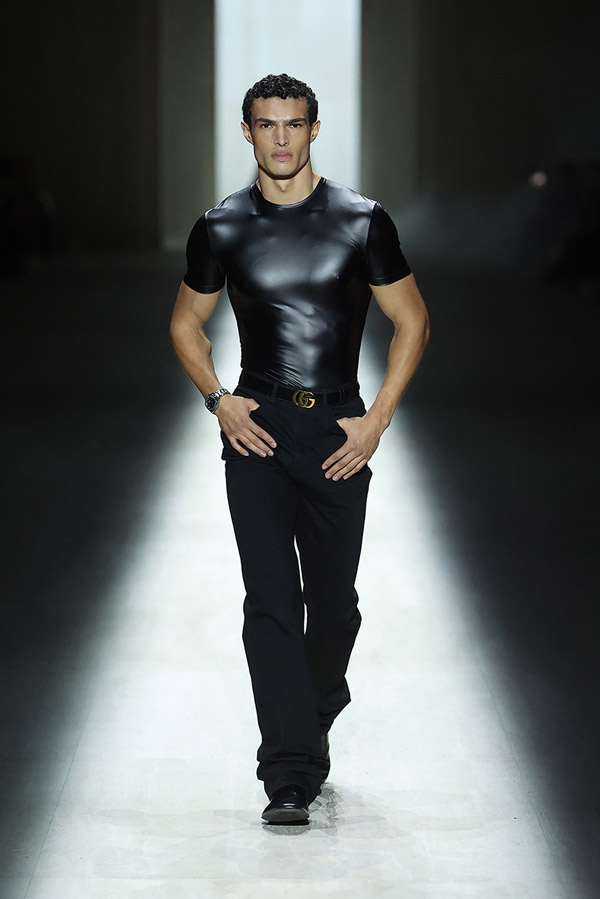
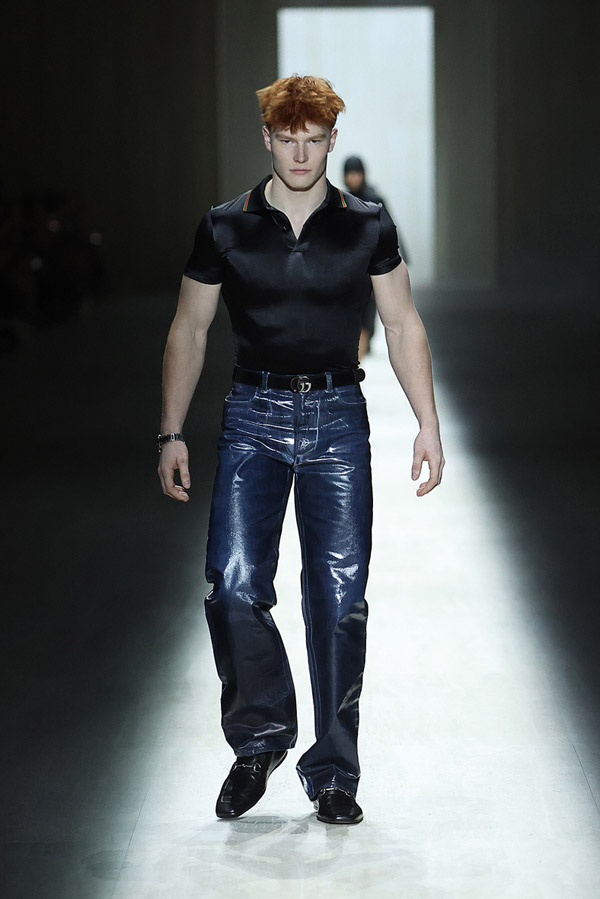
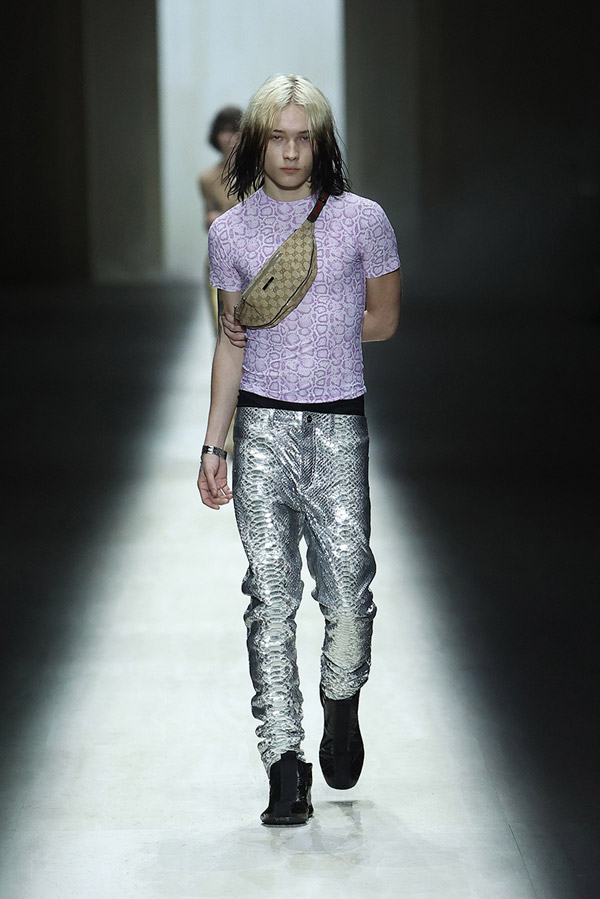
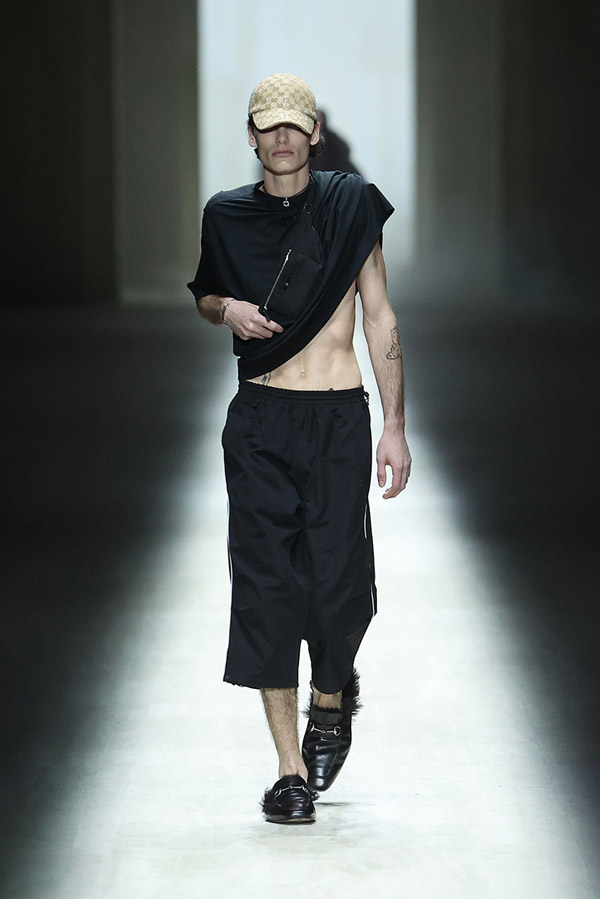
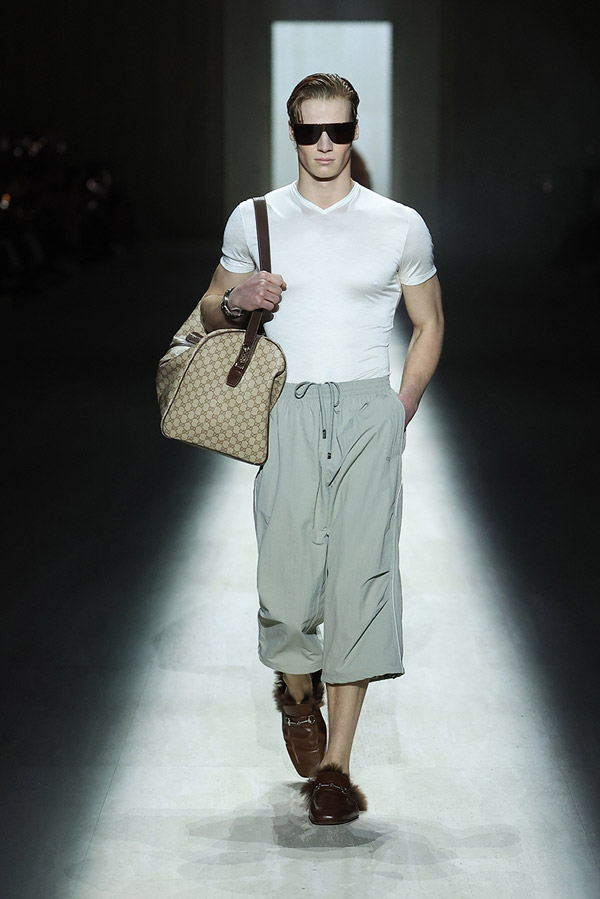
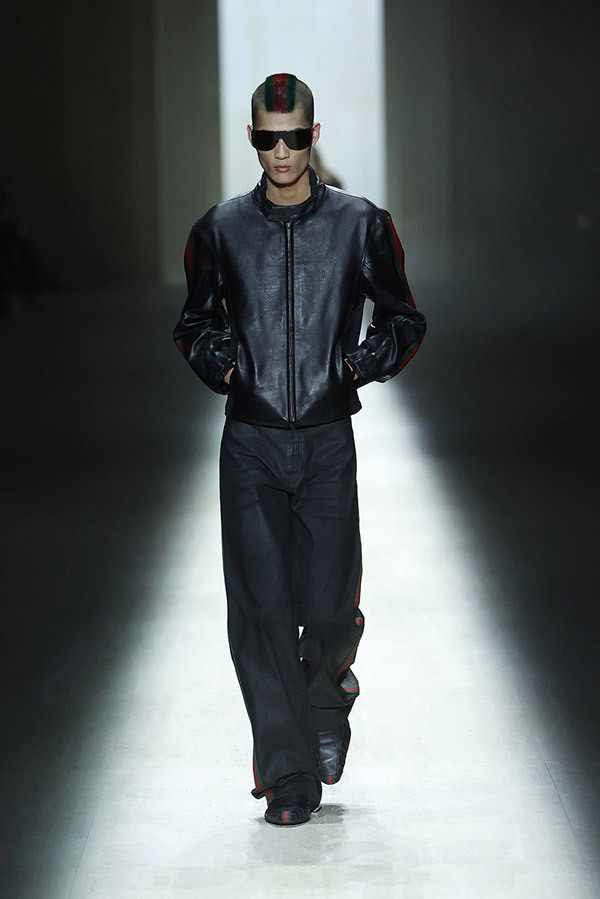
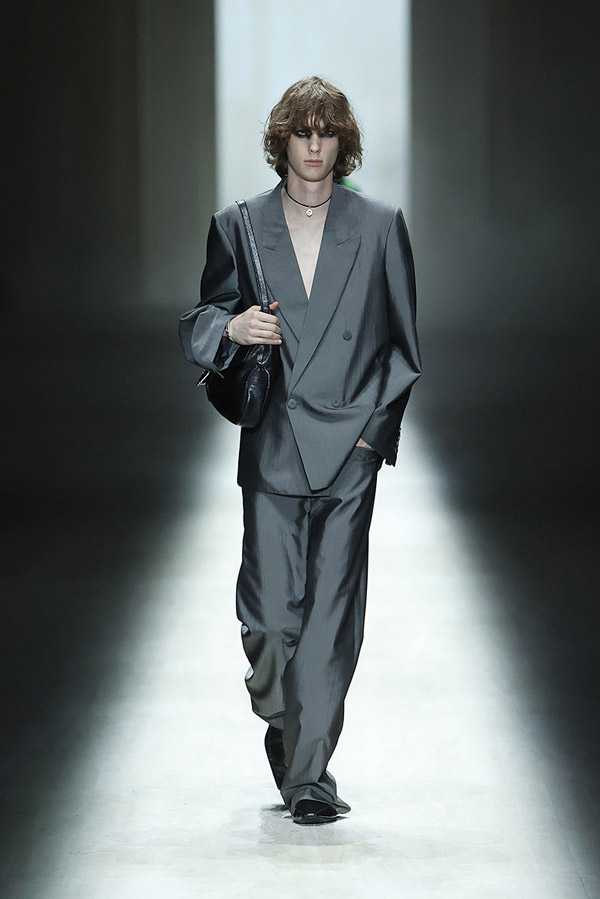
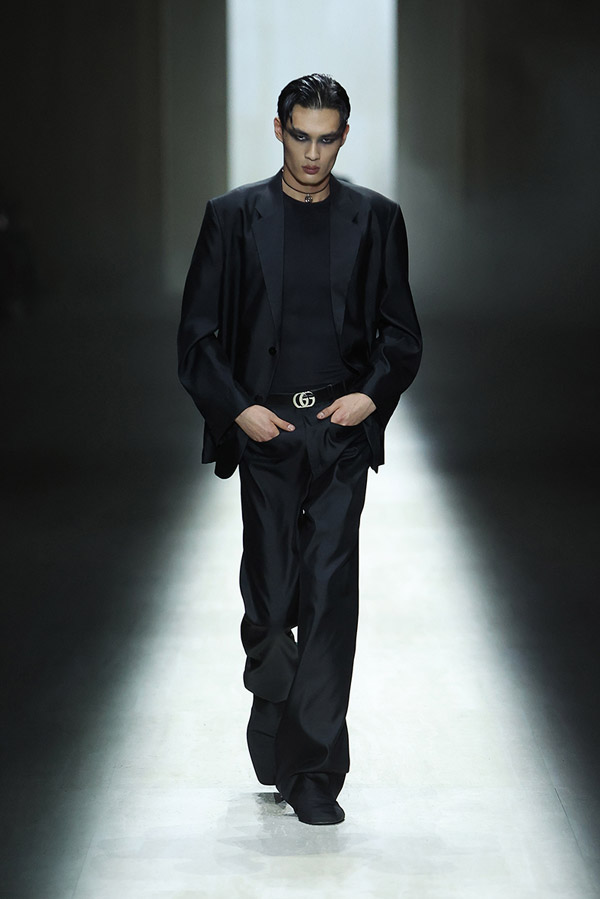
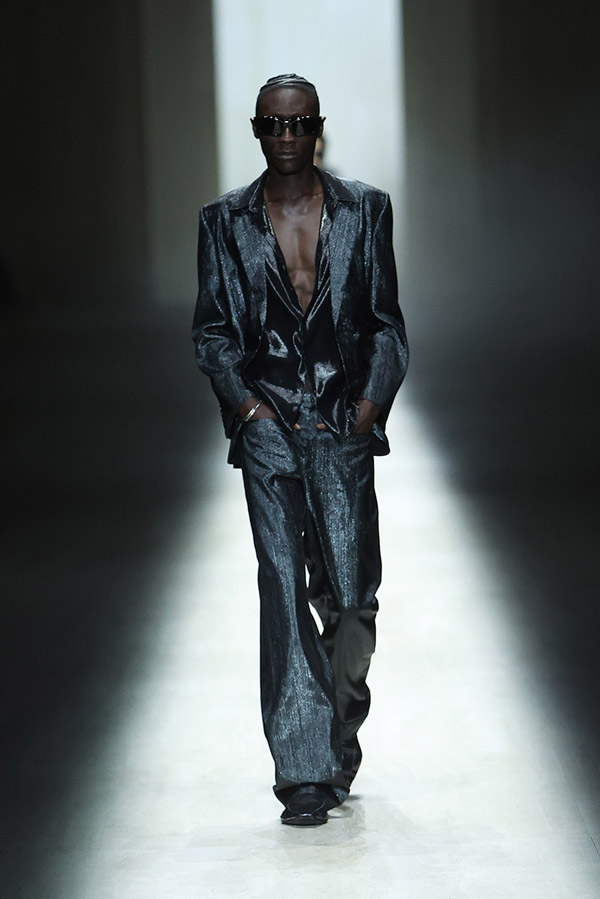
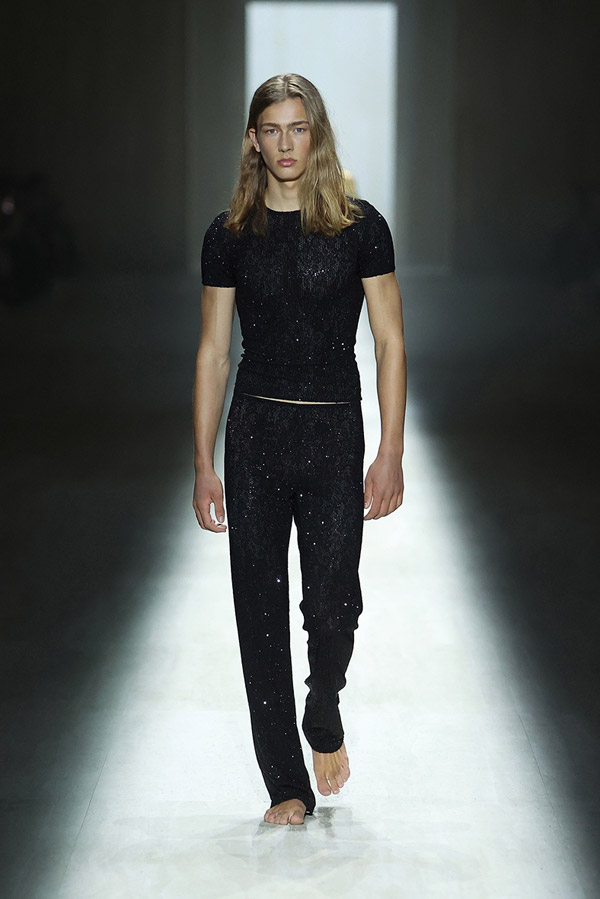
The main takeaway from the collection is that the fit is... well, fitting. Almost every look in the collection is an intentional display of every curve of one’s body, especially the top half. Demna brought back the masculine machismo of the early 2000s with bulging muscles spilling out of tight tops, and a design simplicity that uses the body as a canvas. In other words, let this be the impetus for you to hit the gym a bit harder each time for maximum gains. Because the fit is not it if you’re not fit.
The Dries Van Noten Autumn/Winter 2026 menswear collection has all the trappings of classic design tropes by the brand. The colours are rich, the prints are mesmerising, and the styling is as impeccable as it’s always been. What you’d notice from the collection’s line-up is the deft use of clashing prints, colours and textures to form an outfit. There’s this feeling as though the brand’s raided an elder’s wardrobe—a very stylish one at that—and decided to wear all that could be found inside.
It is this grandfather-esque (it’s often referred to as “grandma” but seems rather sexist to relegate the flack to a gender) aesthetic that’s a growing result of thrifting and buying pre-loved items. Seemingly incongruent garments are worn together to create an eclectic outfit that typically calls to an older period. This season, it’s seen through a decidedly ’80s mix, rendered with geometric knits and a palette that sits between soft pastels and deep, warm hues.
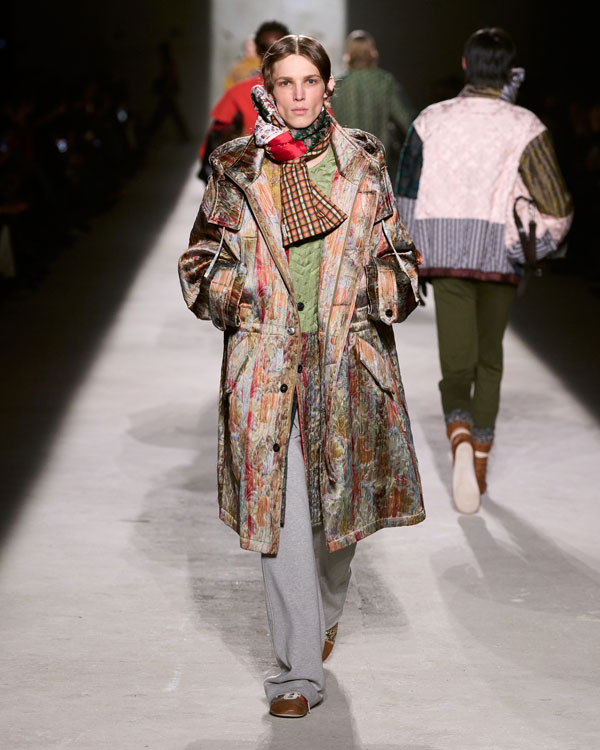
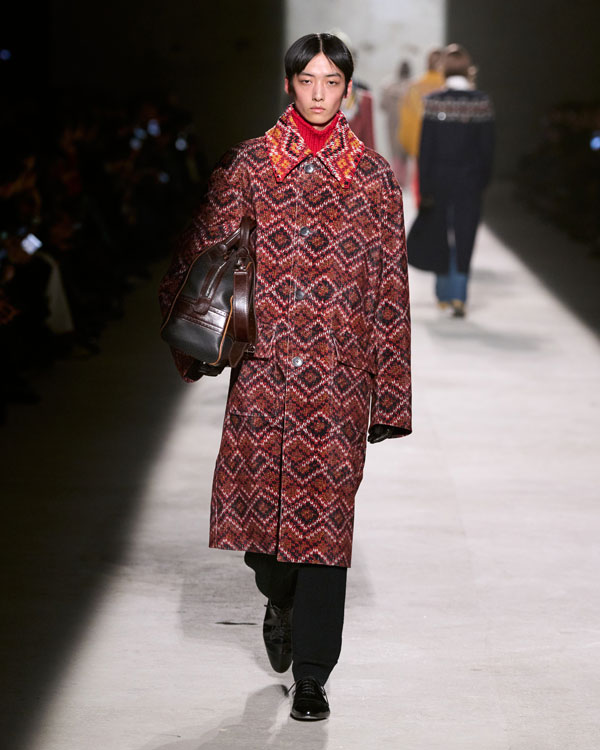
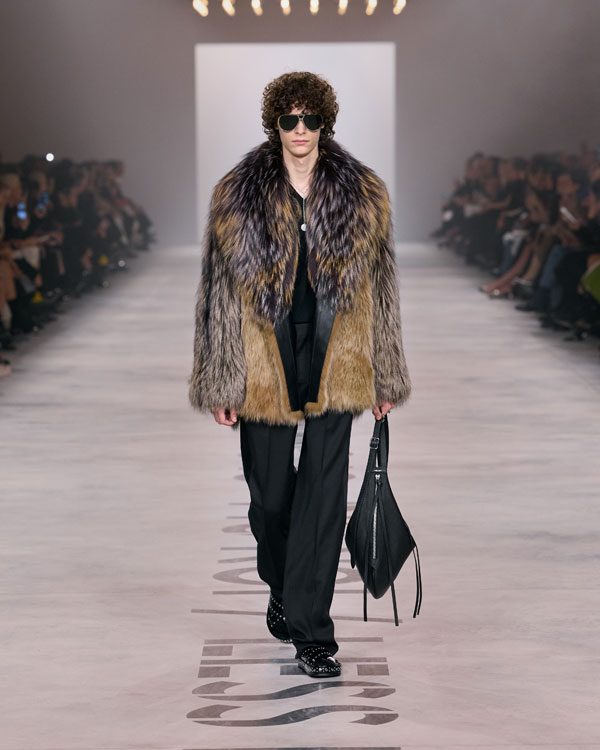
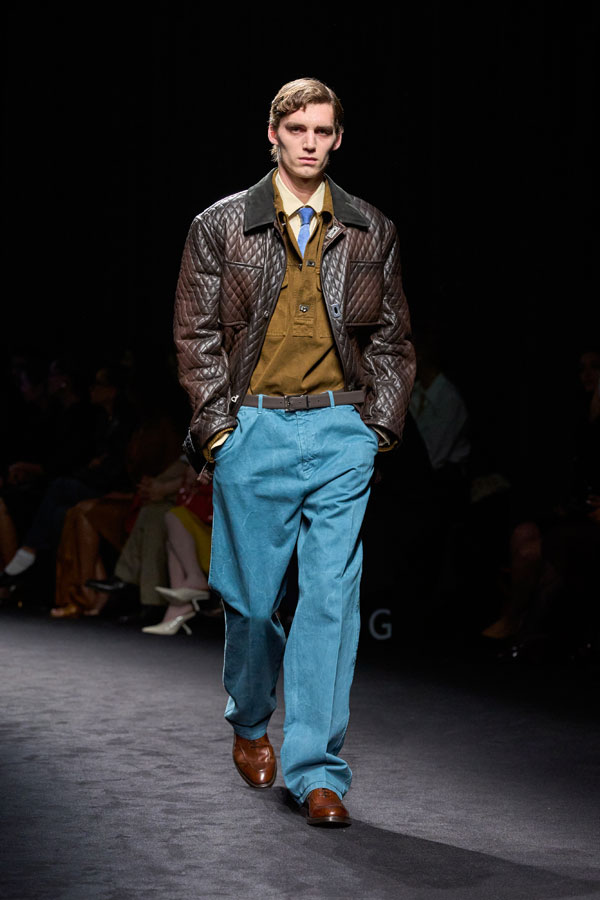

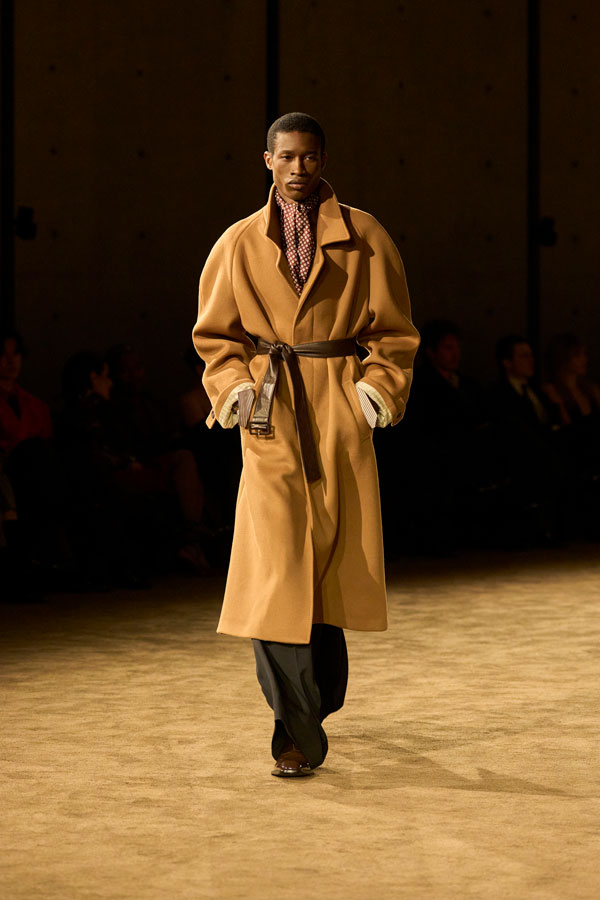
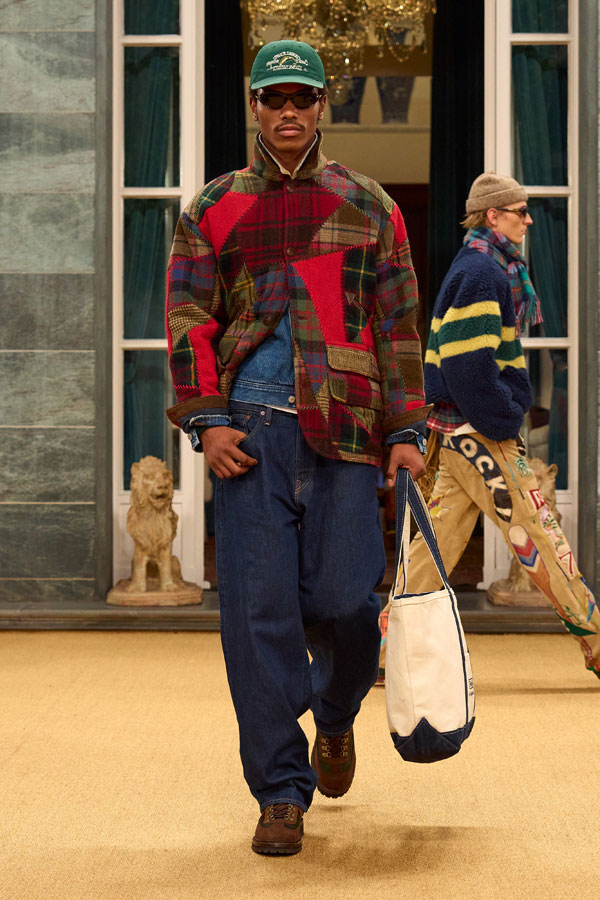
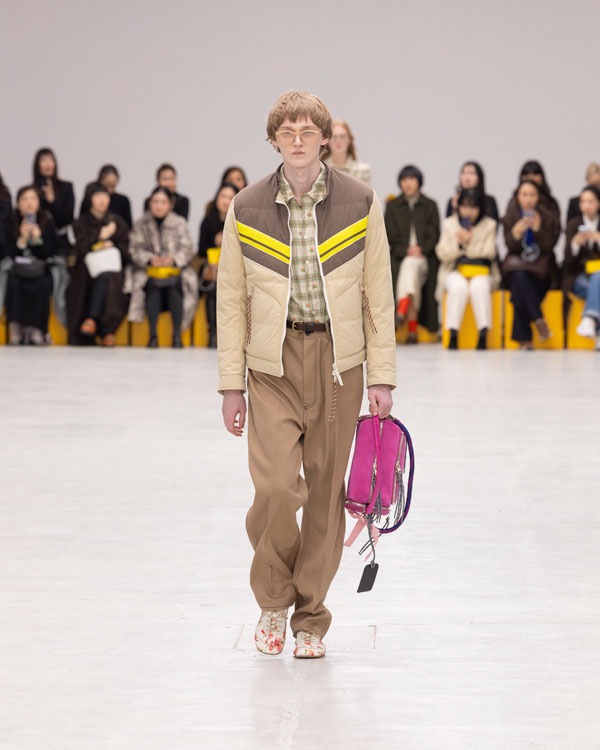
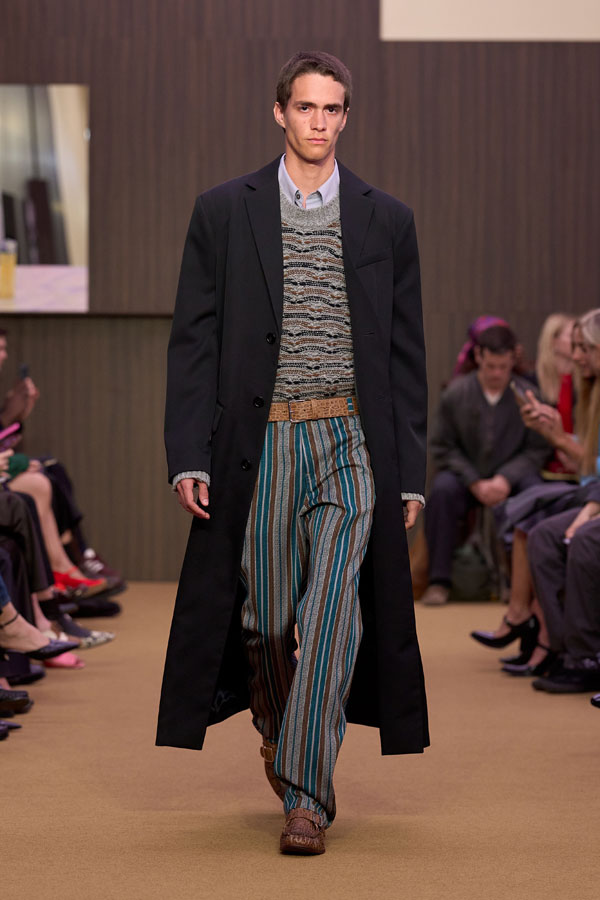
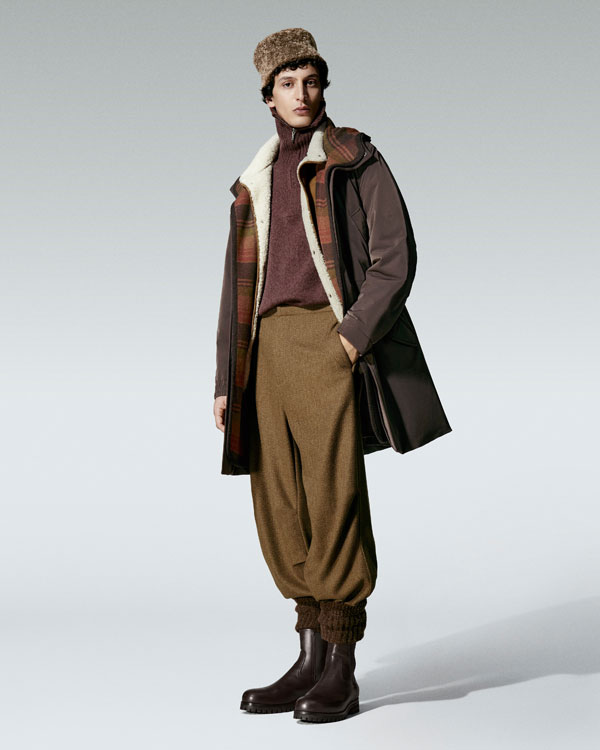
Ralph Lauren has always been a champion for the look, often bringing it to the fore every Autumn/Winter season. Patchwork manipulations evoke the sense of a reworked garment while keeping to its preppy branding. Onitsuka Tiger adopts a more vintage treatment of its ready-to-wear with the use of sporty, graphic lines and a muted palette that tends to lean towards more neutral tones. When a singular, striking colour is involved, à la Ferragamo, it is grounded with rich browns, creating an almost mid century-led take on an outfit.
This is a reminder that there is no one way to wear a piece of clothing. Whether you’re flipping the lapels of your blazer, belting a trench coat only at the back instead of around your waist, or treating a necktie like a necklace and wearing it with a T-shirt, who is to say that there is only one way of wearing something?
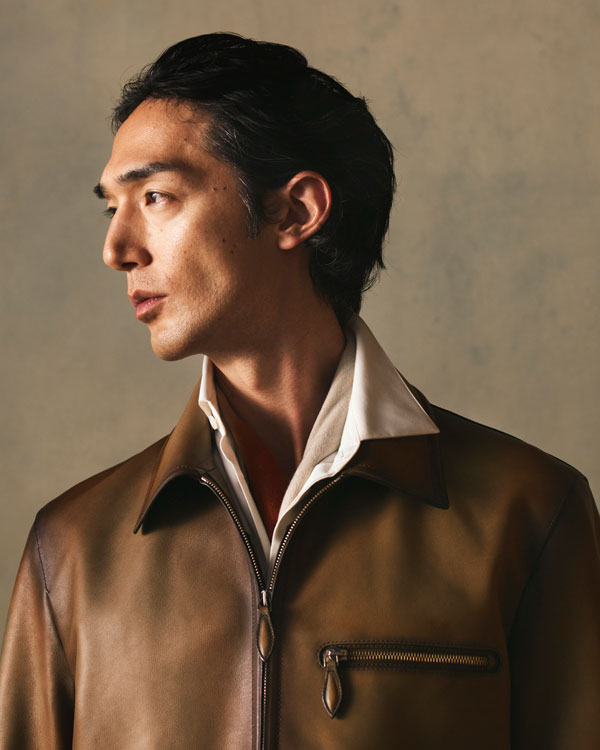
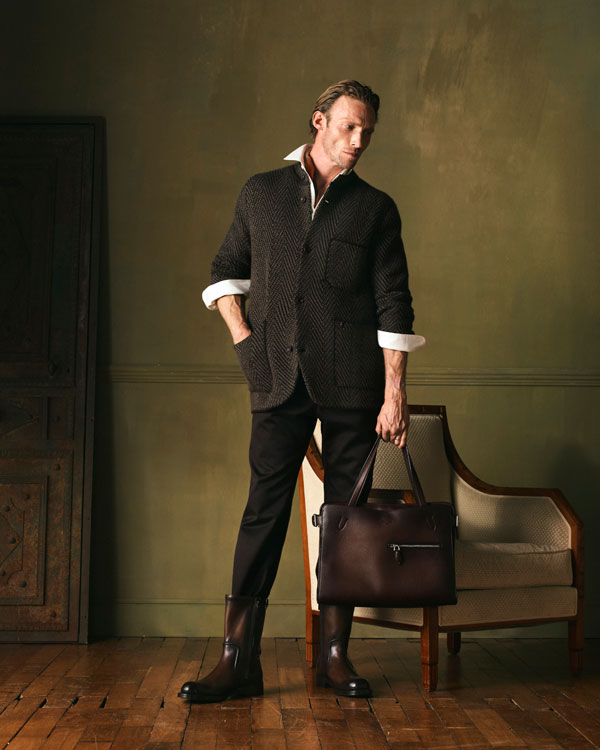
For some reason, we’ve observed a lot of collared asymmetry. Shirt collars, typically tucked neatly under an outer layer, have escaped their confined traditions—or at least one of them has. Like the half-tuck shirt styling that rears its head every now and then, there is an abundant display of a single collar popped right out of everything from a coat to a sweater. And it’s almost always a white shirt collar.
Perhaps it’s a collective act of conscious rebellion, where designers are sick of conforming to traditional notions of dress. Or that they see themselves as a champion of white-collar workers worldwide who now have to work even harder in order to afford increasingly priced luxury fashion. Whichever the case, it’s an easy way to incorporate a calculated sense of sprezzatura that’s often clamoured in menswear. It’s effortless, and done right, it just makes your entire outfit look even cooler.
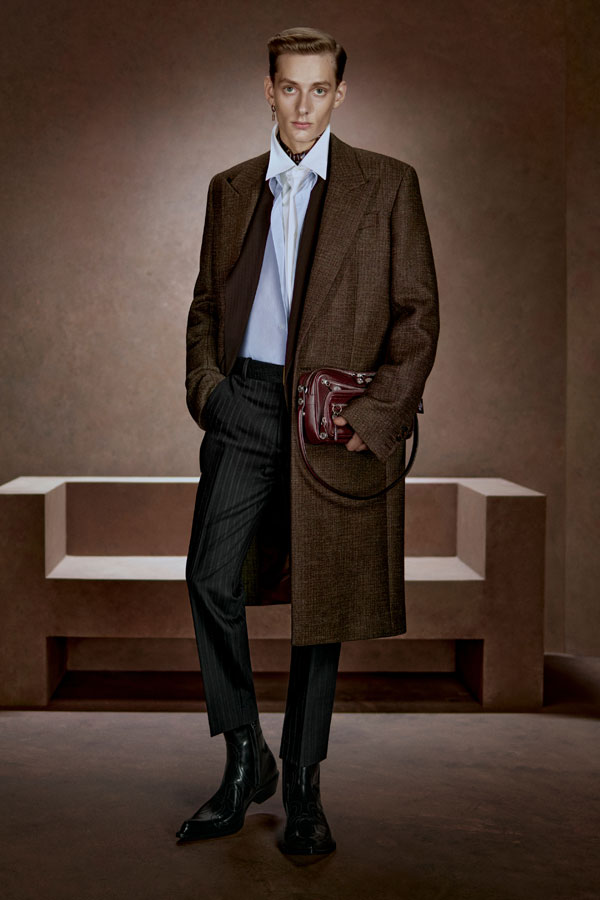
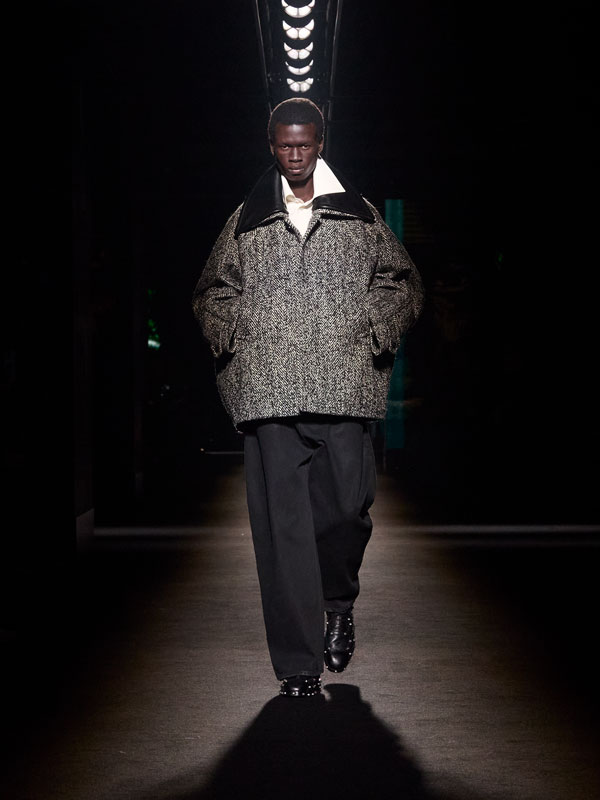
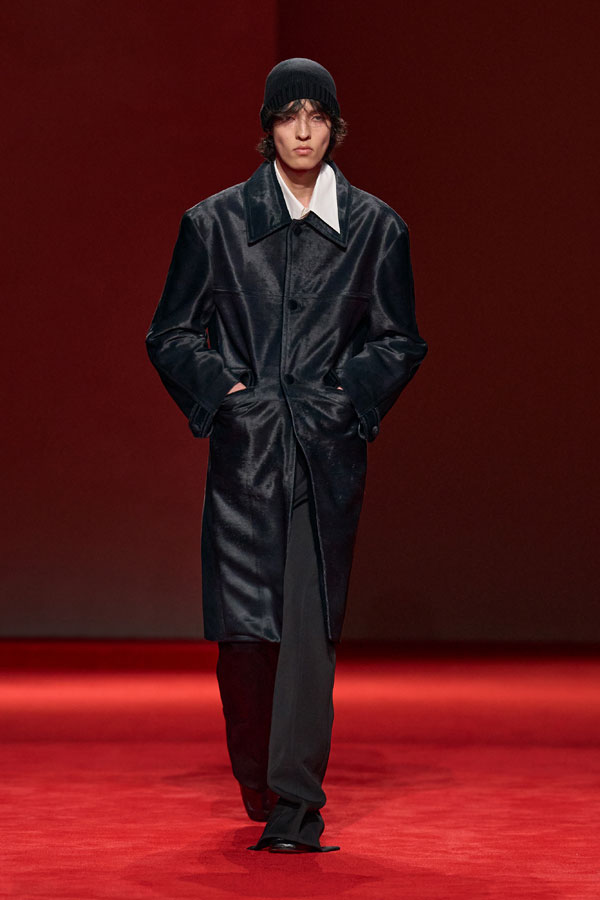
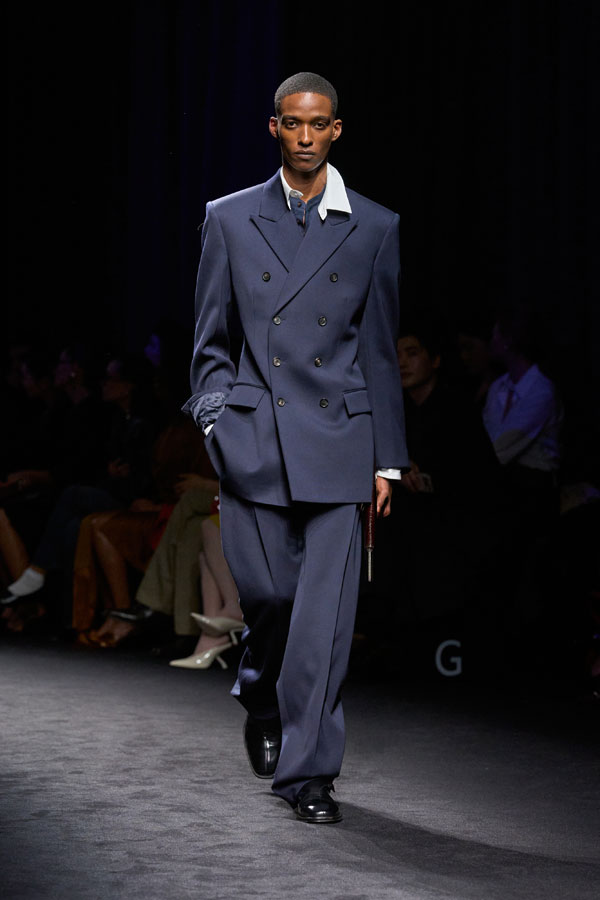
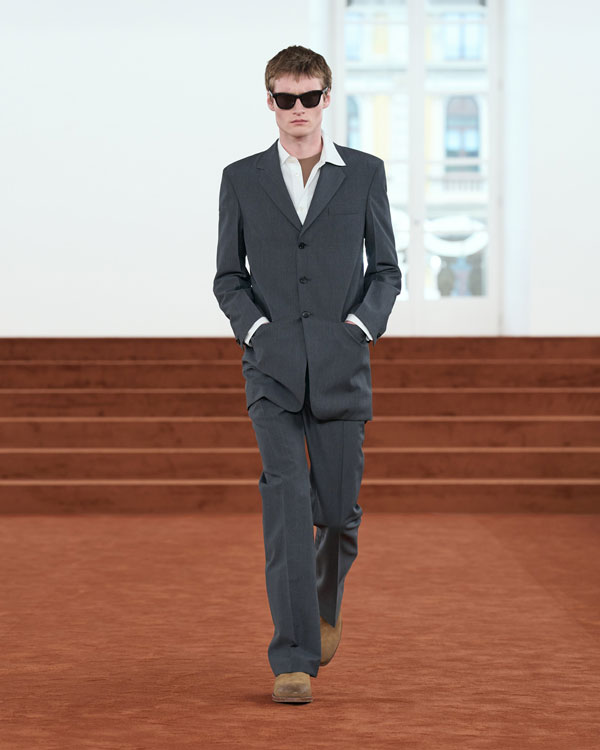
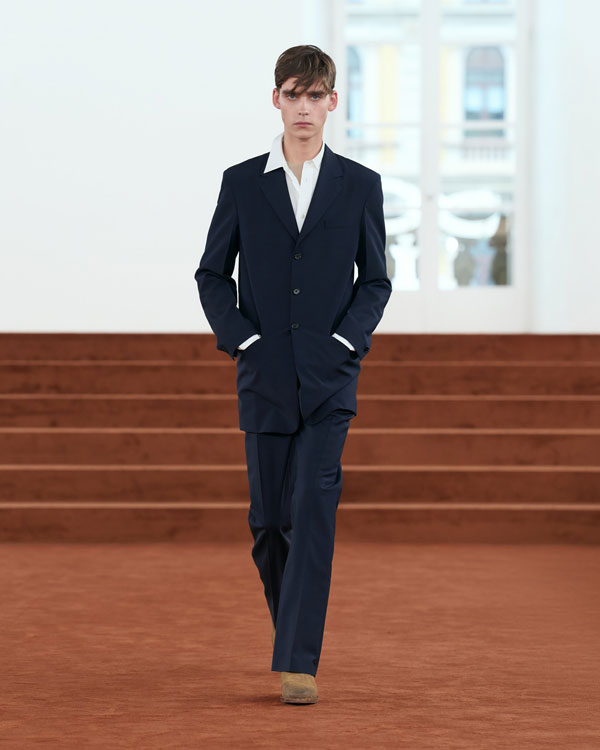
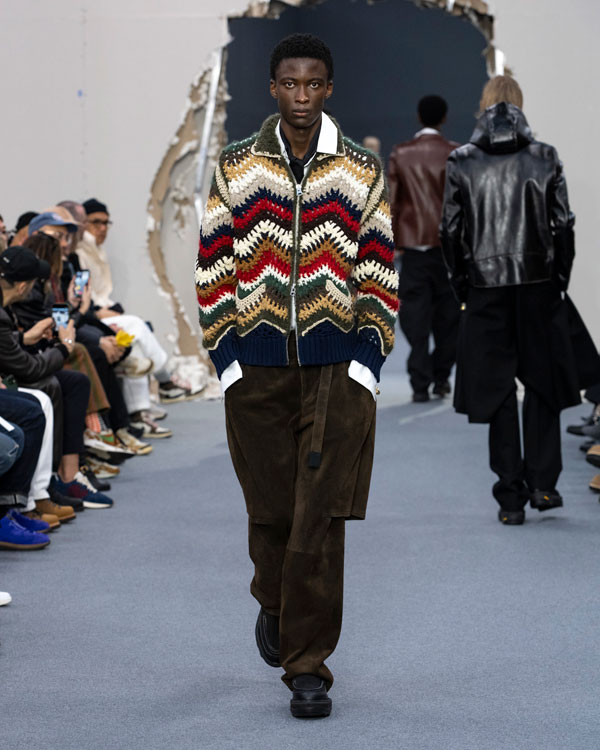
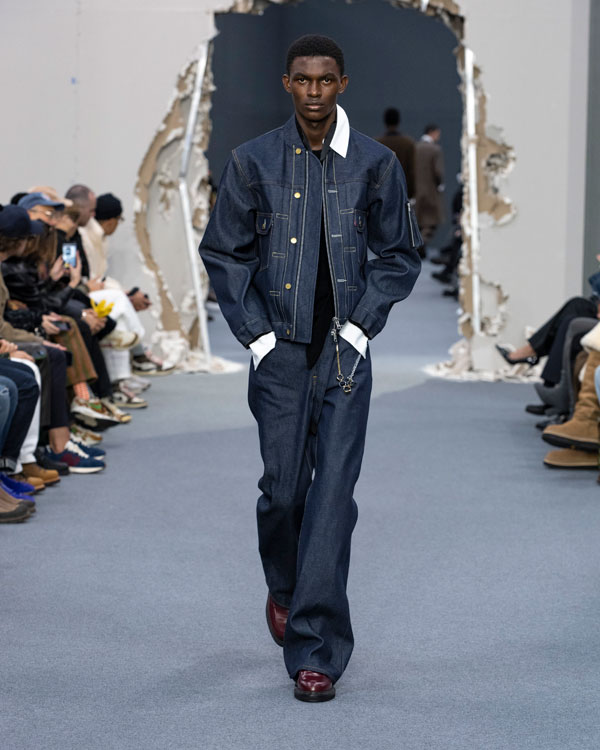
For part one of things to note for Autumn/Winter 2026 menswear.

Le Labo Fragrances return with another City Exclusive, where the brand pays tribute to the cities around the world. This year, Le Labo picks Beijing for a new City Exclusive, and while we were hoping a scent that's along the lines of mala (sorry, we wrote this before lunch), we'll have to settle for notes of camphor, pink pepper, and frankincense.
Called SHIU 25, the fragrance is inspired by the Le Labo Beijing He Yuan Fragrance Lab. Situated in a heritage-listed courtyard house in the middle of Beijing, think of the lab as a balm from all the busy-ness of the city. (Like, have you been there recently? It's great and will overload your senses.) To further emphasise that point, one of SHIU 25's core extract comes from the essence of the ho tree that's often associated with calm.
Then, a light iris, pink peppercorn and resinous frankincense are added to it. Like a comforter, the iris and peppercorn draped over a centred calmness, while the woodiness of the frankincense grounds them.

Normally, the Le Labo's City Exclusive scents are only sold at the cities that said fragrances belong to, but during the magical month of September, all the City Exclusives are available for sale on the Le Labo Fragrances website, in labs, and select retailers.
If you have purchased a City Exclusive before and you're looking to re-up, you can refill it with the same scent at select Le Labo labs. Only the 50ml, 100ml, and 500ml eau de parfum bottles can be refilled, and at 20 per cent off the retail price.
Will 2026 go down as one of the best years in video games? It’s been a long time since a single calendar year has been so completely stacked as the one we’re having right now. If you tell me there’s nothing new to play, I dare you to say it with a straight face, because you have got to be kidding.
Of course, the industry’s economic woes cannot be overstated. It’s a dark time when even prolific studios downsize and slash budgets and lay off talented developers with invaluable institutional knowledge. It’s hard to actually call 2026 a great year in gaming when it’s also been a year of heartbreak and uncertainty for the future.
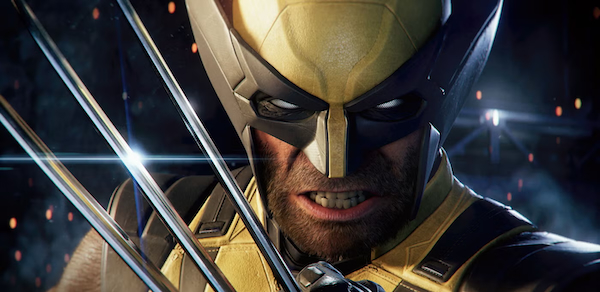
But the games are still great. Resident Evil Requiem nails the franchise’s decades-long identity split with a game that’s half third-person action and half first-person survival horror. Action games like 007 First Light, Marvel’s Wolverine, and Onimusha: Way of the Sword let loose the power fantasies we’ve only dreamed of.
And it’s not all blood and guts and guns and swords. Earlier this year, the coming-of-age Mixtape caused a ruckus among gaming circles, though anyone who’s played it and loved it will tell you just how special it is as a love letter to bygone summer days. And a spin-off Pokémon title about building adorable towns and protecting the environment is currently the highest-rated game in the franchise’s 30-year history.
The year isn’t over just yet. Star Wars: Galactic Racer is primed to bring back podracing in style, while a little game called Grand Theft Auto VI is about to hog everyone’s attention throughout November. Before one of us puts another 40 hours into Pokémon Pokopia, let’s highlight some of the best games Esquire’s editors have played through in 2026 so far. Buckle up, because there are actually a lot of games to talk about.
Rock out with your claws out. Insomniac applies its winning formula for triple-A superhero games to flesh out the most popular X-Men member of all time. The five-foot-four berserker stars in his own solo adventure in a universe where mutants live in secret. While piecing together his own memories, Wolverine meets a telepath named Jean Grey. Together they must stop a powerful industrialist from unleashing a weapon that could kill all mutants. A hyper-violent tour through some of its title antihero’s classic comics, Wolverine doesn’t quite reach the same heights as Spider-Man, but the way it lets players truly feel like “The Best There Is” is gold.
If you could rewind to your last day of school, what would it look like? Who are you with? And most importantly, what’s on the stereo? At the start of summer, developers Beethoven & Dinosaur released the gorgeous narrative game Mixtape, a loving homage to coming-of-age cinema with a tastefully curated soundtrack. (We’re talking Joy Division, Silverchair, BJ Thomas, and more.) Set in the summer of 1995, the game sees three California teens relish their final hours together before going their separate ways. While Mixtape kicked up a storm among gamers over what defines a “game”—you can’t die or fail, nor are any of the things you do in Mixtape remotely challenging—it’s still a special experience that I argue illuminates how special games can be as a storytelling medium. Your adolescence probably didn’t look exactly like Mixtape, but the game can nonetheless trigger old memories.
As the world waits with bated breath to see who will play the next James Bond on the big screen, video games have a Bond to call their own in actor Patrick Gibson. From developer IO Interactive, of the smash Hitman series, comes 007 First Light, a high-octane espionage action game that follows a new James Bond in the early days of his career at MI6. Unlike the Hitman games, which are mired in the darkness of Agent 47’s deadly profession, 007 First Light revels in the fantasy of Bond’s perilous and pleasurable lifestyle. It’s basically the closest any of us will get to feeling like James Bond short of renting an Aston Martin for a test drive.
It’s been 12 years since Yacht Club Games released Shovel Knight, which was deemed by many to be one of the leading retro-inspired indie hits of the 2010s. Now Yacht Club has done it again with Mina the Hollower, which mines plenty of inspiration from gothic dungeon crawlers like Castlevania and Game Boy–era Legend of Zelda games, with modern flourishes à la Dark Souls. Players control Mina, a genius 19th-century mouse who must slay monsters and restore power to her home. Don’t let its cute looks fool you: Mina the Hollower is a challenging game that will have you sweating and smiling all the way through.
Remember dropping quarters into Marvel vs. Capcom 2 back in the day? The legacy of Marvel’s 2D-fighting heritage lives on in Marvel Tōkon: Fighting Souls, a shiny new team-based fighter with an anime-inspired take on the Marvel universe. Heroes like Captain America, Iron Man, Spider-Man, Storm, Deadpool, and Blade—and even villains like Doctor Doom—team up to save the world from an alien menace. The game is developed by Arc System Works, arguably the modern masters of the genre, boasting titles like Guilty Gear, BlazBlue, and Dragon Ball FighterZ, and the studio applies its decades of expertise to one of the finest and most nuanced fighting games we’ve ever had the pleasure of throwing our controllers at.
There’s no shortage of killer samurai games nowadays. Which is perhaps why Capcom saw fit to resurrect its dormant Onimusha franchise with the exceptional Onimusha: Way of the Sword. Essentially a reboot of the series (whose last title was released all the way back in 2006 for the PlayStation 2), Way of the Sword follows legendary swordsman Miyamoto Musashi as he comes into possession of the Oni Gauntlet and must cleanse the world of a supernatural evil. While not quite a Souls-like, the game offers an adequately complex combat system that ensures sword slashing never gets stale. And slicing demons in half feels oh so satisfying.
If you, like me, have fond memories of Initial D, Forza Horizon 6 is an invitation to awaken the sleeping gearhead within. The open-world racing series finally makes its way to Japan, the birthplace of drift racing, to let players roam dense city streets and wide-open mountain roads in tricked-out Hondas, Nissans, and exotic supercars. The Forza Horizon series has reached its peak with this sixth instalment, with photorealistic graphics that can fool you into believing you’re actually speeding through traffic halfway around the world.
After almost 30 years of Resident Evil games, it’s no surprise that the ninth instalment is another polished thrill ride. Capcom plays the hits to great success in Resident Evil Requiem, a survival-horror game that hits the right notes even when it’s serving up Leon S Kennedy fan service. But in the roughly 10-to-18-hour campaign (a great length!), the gameplay of FBI newbie Grace Ashcroft is more horror focused and full of fresh twists on the Resident Evil formula. Though we won’t spoil it here, Esquire’s review in February also teased that the latest Resident Evil game contains “one major set piece in particular that rivals some of the best action-movie moments in recent years.”
Don’t let Pokémon Pokopia’s cozy gameplay fool you—the latest spin-off of the cutesy monster-collecting phenomenon is actually one of the deepest games in the franchise’s nearly 30-year history. Sure, you will spend most of your time in Pokopia building houses for your Pokémon to live in or meticulously gardening. But underneath the casual novelties of building a perfect little Pokémon town lives a surprisingly emotional story about climate-change disasters, grief, and the importance of taking care of Earth’s natural environment.
Saros is a gameplay-first, story-second action game that feels incredible. Much as with the developer’s previous game, Returnal, the third-person shooting is inspired by arcade shooters where bullets fill your screen nonstop. Unlike Returnal, it’s not brutally difficult. Gameplay is fast and exhilarating—and sometimes overwhelming—but it doesn’t take long before you know exactly which projectiles to absorb, which to dodge, and which to parry. The PlayStation-exclusive title also has one of the best gameplay loops of the year, and it does more with the DualSense controller’s advanced haptic feedback than any other game on the Sony system. Merging the run-based progression of Hades with a more traditional level-based structure to enormous success, Saros is difficult yet approachable, rewarding players with a ton of resources to invest in upgrades as it slowly unfurls its mystery-box story bit by bit.
With the release of No More Heroes III in 2021, Grasshopper Manufacture finally put the saga of Travis Touchdown to rest and kicked off its next era with Romeo Is a Dead Man. The studio’s latest game retells Shakespeare’s famous love story mashed up with 1980s sci-fi, Japanese tokusatsu, and grind-house cinema. The game puts players in control of Romeo Stargazer, a small-town deputy who falls in love with an amnesiac named Juliet. But when Romeo dies, he is reborn as a half-man, half-machine superhero who embarks on a quest to find his missing love. Romeo Is a Dead Man feels like immersing oneself in an obscure Troma film, and it’s as madcap and magnificent as it sounds.
Remastered video games are always a tough sell—though with every Nintendo fan having no issue coughing up $30 to play Pokémon FireRed & LeafGreen on the Switch 2 this year, it seems times have changed. Luckily Dragon Quest VII Reimagined is much more than a port to a newer system. The remake, which includes many quality-of-life improvements, was rebuilt from the ground up with glorious 3D animation. If you’ve never played the classic Japanese RPG before, the charm of this latest remake is enough to make you a Dragon Quest fan for life.
If you’re too scared to play horror games alone, let Reanimal’s multiplayer gameplay bring people together. Set in an island town overrun with monsters and mysterious creatures, Reanimal follows a nameless brother and sister who must survive the island’s horrors if they want to save their friends. With a story as cryptic as some of its puzzles, Reanimal carries the baton of other memorable platformers like Limbo and Little Nightmares to deliver an otherworldly experience. Although Reanimal can be played alone, it is a journey best taken with someone by your side.
Video games are all about rewarding the player for progression, and there may be no better equivalent to this feeling in the real world than rock climbing. Cairn, a new indie title that focuses on this extreme sport, captures the similarities beautifully. As the player works their way up the mountain, juggling the character’s stamina and gauging the next best foothold, it is amazing how intense and immersive Cairn feels compared with its relatively beautiful visuals. But as with any good climb, the surprisingly difficult journey is more than worth it when you finally reach the top.
If you thought Doom had too many pixelated demons and not enough rubber-hose whimsy, Mouse: P.I. for Hire is your game. Heavily inspired by classic Disney, Fleischer, and MGM cartoons—and clearly taking some cues from the 2017 hit Cuphead—Mouse: P.I. for Hire puts players in control of an anthropomorphic mouse detective on his latest case in Mouseburg. The game’s fast-paced first-person-shooter action is delightfully complemented by its (literally) cartoonish antics. Hand-drawn pistol and shotgun blasts and reloading animations are as much a treat to watch as the game is fun to play. If gaming today feels more complicated than ever, Mouse: P.I. for Hire brings it back to basics with a novelty coat of paint.
Nintendo should have called the new Mario Tennis game Mario Tennis Chaos, because the player needs to understand right up front that skills on the court can carry them only so far in Mario Tennis Fever. Much like the 24 drivers per race in Mario Kart World, a calamity of new power-ups renders tennis into a zany, uncontrollable farce of a sport that becomes one of the best Mario sports titles in Nintendo’s history—once you learn to let go and embrace the nonsense.
The decades-old Marvel vs. Capcom series still reigns supreme as the best superhero tag fighter in video games, but Invincible VS is set on taking the throne. Based on the hit Amazon series (with some of its stars reprising their voice roles, like Oscar-winner JK Simmons as Omni-Man), Invincible VS is a 3v3 tag-team fighting game featuring playable characters from Robert Kirkman’s comic-book universe. The game tells a stand-alone story adjacent to season 3 in which Mark must stand with his allies to save Earth from the Viltrumites. (Hence the fighting.) Although its mechanical controls are relatively simple compared with those of other fighting games, it’s no less elegant and fun, and the game features some gnarly cel-shaded 3D animation that’s simply gorgeous. Besides, it’s another way to pummel your buddies to a bloody pulp. Talk about threatening us with a good time.
Dead Space? More like Dad Space. Pragmata is Capcom’s latest original game and a potential franchise in the making, its story centered around a systems engineer named Hugh and his foster-father relationship with an adorable android nicknamed Diana. With a rogue AI overtaking a research station on the moon, Hugh and Diana must work together to take the AI offline and make it back to Earth. Between its breakneck gameplay involving grid-like puzzles (which must be solved on the fly) and its endearing story about parenthood, Pragmata is what you might get if you asked ChatGPT, “What if Alien and Marvel’s Logan could be a single video game?”
Originally published on Esquire US
There was a time, not too long ago, when one of the things that differentiates a corporate man from the next is the luxury belt that he chooses to finish off his formal shirt-trousers combo with. More often than not, it’s a belt with a branded buckle that you’d be able to spot from a few metres away. We’re here to tell you that those days are back again.
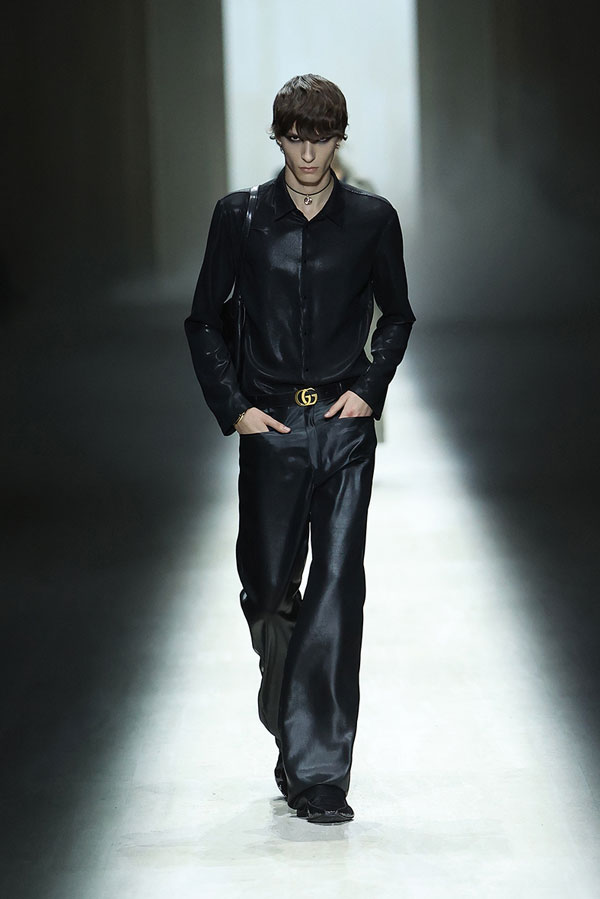
When we last wore our Gucci GG belt with stylish pride, it was probably during Alessandro Michele’s era. Demna brought the belt back, albeit in a more tasteful and contemporary manner. It’s no longer ostentatious, comes with a smaller buckle, and yet is still unmistakable as ever.
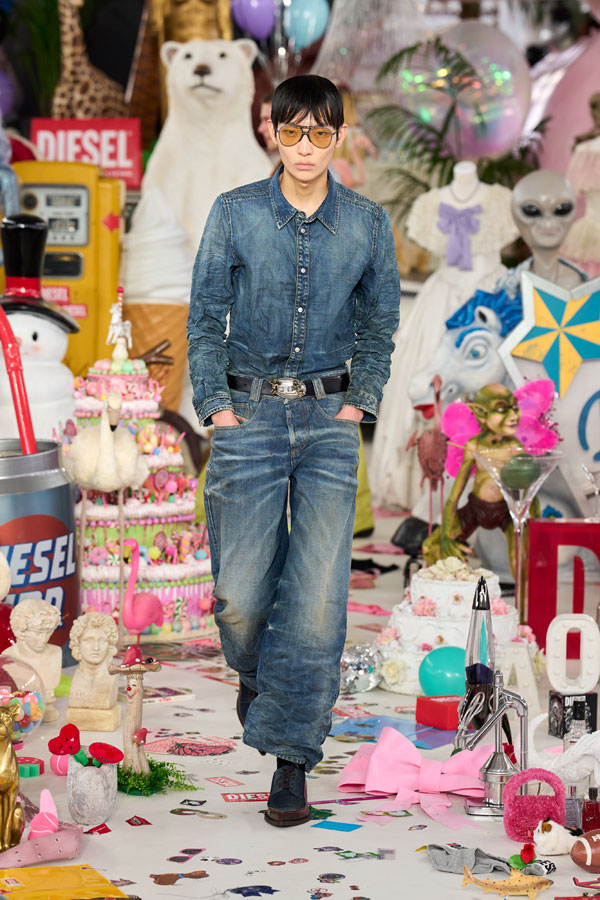
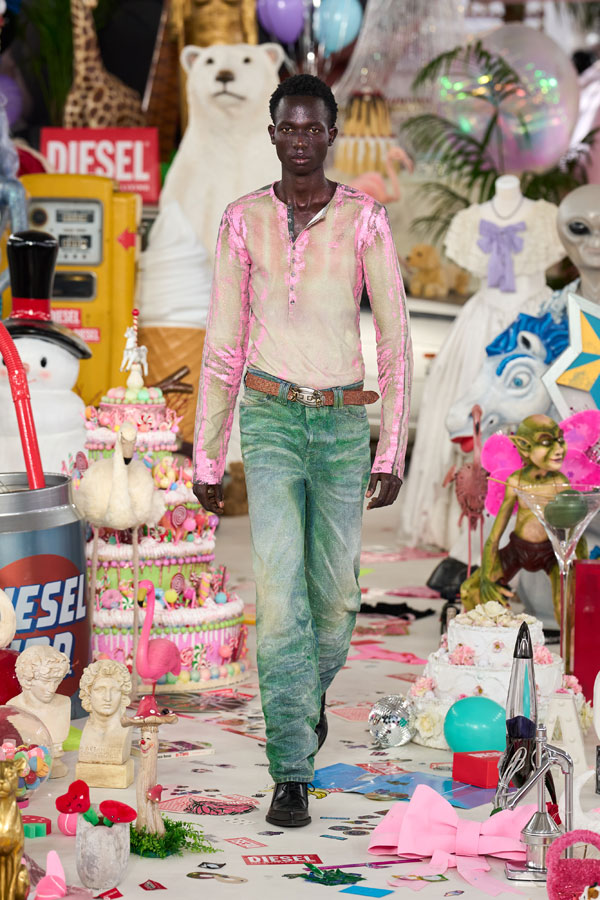
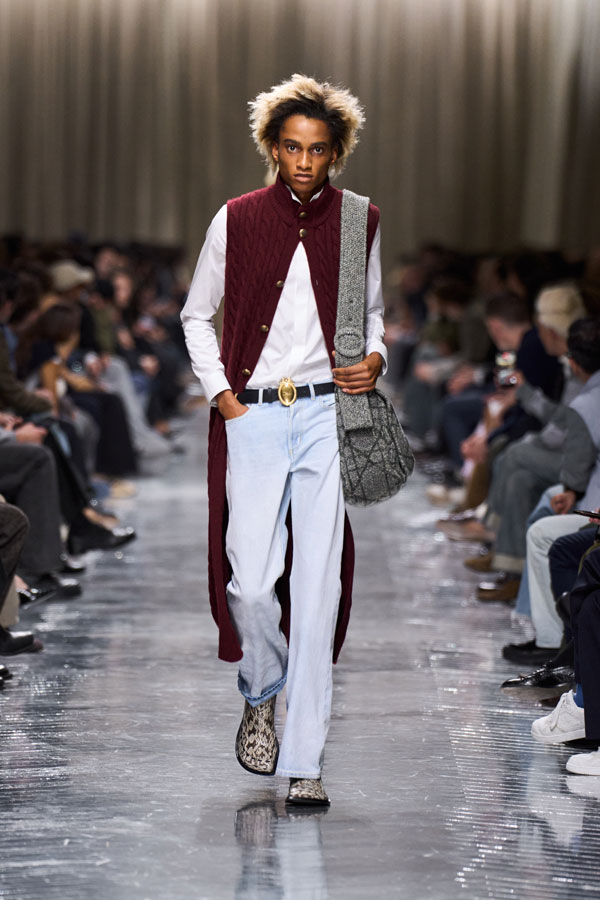
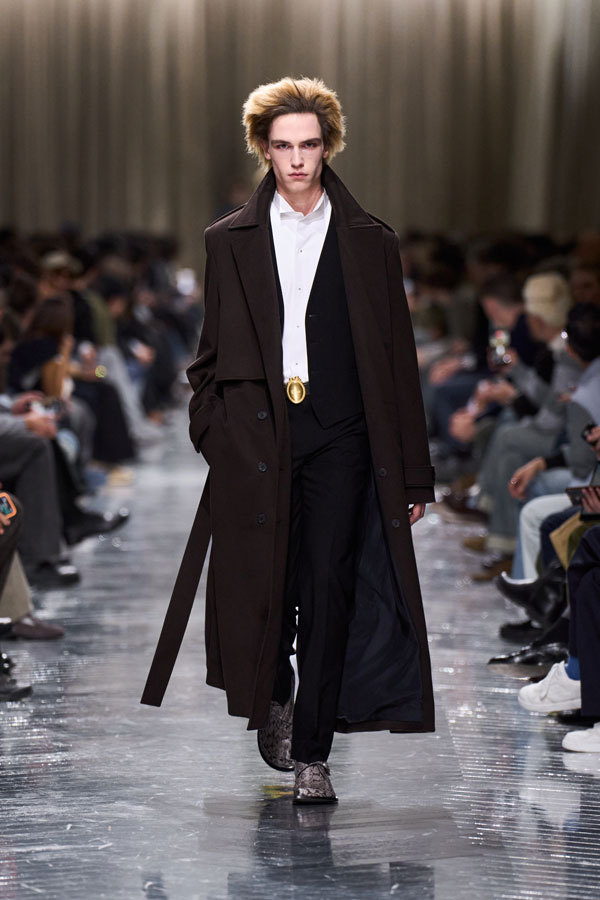
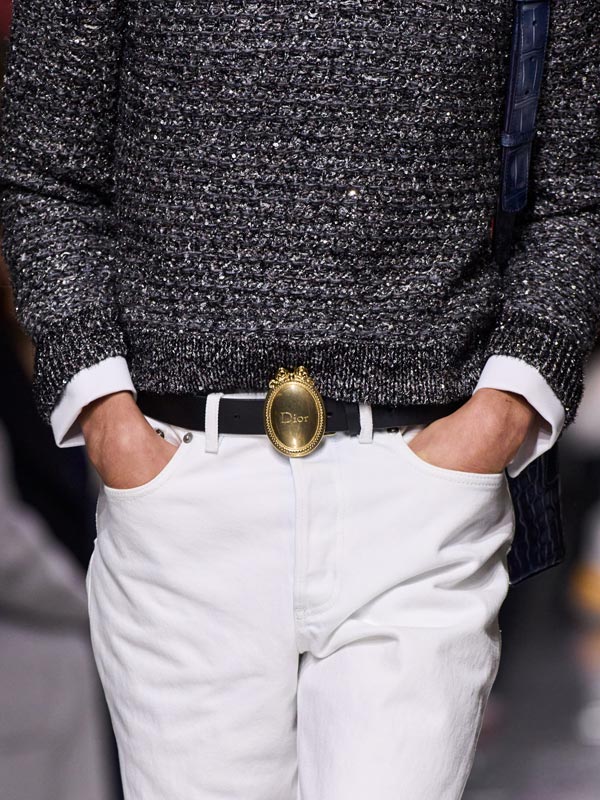
Diesel, Dior and Fendi have jumped onto the bandwagon with their own branded renditions. The former opted for an oval-shaped buckle with its D logo as the central motif, while Fendi offers a similar shape that’s simply branded with its logo. Dior refocuses its attention on the Dior Médaillon motif. The gold buckles mark one of the first few instances of the motif being part of the House’s menswear universe.
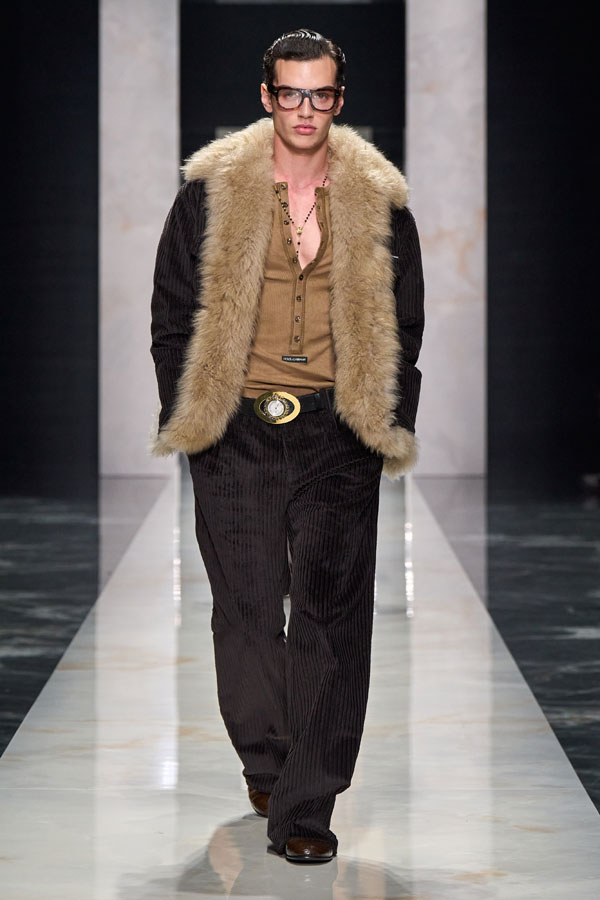
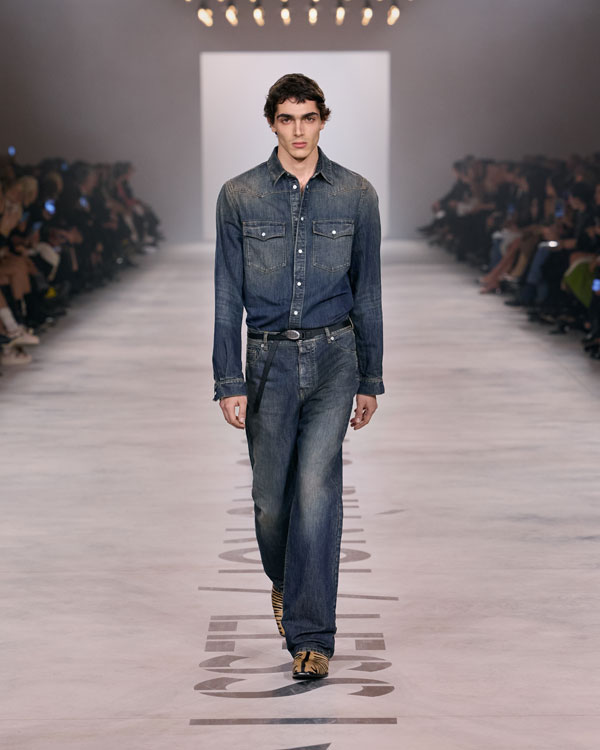
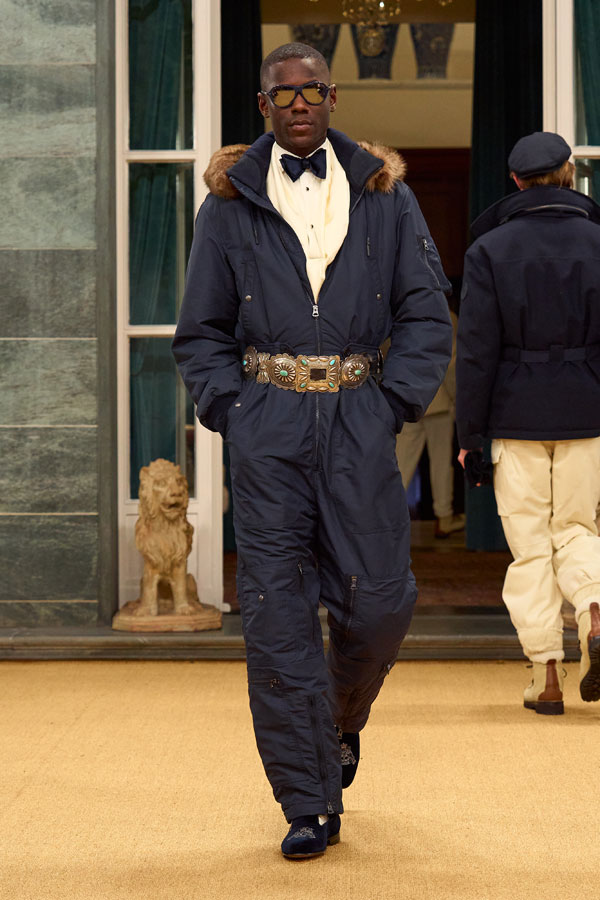
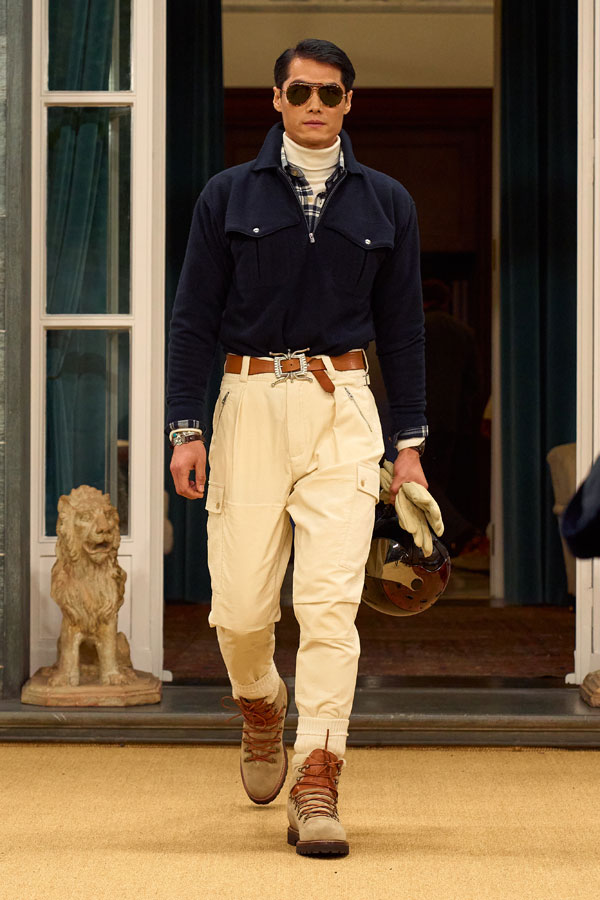
If you want something with more visual impact and less overt branding, Dolce&Gabbana took the time (pun intended) to shape its buckles into timepieces. And of course, you simply can’t go wrong with Ralph Lauren’s Western-style buckles that exude plenty of character.
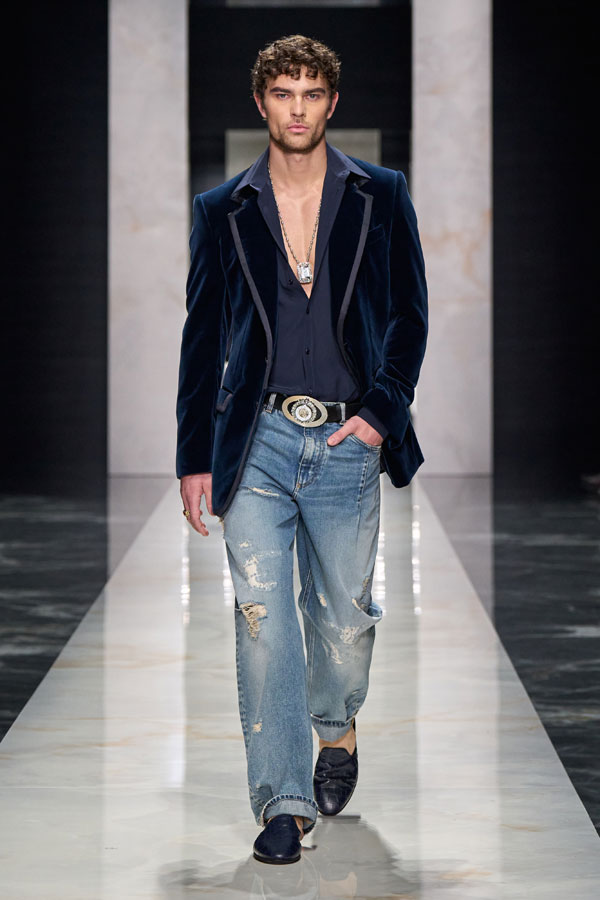
We know what you’re thinking: can’t wait to find one to wear to the office. Hold up. Maybe let’s not bring back past sartorial mistakes. Leave these for the 5-to-9 portion of life where rules don’t really apply.
The Autumn/Winter 2026 season marks the first menswear runway collection by Loewe’s latest creative director duo, Jack McCollough and Lazaro Hernandez. “What is fashion but an open field for endless creative play,” reads the ending statement to McCollough and Hernandez’s collection notes.
The duo put Loewe’s longstanding heritage of craft to the test with a collection that pushes the boundaries of what’s possible. Silhouette, form and material are central to the collection, with each reshaped in unexpected ways. Tops are accentuated with lace and bows but cast in latex, while coats range from liquid-like fabrics to those that appear puffed up. Tartan sweaters aren’t typical knitwear, but rather knitted in ultra-thin leather yarns. Parkas and scarves constructed with an inflatable quality were crafted using an industrial process that involved laser-cutting and bonding, before being sealed to create an airtight seam.
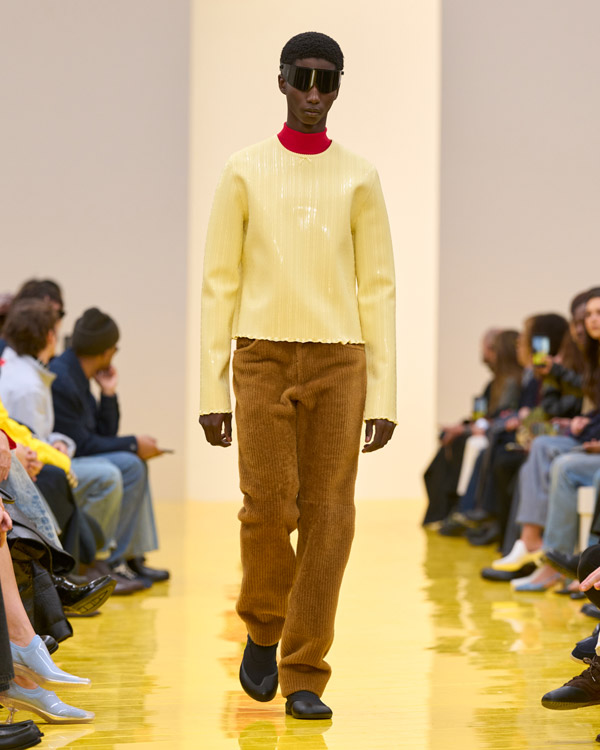
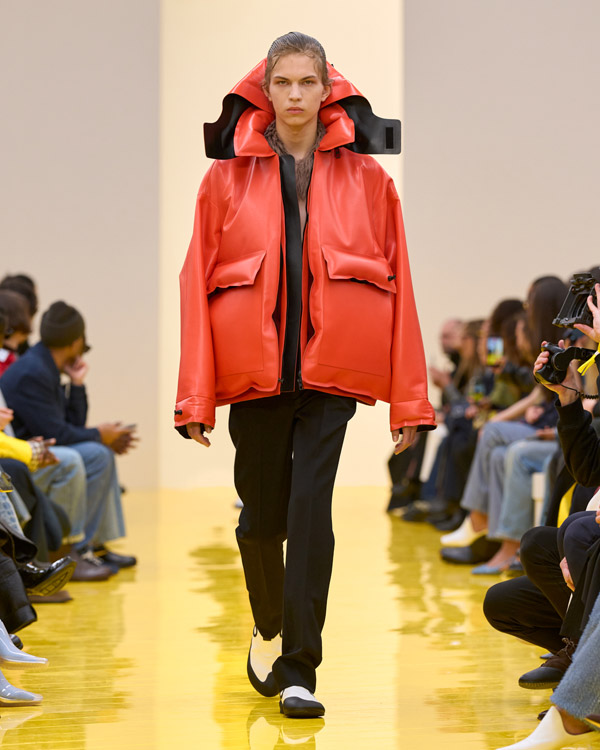
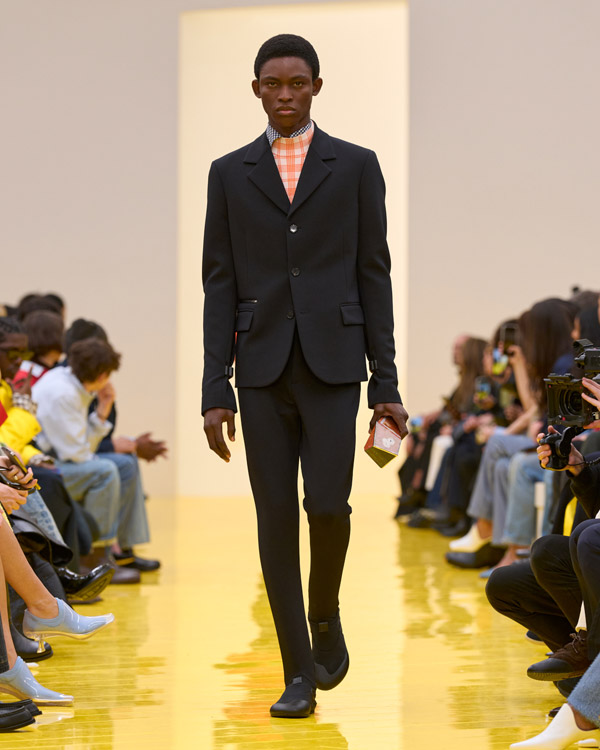
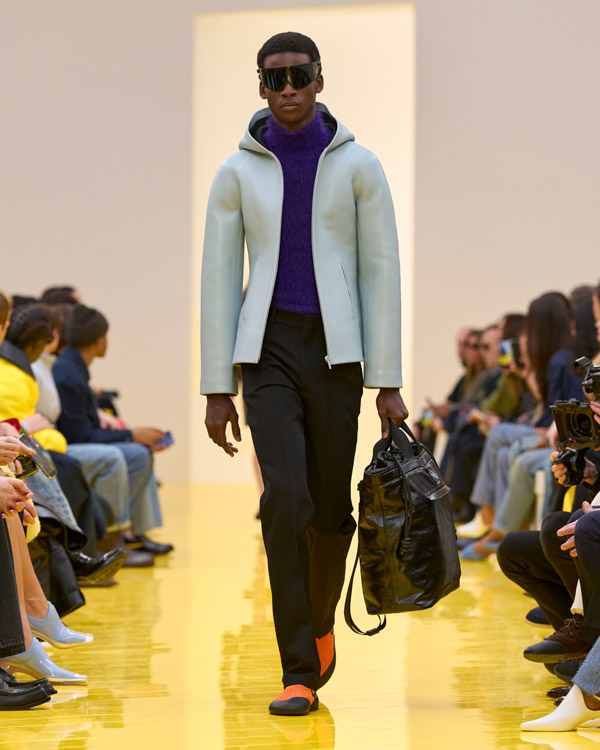
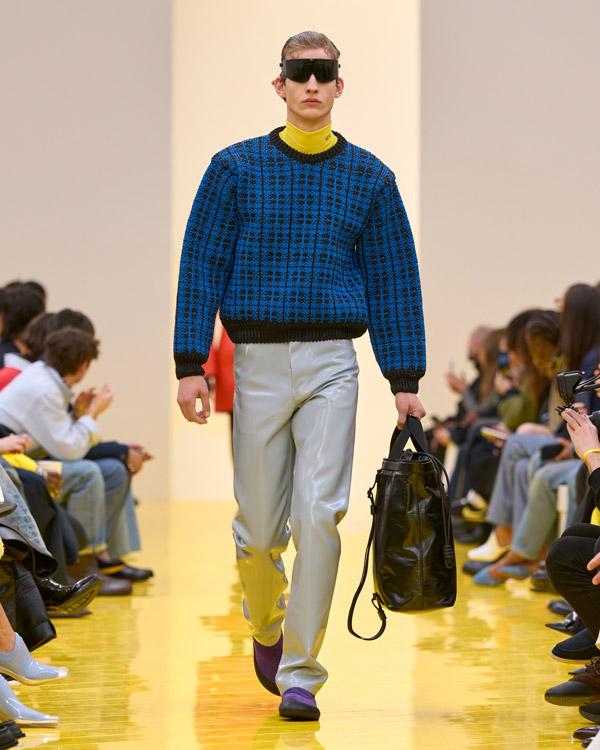
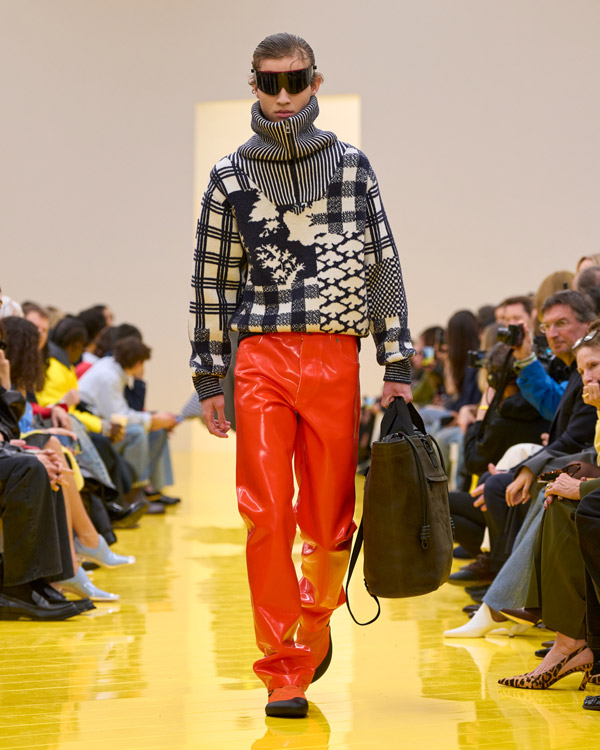
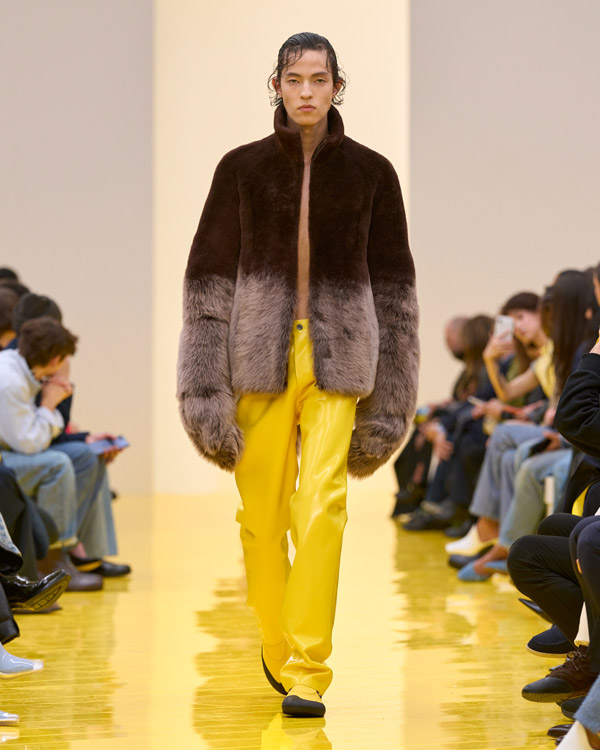
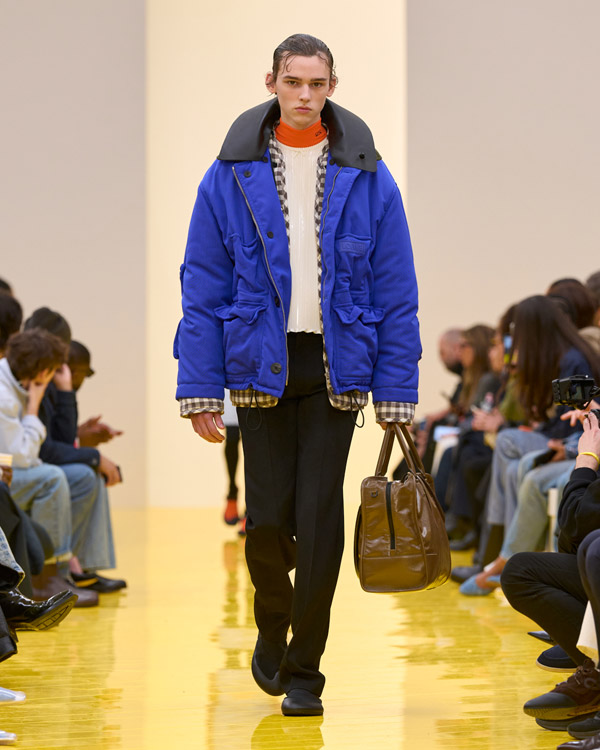
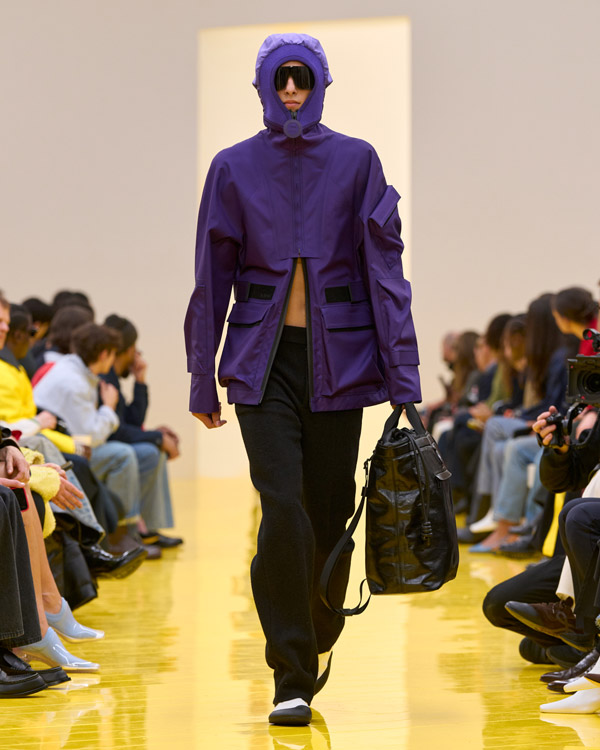
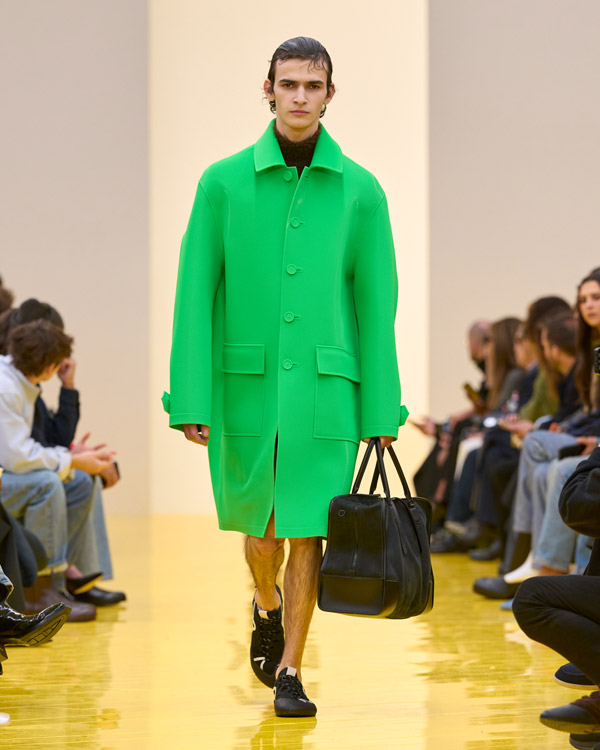
There’s a certain joyousness to the collection thanks to the use of bold colours—a signature that seems to be part of the duo’s direction for Loewe. But apart from that, there is that infectious enthusiasm derived from unbridled play and creativity. And honestly, we could definitely get behind creative directors enjoying their time and having fun experimenting to the best of their abilities.
Now that we’ve fully adopted ties back into everyday dress (for the uninitiated, we’re good with ties again, and have been for a few seasons now), it’s time to tweak what they’re paired with. We’re not saying that it’s passé to be wearing them with traditional suiting, because that’s a classic mainstay; wearing ties doesn’t need to be as stuffy any more.
We have to caveat that this isn’t anything new. It is, however, certainly something that we’re seeing more and more of on the runways. Broken suiting—creating the idea of a suit with individual elements—is a more grounded option for wearing a suit without actually wearing one. It’s simply acknowledging the elements of a suit and then thinking of them as separates. For Autumn/Winter 2026, the option is to remove the blazer from the equation. Instead, brands opted for everything from oversized sweaters to variations of blousons à la Louis Vuitton to simply a trench coat, as shown by the bastion of relaxed suiting, Giorgio Armani.
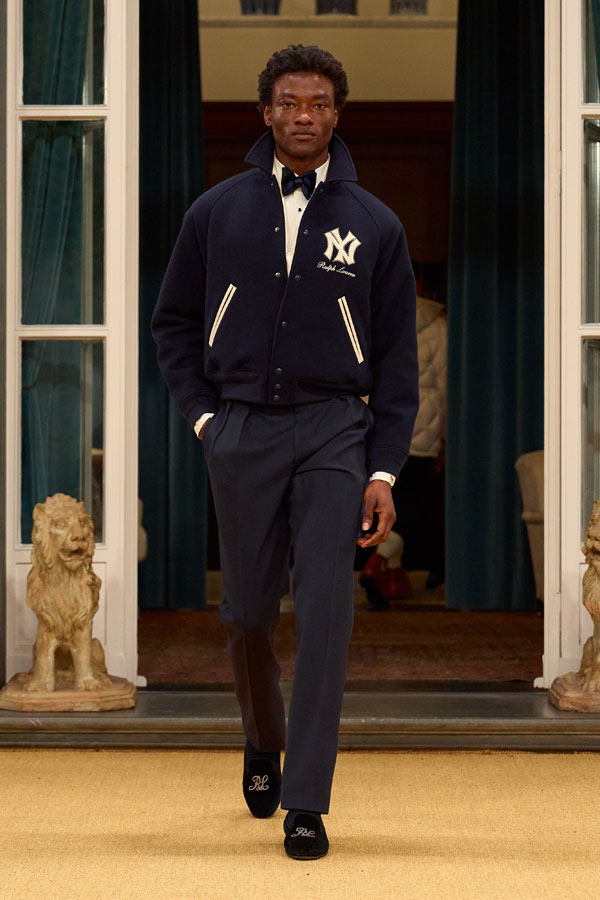
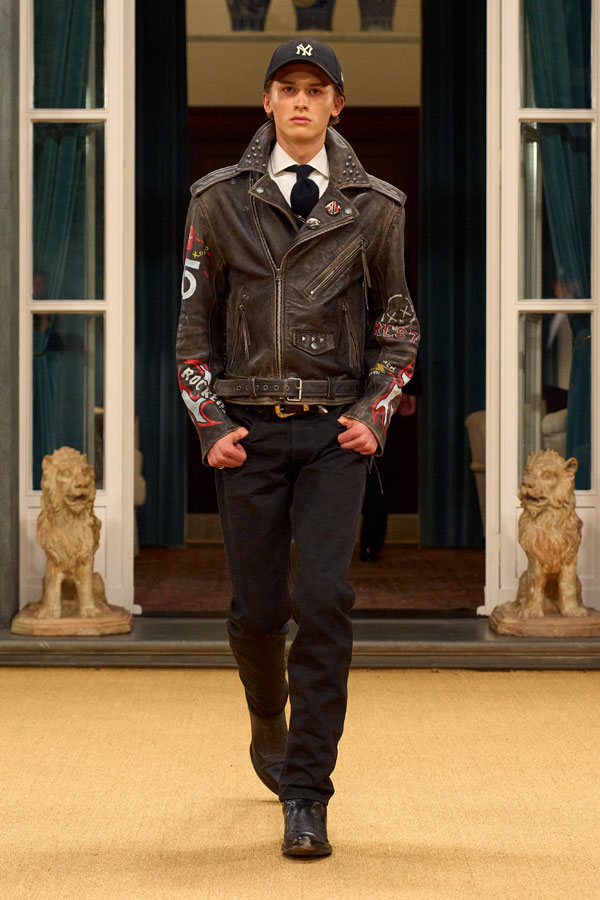
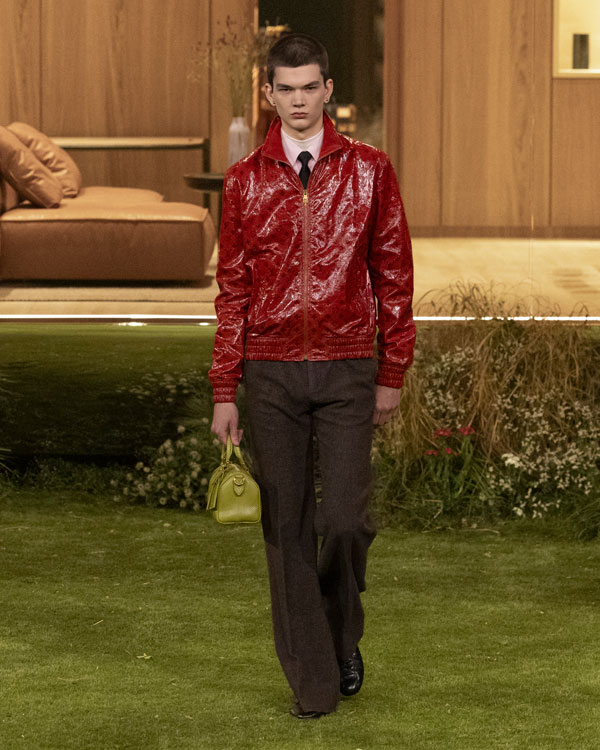
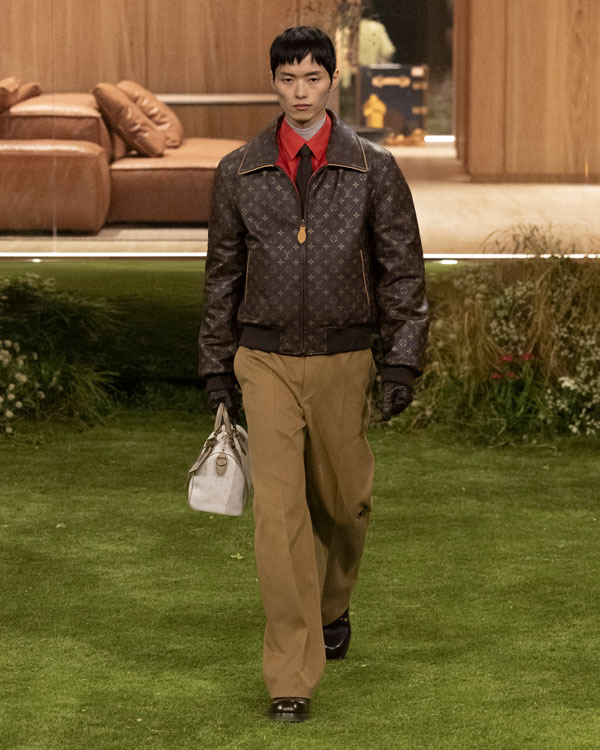
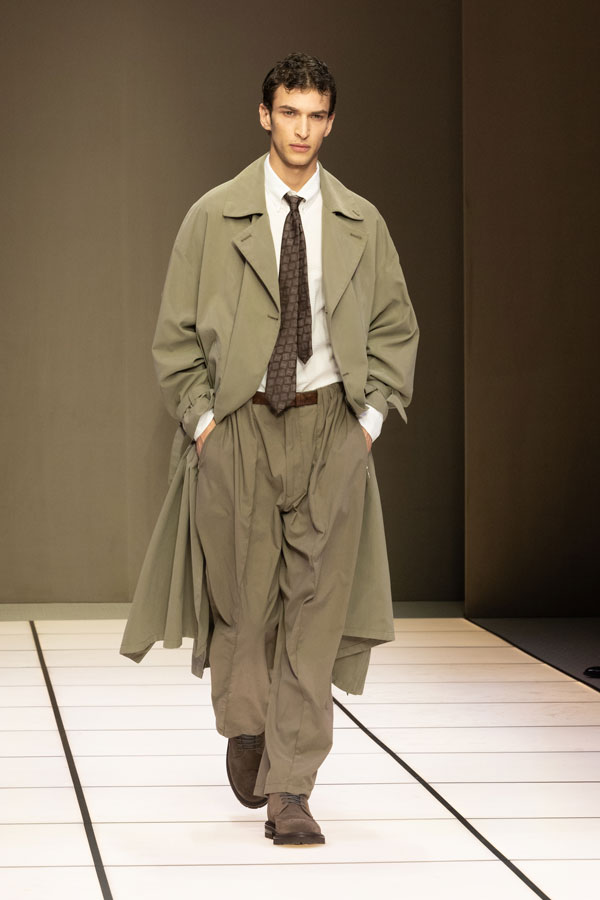

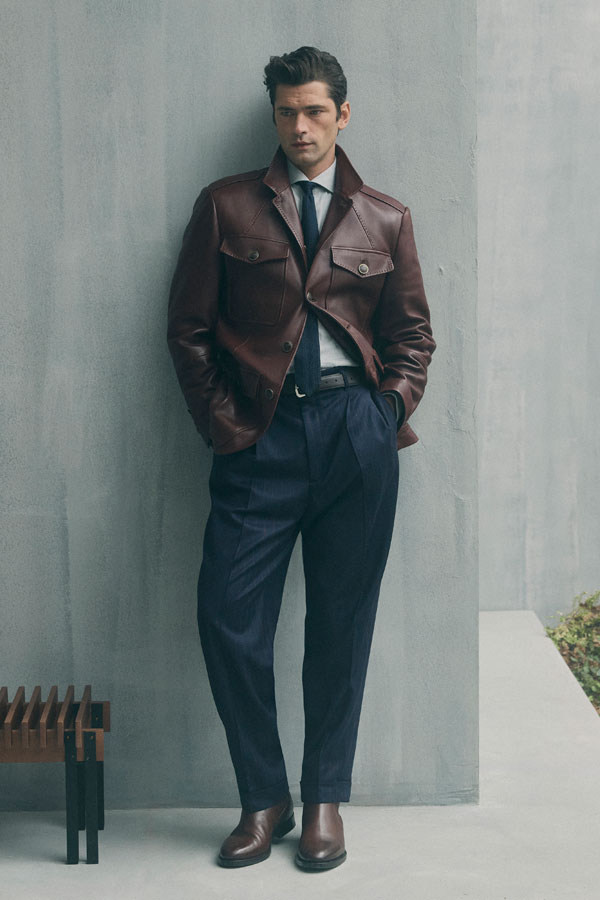
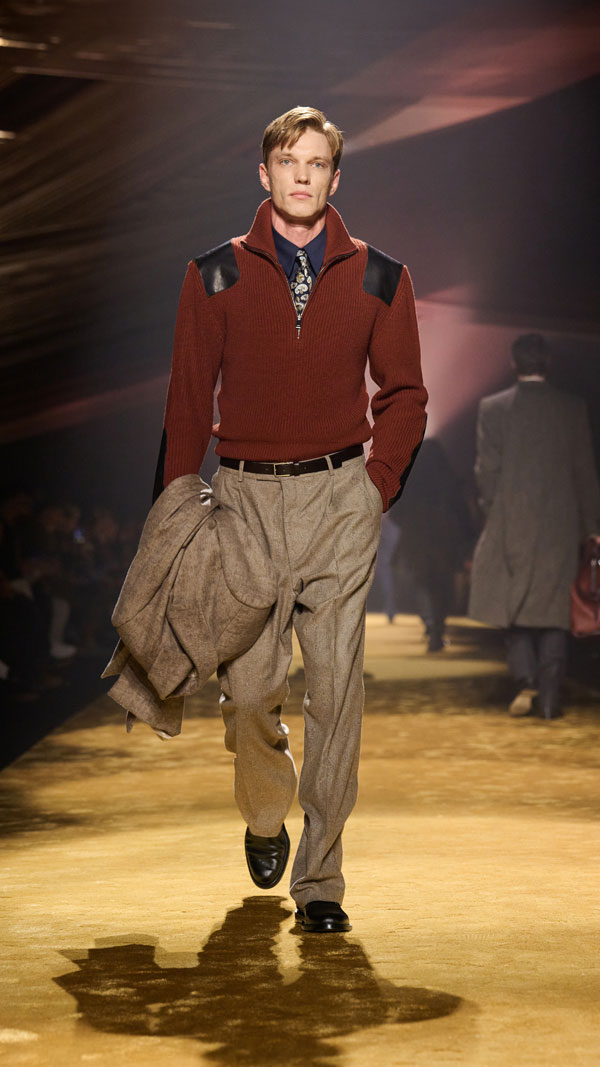
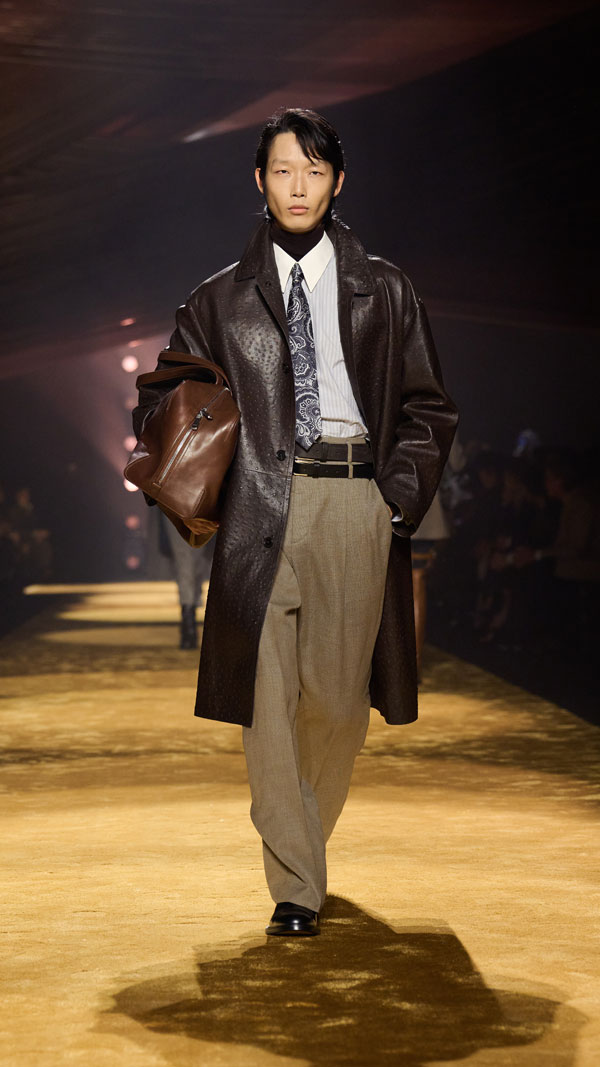
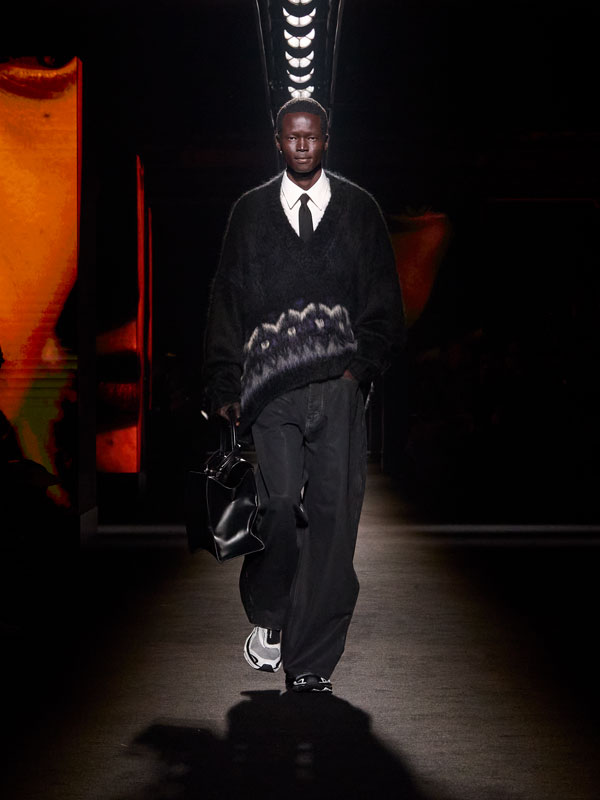
This works exceptionally well if you often have a difficult time transitioning your suited-up office wear for the evenings. All you need to replace the blazer with, is a layer of choice. Add a bit of ruggedness with a leather jacket or a lightweight denim jacket, and you’re good to go. As the saying goes: “if it’s too fixed, it’s time to break it a little bit”.
There is this misconception—especially this side of the world—that in order to dress well or have style, layering is key. And hence, with Singapore’s hot and humid climate, it’s often a lazy excuse for not being able to “dress well”. The Autumn/Winter 2026 collections, oddly enough, aim to dismantle it.
It begins with Jonathan Anderson’s Dior where the first few looks consist of denim jeans worn with an array of embellished tanks. These sleeveless creations were inspired by 1920s dresses by Paul Poiret and are anything but simple-looking. Then there’s Gucci with its skin-skimming tops completely drenched in sequins. Forget about layering these pieces under a jacket or the like; these tops are meant to be seen and deservedly so.
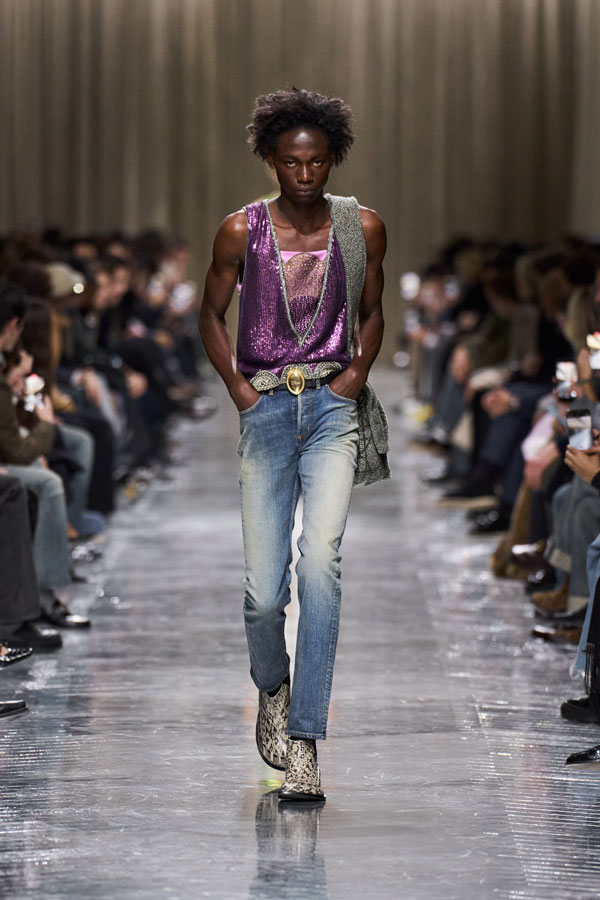
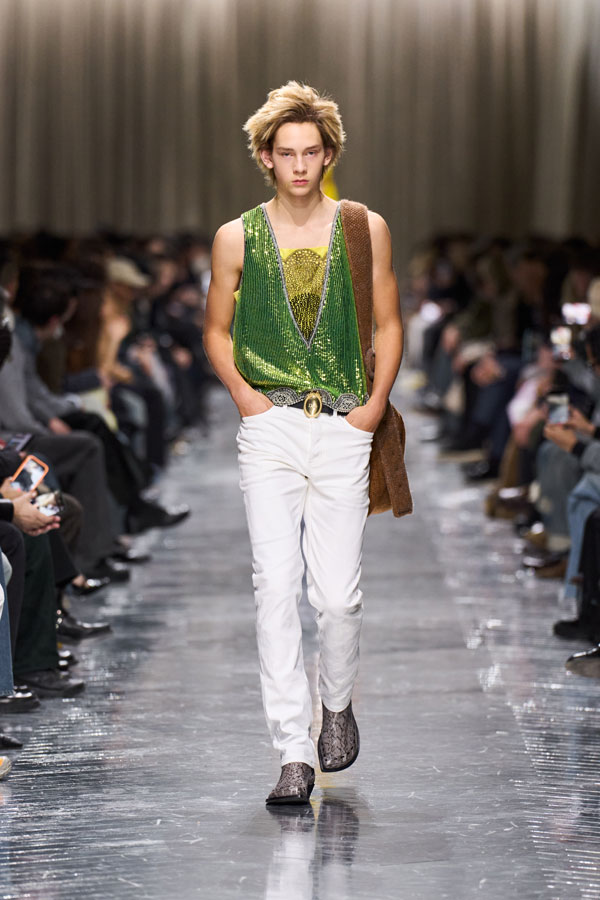
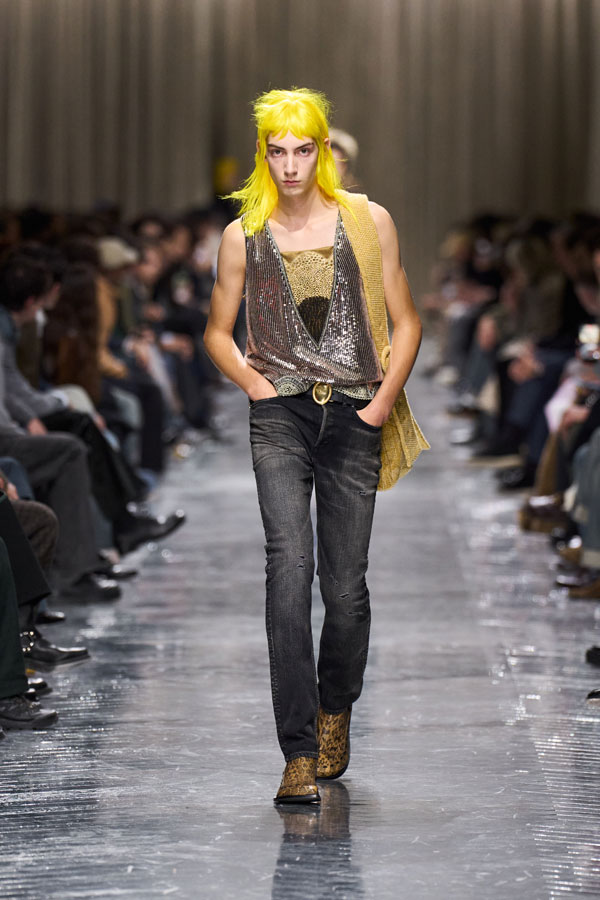
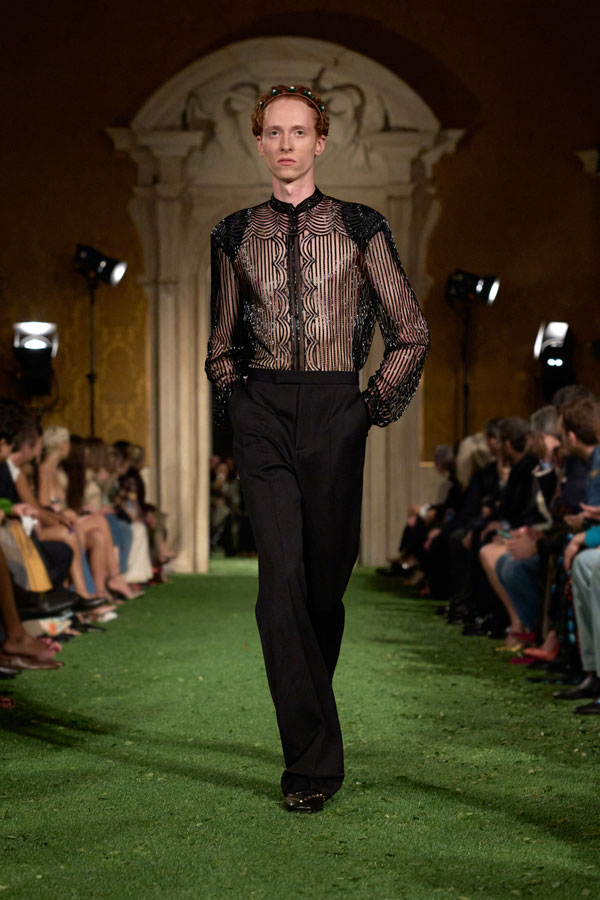
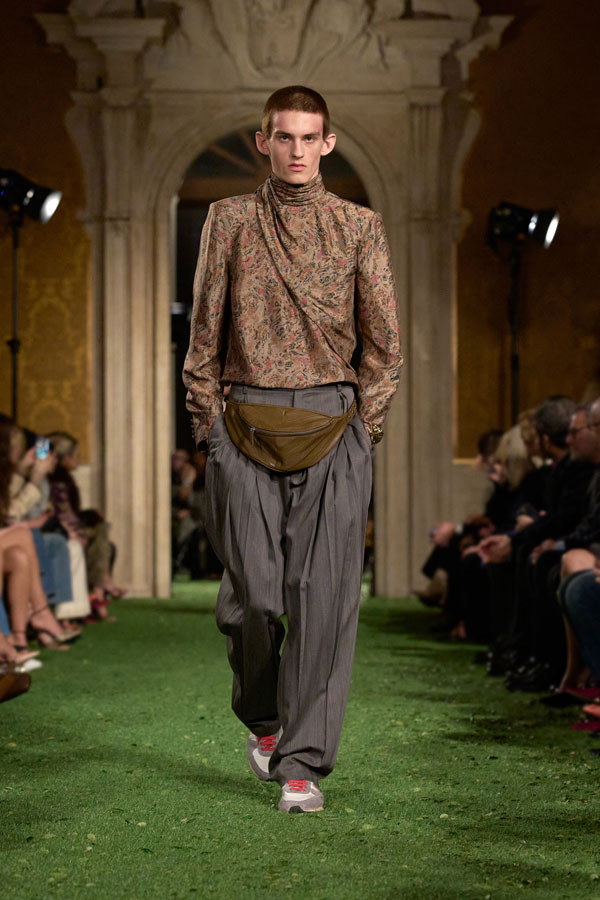
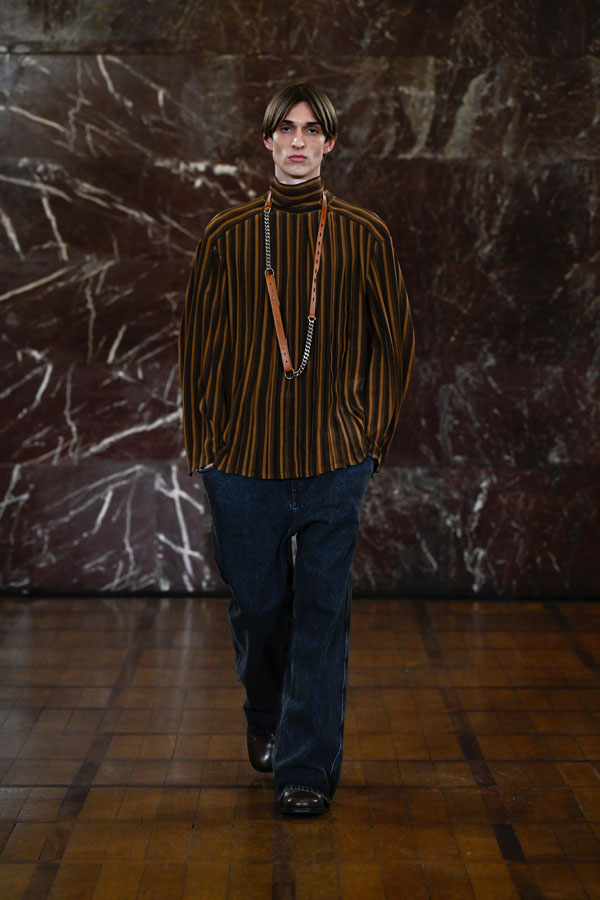
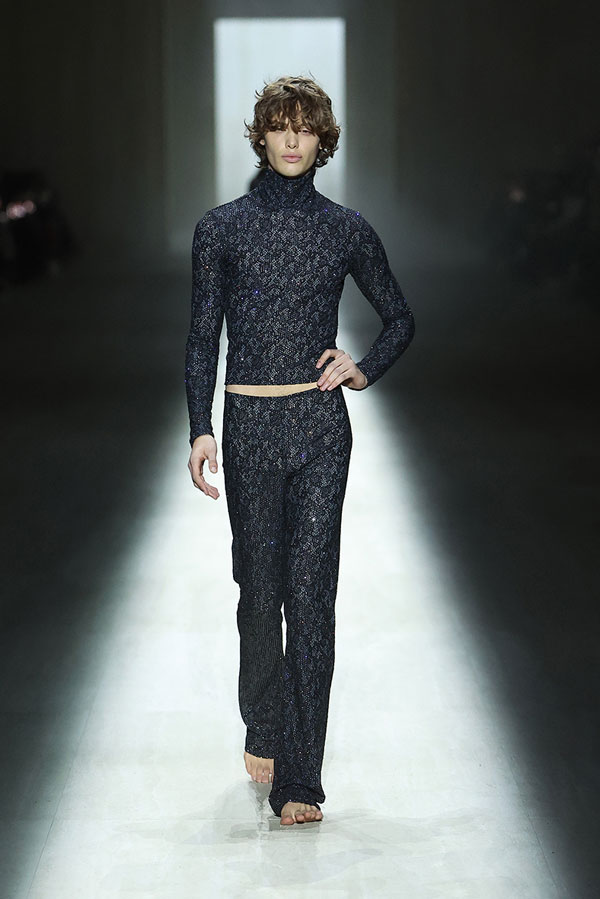
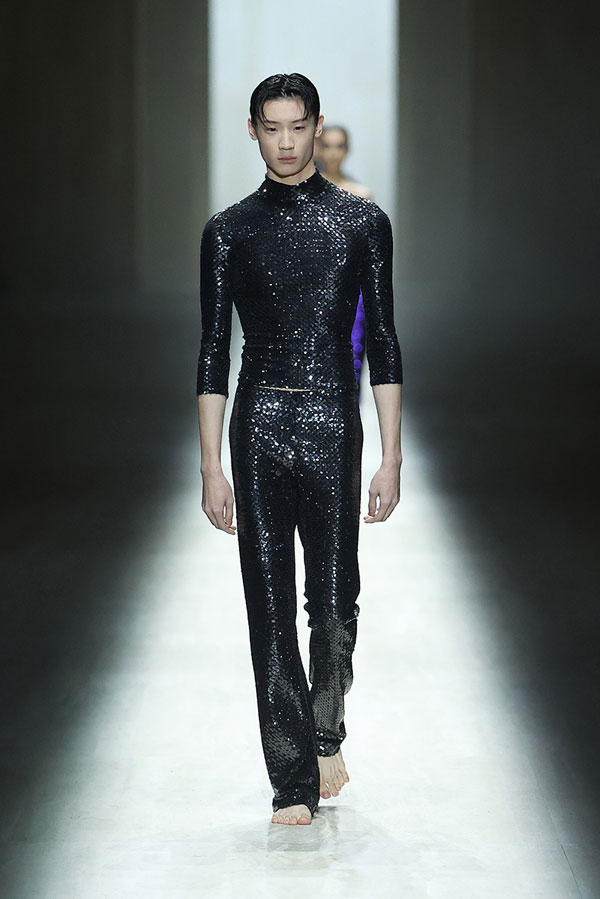
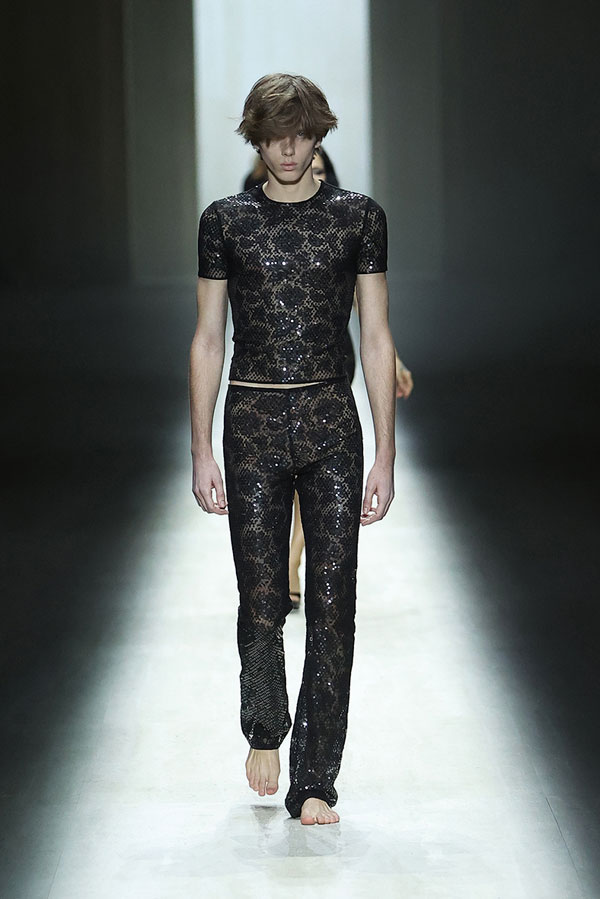
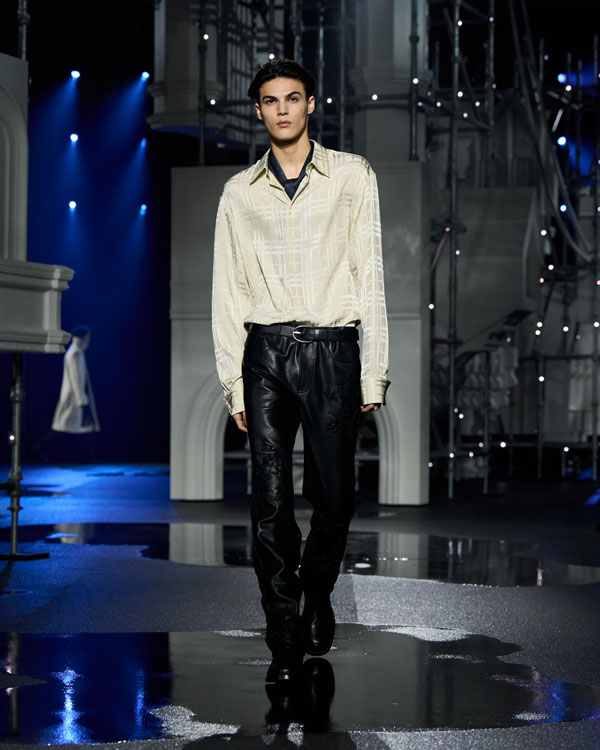
If the two aforementioned iterations are too outré for your liking, there are more grounded versions of a going-out top as shown by Burberry and Valentino. The key is that the top—whether a shirt, tank, or even a sweater—has to have a certain level of design flair to it. And no, we don’t mean a T-shirt emblazoned with an obscure graphic. Opt for silk-like materials, interesting patterns, and a hint of embellishment—essentially, details that you wouldn’t want to hide. All you’d have to do is wear your chosen top with your favourite bottoms. You’re now ready to head out in good style and without feeling the need to sweat for fashion.
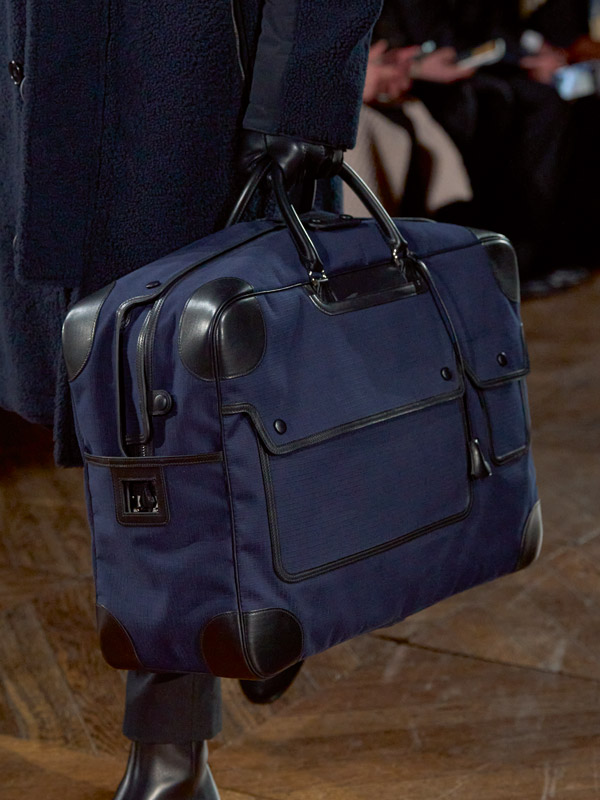
A bag first introduced by Hermès back in the ’60s made a reappearance for the Maison’s Autumn/Winter 2026 menswear collection. The Plume Fourre-Tout is a structured, boxy silhouette that’s reminiscent of a more angular bowling bag or a weekender. You could probably treat it as the latter, with its spacious interior and the generous sizes that went down the runway.
These reimagined versions were shown in various finishes and materials, all to tempt the contemporary man. In true Hermès fashion, there wasn’t just one kind of Plume Fourre-Tout. The Plume Fourre-Tout Paddock variation is crafted from canvas with calfskin trims, and resembles a more utilitarian-driven design replete with external pockets.
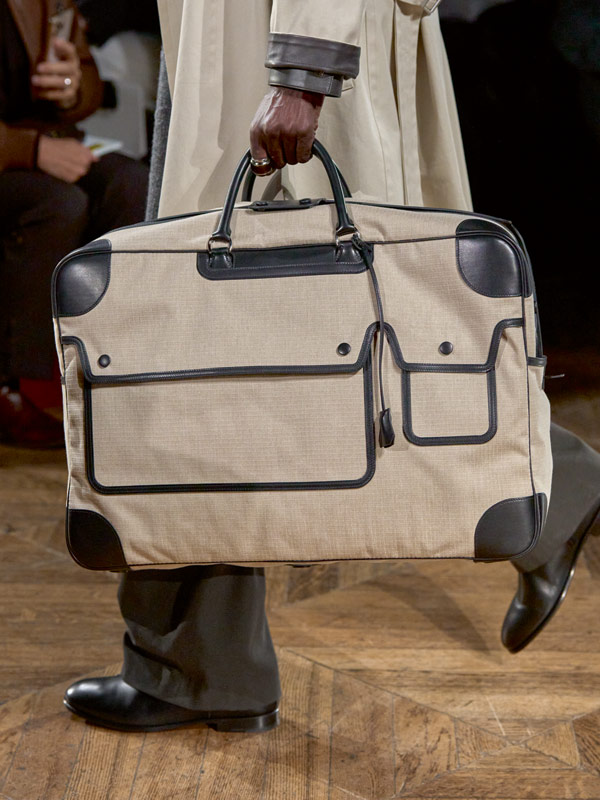
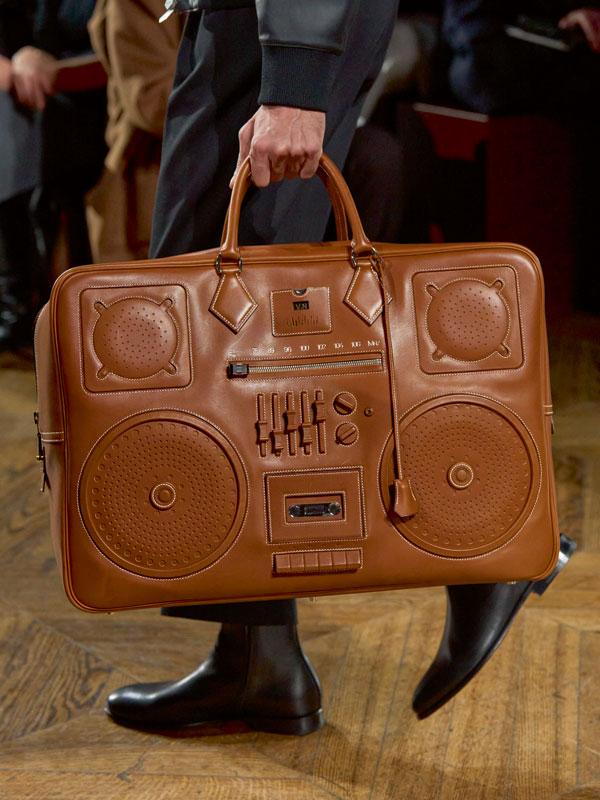
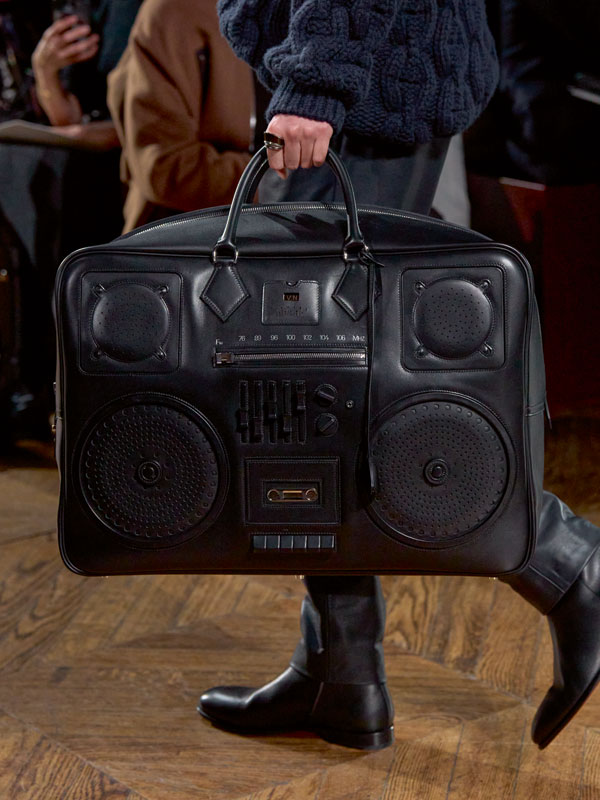
The ultimate expression of Hermès craftsmanship and playfulness comes in the form of the Plume Fourre-Tout On Radio bags. It looks completely like a leather boombox with a speaker-style leather appliqués and raised button motifs that anyone significantly younger than you would probably not recognise. The cassette holder is fully functional, mind you, and actually holds a removable leather-clad cassette tape as well as conceals a compartment for cards and other slim essentials.
Now this, this is a statement bag.
For part two of things to note for Autumn/Winter 2026 menswear.

Zach Cregger’s Resident Evil, a late-summer powerhouse flexing technical bravura across its vacuum-sealed ninety-five minutes, isn’t just good “for a video game movie.” It’s a superb film and it’s based on a video game. Since 2002, Capcom’s zombie franchise has plagued theatres with subpar releases that were essentially director Paul WS Anderson bragging that he’s married to Milla Jovovich. After a drab 2021 reboot, the director of Barbarian and Weapons shows how it’s done with a refresh that wholly abandons its source text’s universe to stay true to what really matters: the euphoria of white-knuckle survival and the sopping-wet horrors only Resident Evil games infamously deliver.
In theatres now, Resident Evil by Zach Cregger is the eighth live-action film based on the action-horror games. But it is the first that’s truly worth paying any attention. A standalone entry with zero connective tissue to anything “Resident Evil” before it, it follows an ordinary medical courier (Austin Abrams, in a star-making turn) who takes a last-minute job delivering a precious organ (or so he thinks) to a hospital in Raccoon City. What those outside city limits don’t know is that the place has succumbed to flesh-eating monstrosities, leaving Abrams’s Bryan to walk into a living nightmare. Alone.
Cregger’s first stab at an IP blockbuster lacks the depth of his 2025 hit Weapons, a picture moulded out of Cregger’s grief, and it doesn’t have any of the provocative themes that made Barbarian a social media phenomenon in 2022. By contrast, Resident Evil is a straight shot of adrenaline, but that simplicity is key to its brilliance. While the Resident Evil games—the first released in 1996—operate on an overcooked mythology, their progression mechanics are fundamentally straightforward: survive.

Any major encounter in the games, including the recently acclaimed Resident Evil Requiem, leaves you with barely enough bullets to kill whatever’s trying to kill you, and you’re left figuring out how to make it to the next save point. And there’s always a puzzle to solve, or a locked door keeping you from moving forward. Cregger’s focused take on Resident Evil is rooted in this exact pedal-to-the-metal propulsion. There are no detours for universe-expanding Easter eggs or name drops for Chris Redfield or Jill Valentine or Lady Dimitrescu (sorry, horndogs). All that matters is what’s in front of (or behind) Abrams’s inept schlub who barely knows how to switch off the safeties. The suspense is ever-present, and the scares are always just around the corner. In short, Cregger’s film doesn’t cosplay as a Resident Evil game, but it’s undoubtedly more faithful and smarter about its approach to adaptation.
Watching Resident Evil is something of a revelation, because you have to wonder what the hell took so long to pull this off. Once upon a time, movies based on video games had the same dubious reputation as “direct-to-video” and “porn parody.” There was a low bar for quality, and for every Mortal Kombat that barely grazed it, there was a Wing Commander, a Doom, a Postal, a Tekken, a Need for Speed. Video game IP was mistaken by Hollywood bigwigs for ready-to-bake action movies, and fans suffered the embarrassment of substandard attempts that never felt like the games they loved. I’m suspicious of anyone who unironically wraps their personality around “Gamer,” but I can’t fault an audience that has come to expect mediocrity as a best-case scenario.
Resident Evil fans especially spent a decade-plus putting up with Anderson’s nu metal nonsense, so when Cregger expressed that his take had next to nothing from the mythos at all, well, the Internet got noisy. But the irony here is that Cregger’s movie, with its wall-to-wall dread mixed with action movie homages (there are nods to Hard Boiled and Die Hard in a single span of twenty-five minutes) and slapstick hilarity, might be the most faithful cinematic interpretation of Resident Evil to date. Cregger knows a good Resident Evil movie isn’t about finding the right actor to wear Leon Kennedy’s shearling jackets, but the palm-sweat tension of being underarmed and outmatched by whatever grotesque nightmare has you in its sights.
Is Resident Evil actually the greatest video game movie of all time? It’s up for debate (Werewolves Within remains underrated), but it absolutely deserves to be in the conversation. The family-oriented Super Mario Bros. movies are downright unwatchable, but they similarly understand the spirit of the Nintendo games and, I’ll admit, nail the look and feel of them for the screen. Earlier this year, Exit 8 impressively adapted an indie horror game about a haunted subway, though it’s uneven to compare a one-hour indie game to a billion-dollar franchise. The competition is slim, but it’s growing now. At the very least, the bar is finally raised.
Originally published on Esquire US
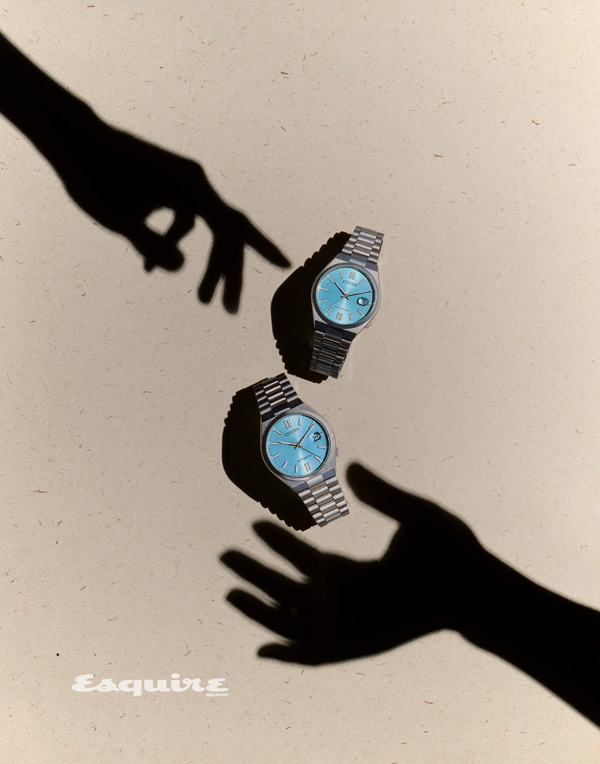
Strength with a splash of colour—that's the idea behind Citizen's Tsuyosa collection. The 37mm NJ0200-50L and 40mm NJ0151-88M, in particular, stand out for their sunray-brushed dials in a bright, refreshing ice blue. A 3 o'clock date window and luminous hands and markers keep things practical without breaking the minimalist look. Their pristine appearance, paired with availability in differing sizes, frees them from any gender binaries, meaning they'd make a pretty matching pair for any couples out there.
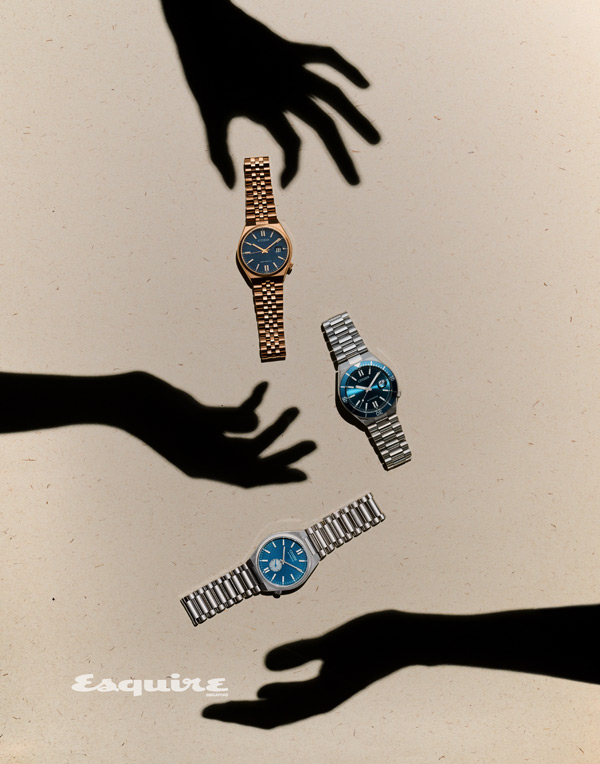
On the other hand, the NK0023-57L, NJ0231-56L, and NK5010-51L continue the solid foundation Citizen built the Tsuyosa name on. All three pair a 40mm stainless steel case with a fully integrated bracelet, giving each watch a seamless silhouette. They all run on a genuine automatic movement (no batteries here!) wound simply by the motion of the arm. From deep blue guilloché-textured dials, to unidirectional rotating bezels, to a 60-hour power reserve—there's probably a Tsuyosa to meet whatever need you desire.
Photography: Jaya Khidir
Styling: Elliot Tan
Photography Assistant: Goh Chiang Yan
Duncan Sheik was an American musician and actor. He's best known for winning the Grammy in the Best Male Pop Vocal Performance category for his 1996 debut single "Barely Breathing", and the Tony in 2007 for Best Original Score and Best Orchestrations for Spring Awakening. Sheik died from cardiac arrest stemming from heart and organ failure on 17 September. He was 56.
We revisit an interview with Duncan Sheik, published in April 2016.

WHATEVER IS HAPPENING in the moment, you just have to really focus and concentrate on that.
I WANT TO BE AN ARTIST. I want to make art that will stand the test of time. If it makes a lot of people happy and is popular, great. But the important thing is that the quality of the work is great.
IT'S ABOUT WHAT you are determined to do. How can I create value? How can I create something positive? That’s always my hope, and I don’t always get it right, but I try.
WHEN I WAS FIRST MAKING RECORDS, if you had a hit on the radio, it was easy to sell seven, or nine, or a million records. Now a hit will sell a hundred thousand. The music business has changed so much. That’s just the way the wind has blown. Anything that can be converted to zeroes and ones is going to be infinitely distributed. This decade is going to be very interesting.
EVERY ARTIST wants to be as successful as he or she can be. There’s a part inside that says you should write 50 pop songs, send them out, and make a lot of money. You want many people to like your stuff, but really, life’s too short, and it seems too boring to even try to do that. What you want to do is to move people’s hearts.
IT'S UPSETTING. There was a time in pop music when you could talk about politics and important things. I think a song like Rihanna’s “Bitch Better Have My Money” is genius, but 98 per cent of pop music isn’t compelling to me; it doesn’t affect me or move me. Take any classic piece of music; for example, “Ain’t No Mountain High Enough”, “Bridge Over Troubled Water”... these songs have breadth, and people continue to love them.
IT'S SOMETHING IN MY PSYCHOLOGY that I always want to do more.
I’M ALWAYS INSPIRED to write music that will have that longevity. You might not be able to predict it—you never know what people are going to feel—but that’s what I’m always trying to do.
YOU DON'T HAVE TO BE SO LITERAL. You can be poetic, and that will broaden the meaning of what you’re singing about.
DO SOMETHING that’s going to make the audience sit up and shout—whether it makes them angry, or excited, or thrilled, or moved, just do something that affects them. You must push the form forward, and if you’re not doing that, then I’m not that interested. I want to push people’s buttons. There’s a lot of laziness, and formulaic people following rules and doing boring work.
I’M JUST A SONGWRITER. If I start pontificating about this stuff too much, I might start sounding like an idiot.
ON SOME LEVEL, music is cathartic.
I’VE LEARNT NOT TO second-guess what people like. The only way anybody else is going to like what you do is if you like what you do.
YOU'RE ALWAYS A DIFFERENT PERSON. Twenty years ago, I probably wasn't a very nice person, and I wasn’t very good at what I was doing at the time. I was a terrible performer. But it’s not about me; it’s about the audience. I have to make the best music that I can, and give them a great experience.
I WAS PRETTY NEGATIVE about musical theatre. As a kid, I would do theatre—I was the Artful Dodger in Oliver!—but musical theatre wasn’t connecting with me. And now? Now, I’m a composer. That’s the way the wind blows.
MUSICAL THEATRE and “live” music—you can’t turn those into zeroes and ones. “Live” experiences are always going to have value. People will always want to see something “live”, and thank God, because otherwise, forget it; we’d all be screwed.
THE WHOLE POINT of me making music is to move people’s hearts. It’s important for me to move as many people’s hearts as I can. When I was 15 or 16, I would sit there and listen to Depeche Mode, Talk Talk and David Sylvian, and it would really affect me. That’s what I want to do for other people.
IF I COULD LIVE MY LIFE OVER, maybe I would be a visual artist. I could make one crazy painting that appealed to one person, and I’d be done; I could be happy with that.
WITH MUSIC, you make a song that needs to appeal to 20 million people, and that can mess with your mind—force you to go for a lower common denominator—and I never want to do that. I want people who are going to enjoy it to be able to experience it. I don’t want it to be pushed down people’s throats; I just want the people who might like it to discover it.
JOY IS MUCH HARDER THAN PAIN. Pain is actually pretty easy—if you feel pain, it’s easy to write songs about that. If you’re really happy, why bother writing a song?
BUT I just try to write a nice song and forget about it.
Photograph by Chng Dju-Lian
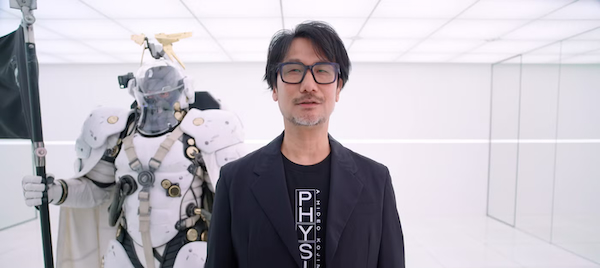
Remember a decade ago when Kevin Durant left Oklahoma City to play for the Warriors? Or when LeBron left Cleveland to join the Heat? Something of that magnitude happened in the world of video games this summer, with one of the industry’s most celebrated auteurs taking his talents—and his mysterious project, titled Physint—from one major platform to its direct rival.
Yes, we’re talking about Hideo Kojima, Kojima Productions, and how their upcoming game went from PlayStation—where it was meant to be an exclusive—to Xbox. In case you missed all of this and how it went down recently, here’s your handy catch-up on Kojima, Physint, and the drama surrounding the defection to Xbox.
First, the news: On the morning of 18 September, Xbox woke up the East Coast with a presentation of its slate at the 2026 Tokyo Game Show. Saved for last was Physint, a new game from famed developer and known cinema obsessive Hideo Kojima, who created the Metal Gear Solid games and the star-studded sci-fi series Death Stranding. Kojima provided updates on his next two games, OD and Physint, including a major Hollywood actor as the main character in Physint.
First, the other game: OD. Exclusive to Xbox since the start of development, Kojima said work on OD is coming along. “Performance capture and ADR recording, which had been paused during the SAG strike, resumed this year, and production is proceeding on schedule,” he said in the video. The horror game stars Sophia Lillis, Hunter Schaefer, and the late Udo Kier (in a posthumous appearance), and is co-written by filmmaker Jordan Peele. OD currently doesn’t have a release date, but it is on tap to be the very next game from Kojima Productions.
And now, Physint. It’s another new video game from Kojima Productions and is set to release after OD. While details regarding the story, its characters, and its universe are shrouded in mystery, Kojima himself confirmed the game is an original IP that is poised to be a spiritual successor of sorts to Metal Gear Solid.
Physint was first announced in January 2024 as a PlayStation exclusive, when the brand gave Kojima a major spotlight during its State of Play presentation. During the reveal, Kojima described it as “a next-generation action espionage game.” Although Kojima didn’t reference Metal Gear Solid by name, he cited his extensive history with Sony in “grow[ing] the espionage genre together for almost 30 years.”
For two and a half years, all seemed sunny between Kojima and PlayStation. But on 9 September, 2026, Kojima posted on Twitter/X that the fate of Physint had changed. “As confirmed earlier through our official channels, in mid-June of this year, we unexpectedly received notice from PlayStation Studios that they would cancel the PHYSINT project,” Kojima wrote. “PHYSINT is an important project both to me personally and to KOJIMA PRODUCTIONS. Determined to keep the project alive, we have spent the last three months searching tirelessly for a new partner.”
In that same tweet, Kojima announced that Xbox—already a partner on OD—had stepped up for Physint. “In the course of seeking advice and pursuing negotiations with people across many fields, we found in XBOX a partner with whom we share a common vision for the future, and we have decided to team up with them once again. Please rest assured that development of PHYSINT, our genre-defining action-espionage title, is ongoing and will continue moving forward.”
On 11 September, Bloomberg’s Jason Schreier reported that a “major factor” behind PlayStation and Sony’s shock decision was the low sales of the studio’s previous two titles, Death Stranding and Death Stranding 2. The games “didn’t meet PlayStation’s revenue expectations” according to Bloomberg’s anonymous sources.
But Death Stranding wasn’t the only cause behind Physint’s demise at PlayStation. Bloomberg wrote that development “has also missed deadlines and was on track to be well over budget” while its release was still “years away.”
Wrote Schreier: “PlayStation was reluctant to invest hundreds of millions of dollars in another game that wouldn’t remain permanently exclusive to the company’s own hardware... Kojima’s closely held studio, Kojima Productions, retained ownership of the franchises.”
In September 2025, actors Don Lee, Charlee Fraser, and Minami Hamabe were announced as the first actors attached to Physint. Now, during the Xbox TGS showcase, Kojima announced actor Bill Skarsgård has joined them, in the role of the still-unnamed main character and player avatar for Physint. “We are both long-time fans of each other’s work, and we’ve decided to embark on this new adventure together,” Kojima said in the announcement. “There are still many exciting cast announcements to come in the future, so please stay tuned for further updates.”
There’s still plenty to learn about both OD and Physint. While the former sees Kojima wading into horror (as he once almost did in his canceled Silent Hill game), the latter sees Kojima going back to his Metal Gear Solid origins to deliver a spy-oriented action game. Earlier this year, IO Interactive released 007 First Light—based on the James Bond franchise—to critical and commercial acclaim. But Kojima’s unsubtle political themes and frequent interest in future technologies will surely make Physint its own beast in the genre.